Last one
Used

This model is currently sold out. Enter your email and we'll let you know when it's back in stock.
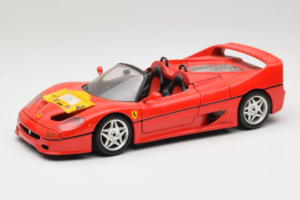
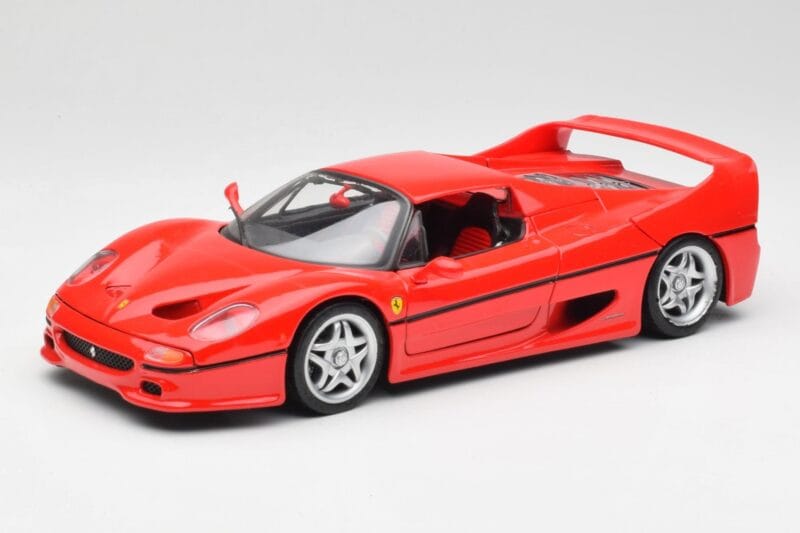
TL;DR: Maisto's 1:18 diecast Ferrari F50 in red has opening doors and engine cover exposing a V12 mockup, reproducing the F1-derived supercar Ferrari built to mark its 50th anniversary. This is a used model, and the box shows traces of storage. A recognizable flagship subject at accessible pricing.
Ferrari built the F50 around a genuine carbon-fiber tub and a V12 engine derived directly from its 1990 Formula 1 car, making the road-going result closer to a race car with headlights than any supercar before it.
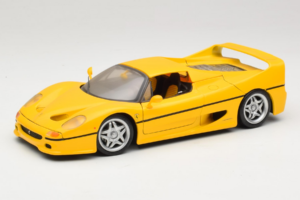
The body is zinc alloy, and the doors and rear engine cover open to reveal a simplified V12 mockup and cockpit interior, features that give this model genuine display flexibility rather than a static shell. Maisto's tooling at this price point captures the F50's aggressive, race-derived proportions, the low nose, wide haunches, and prominent rear diffuser, reasonably well, though paint depth and panel tolerances sit below premium resin alternatives in the same subject. The removable targa-style roof panel, distinctive to the F50 among Ferrari's flagship supercars, is represented in the casting's overall silhouette even if the model doesn't replicate the actual panel removal. As a used piece, expect handling wear typical of a model that has been part of a collection, and the box shows traces of storage rather than a fresh, unhandled presentation.
The F50 sits in a specific, well-defined chain of Ferrari flagship supercars, following the 288 GTO and F40 and preceding the Enzo, each built to mark a technical leap or an anniversary milestone. Its Formula 1 engine heritage sets it apart from the F40's turbocharged approach, giving it a different character despite similar market positioning. On a Ferrari flagship shelf, the F50 works well displayed alongside its F40 predecessor and Enzo successor, showing the marque's shifting philosophy from turbo power to naturally aspirated race-derived engineering across a compressed decade. At 1:18, the scale gives the aggressive wheel arches and rear wing enough presence to read clearly, and opening the doors or engine cover reveals the mechanical drama that defines this car's reputation. For a collector assembling a Ferrari halo-car chronology without committing to premium resin pricing, the F50 fills a genuine and recognizable gap.