Back in stock
This model is currently sold out. Enter your email and we'll let you know when it's back in stock.
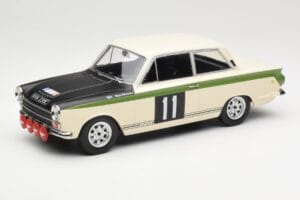
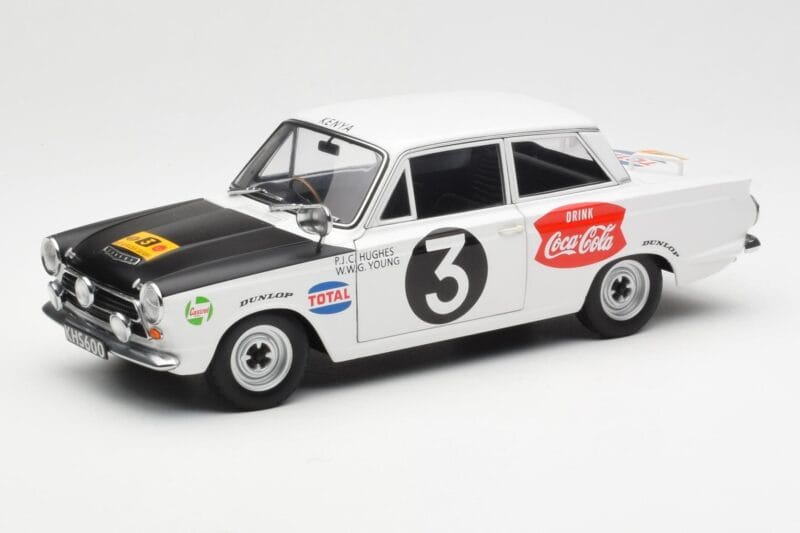
TL;DR: AUTOart's 1:18 diecast Ford Cortina Mk1 #3 reproduces the Hughes/Young car entered in the grueling 1964 African Safari Rally. Doors and hood open. This is a used example, box showing traces of storage. A snapshot of rallying before purpose-built rally cars existed.
The Safari Rally was one of motorsport's harshest early tests, and the Cortina's presence there shows how ordinary road-based saloons were pushed into genuinely extreme conditions long before dedicated rally machinery took over.
The Cortina's boxy, upright saloon shape comes through with honest, accurate proportions on the zinc alloy body, and the rally livery and number 3 markings are applied with clean registration rather than smeared graphics. Doors and hood open to reveal a period-correct engine bay and a simple, functional cabin, with panel gaps staying consistent around every opening section. The model's solid weight suits a subject built for punishing off-road conditions rather than showroom polish. This is a used example, and the box shows traces of storage while the casting itself remains sound.
Before Group B and modern WRC machinery, rallying was fought largely in modified road cars like this Cortina, and that context matters to anyone building a chronological rally shelf. Placed ahead of a later Escort or Sport Quattro, it grounds the display in rallying's rougher, earlier era and shows just how far the sport traveled from its origins.