Last one
Used
This model is currently sold out. Enter your email and we'll let you know when it's back in stock.
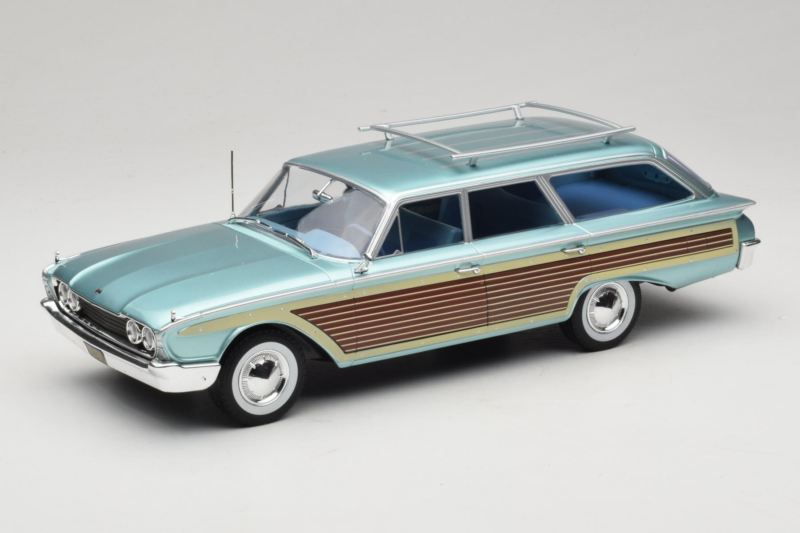
TL;DR: MCG's 1:18 diecast reproduces the 1960 Ford Country Squire in blue, a cooler alternative to the warmer factory tones more often seen on this wagon. The wood-look side paneling stands out with particular clarity against the blue body.
Blue was never the loudest color Ford offered on the Country Squire, but it may be the one that lets the wood trim do its job best.
Against a cooler blue body, the Country Squire's faux wood paneling reads with more contrast than it does against warmer factory colors, which makes this a strong choice for a collector who wants the wagon's defining feature to be immediately legible from across the room. MCG's diecast construction holds the same long, flat-paneled wagon body as its yellow counterpart, and the wood-look application remains the detail worth inspecting closely: even spacing and a convincing grain pattern separate a good wagon replica from a mediocre one. At full wagon length, it commands the same substantial shelf presence as any Country Squire variant, a genuinely large piece by 1:18 sedan standards.
Owning the Country Squire in more than one color makes sense for a collector building a dedicated American wagon theme, since the wood trim reads differently against each body tone and the era's dealership lots genuinely offered this kind of color variety. Blue and yellow together illustrate how much a single color choice can change the character of an otherwise identical car, from cheerful and bright to calmer and more classic. Set beside contemporary sedans or trucks from the same period, this wagon anchors a slice of everyday 1960s American life that performance-focused collections often skip entirely.