Used
This model is currently sold out. Enter your email and we'll let you know when it's back in stock.
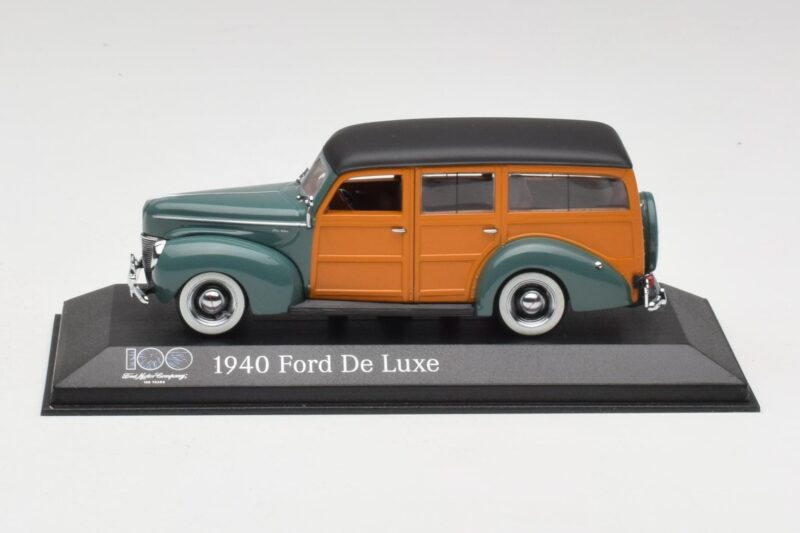
TL;DR: Minichamps' 1:43 diecast 1940 Ford Deluxe Woody Wagon, in Forest Green, reproduces the wood-paneled station wagon body style that defined American family transportation just before the Second World War interrupted civilian production. Its distinctive timber side panels remain one of the era's most recognizable design signatures.
Wood-paneled wagons carry a specific visual identity that few other body styles from any era can match, and the 1940 Deluxe wears it particularly well.
The wood-bodied station wagon emerged from a practical need, using timber framing and paneling because it was more readily available and workable than the steel stamping required for a fully metal wagon body during the period. Ford's Deluxe Woody represented the format at its most polished heading into 1940, a genuinely handsome combination of varnished wood, chrome trim, and the flowing fender lines typical of American cars just before wartime production halted civilian manufacturing entirely. That combination of material and timing makes this Woody a genuine snapshot of pre-war American design, distinct from the plainer wagons that followed once steel bodies became standard.
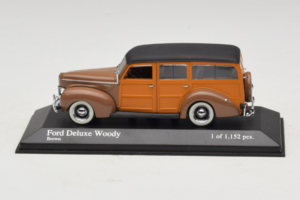
At 1:43, Minichamps renders the Woody's wood-paneled sides and running boards with enough definition to read the paneling detail clearly despite the compact scale, and the Forest Green finish on the metal sections contrasts cleanly against the wood-toned panels. Detail stays proportionate to the format rather than exhaustive, appropriate for a subject whose visual identity comes from material contrast rather than intricate mechanical features. Displayed among other pre-war American vehicles, this Woody adds genuine material and textural variety that steel-bodied contemporaries simply can't offer.