Last one

This model is currently sold out. Enter your email and we'll let you know when it's back in stock.
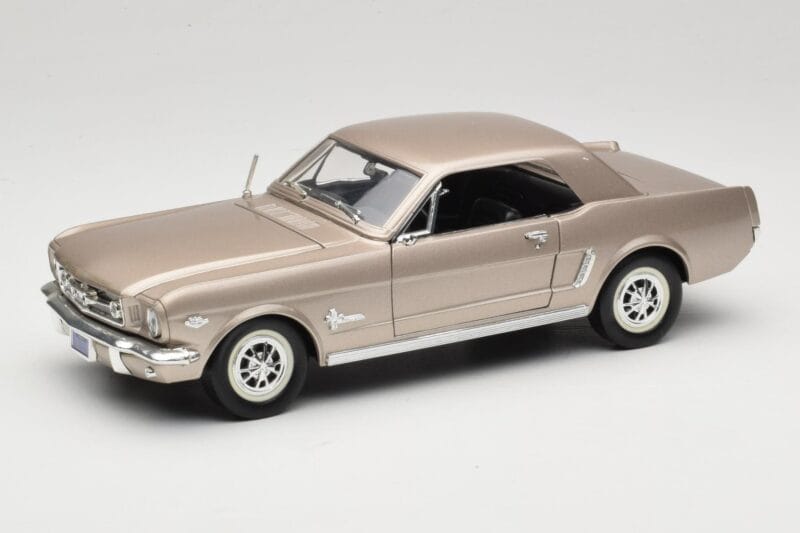
TL;DR: Mira's 1:18 diecast Ford Mustang 1964 1/2 in Silver reproduces the very earliest production Mustang, the "1964 and a half" cars sold before the official 1965 model year revisions. Zinc alloy construction gives this entry-tier diecast real heft and honest, simple bodylines.
Ford enthusiasts still debate where the "1964 1/2" line falls exactly, but the earliest Mustangs off the line carry small details later cars dropped, and Mira's Silver example leans into that early-production identity.
Mira's construction here favors accessible pricing over fine surface detail, and the trade shows in wider panel gaps and a straightforward, simplified interior behind the functional door hinges. Silver paint helps rather than hurts at this tier, since a bright, even metallic finish disguises minor tooling seams better than a flat color would. The proportions that matter most, the long hood, short rear deck, and simple grille that defined the Mustang's first shape, come through correctly, and that silhouette is really what a collector building an early-Mustang display is buying. It's an honest entry-level rendition of a genuinely important shape, priced to let a buyer start a pony car collection without a premium-tier outlay on the very first piece.
Ford introduced the Mustang on April 17, 1964, and cars built between that launch and the start of the official 1965 model year are commonly called "1964 1/2" Mustangs by enthusiasts, distinguished by small details like generator-based electrical components in place of later alternators. The car became an instant cultural phenomenon and effectively created the pony car segment that Chevrolet, Plymouth, and others would spend the rest of the decade chasing. An early Mustang like this one anchors that origin point cleanly at the start of any American muscle or pony car shelf.