Last one

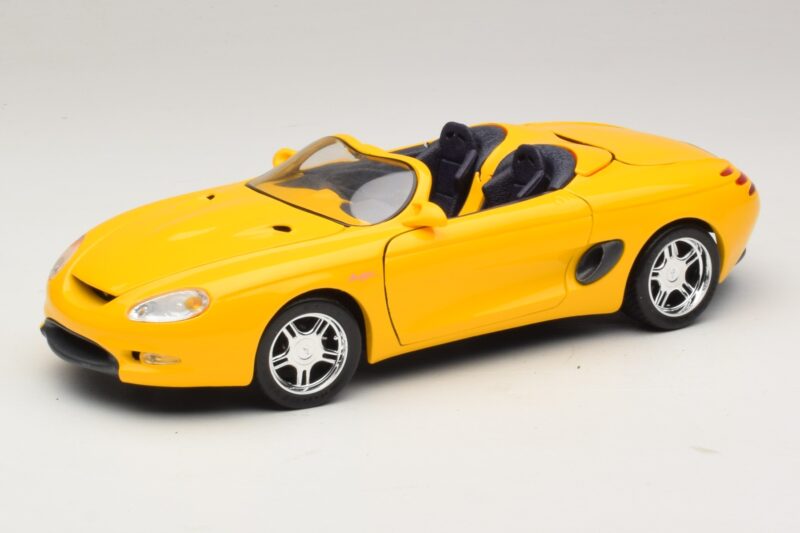
TL;DR: Maisto's 1:18 diecast reproduces Ford's 1993 Mustang Mach III concept roadster in yellow, with working doors, hood, and trunk. Built in zinc alloy at an accessible mass-market tier, it captures a show car that previewed styling cues for the 1994 production Mustang rather than a model most collectors already own.
Most 1990s Mustang models on a collector's shelf are production cars. This one is not. Ford never built the Mach III for sale, which makes Maisto's yellow cabrio a rare entry point into a design study that quietly reshaped the Mustang nameplate just one model year later, at a price that rewards curiosity rather than deep pockets.
Ford revealed the Mach III at the 1993 Detroit Auto Show as a two-seat, open-top roadster built to test design language for the Mustang generation still under wraps. It carried no folding top, pure speedster proportions, a cab-forward stance, and round quad taillights that reached back toward the 1960s originals the Fox-body Mustang had drifted away from. Underneath, a supercharged V8 sat ahead of rear-wheel drive, a configuration Ford never intended for the showroom floor. The concept toured auto shows for a season, drew heavy press coverage, and then returned to Ford's design archives rather than any production line, which is exactly the fate that makes it an unusual subject for a diecast replica decades later.
When the production Mustang arrived for the 1994 model year, several Mach III cues survived the jump: the galloping-pony grille returned to the nose, the round taillamps reappeared on the rear fascia, and the bodyside sculpting borrowed the concept's tighter character lines. The showroom car kept its roof, its back seats, and a naturally aspirated range of engines, but the visual link back to this yellow roadster is easy to trace once you know where to look. Most Mustang diecast covers cars buyers could actually own, GTs, Cobras, later Bullitt and Shelby tributes. A Mach III replica covers a car Ford built once and retired, a different kind of collecting target entirely.
Lift this Mustang from its packaging and the zinc alloy body announces itself immediately: real heft, a cool temperature against the palm, the kind of mass diecast alone delivers. Maisto builds its 1:18 line around that density, then adds the opening features the brand is known for across its range. The doors swing on a hinge with enough resistance to feel deliberate, the hood lifts to expose a simplified engine bay, and the trunk releases to show the roadster's open luggage area. Being able to open the hood on a concept most owners will never see in person is a genuine part of the appeal here, not a routine checkbox feature.
The yellow finish sits on a hard metal shell, so the gloss holds an even depth under direct light rather than looking chalky, a trait diecast achieves more consistently than painted plastic. Panel gaps run a touch wider than a resin casting would allow, the trade every diecast at this price makes for structural strength and moving parts, but the shut lines stay straight and the body keeps its shape without warping over years on a shelf. This is accessible, mass-market diecast rather than a limited hand-built piece, and it is honest about that. The value here is a functional, well-finished replica of a subject most other manufacturers have skipped entirely.
At 1:18, a two-seat roadster like this keeps a notably compact footprint, well short of a full-size 1994 Mustang GT at the same scale, small enough to sit alongside it without crowding a shelf. Placed next to that production car, the family resemblance becomes the display's whole point: same grille language, same taillight shape, two very different outcomes. Buyers assembling a Mustang design-history shelf, concept through production, will find this piece hard to substitute, since few manufacturers ever tooled the Mach III at all. At an entry-level price, it will not match the panel precision of pricier resin, but it delivers a functional, opening-panel replica of a car most Mustang fans only know from old auto-show photographs.