Last one
Used
This model is currently sold out. Enter your email and we'll let you know when it's back in stock.
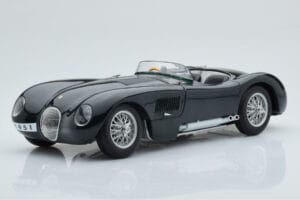
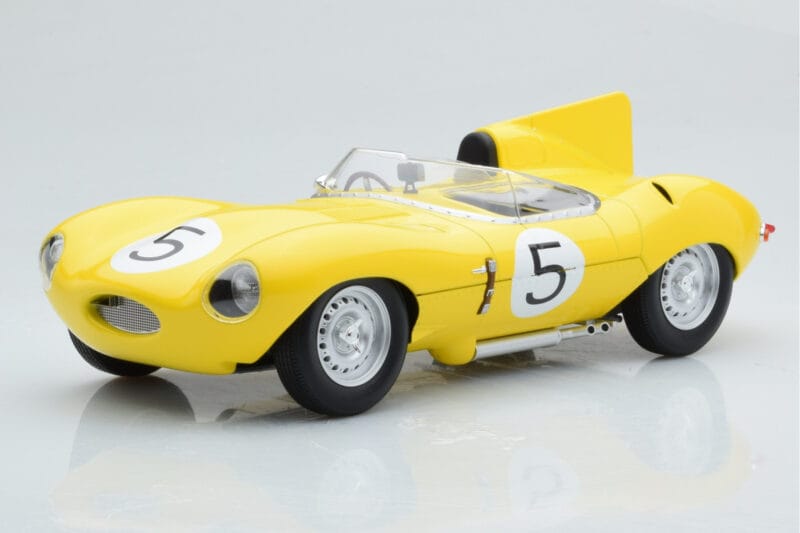
TL;DR: CMR's 1:18 diecast Jaguar D-Type reproduces Ecurie Nationale Belge's #5 car from the 1956 24 Hours of Le Mans. The sealed body preserves the car's distinctive aerodynamic tail and period racing livery.
The D-Type's aerodynamic fin-tailed silhouette made it one of the most advanced sports racing cars of the mid-1950s, and this Ecurie Nationale Belge entry places it in one of endurance racing's defining eras.
The D-Type's swept-back tailfin and low, curved nose were genuinely advanced for their time, and a sealed diecast body suits that streamlined shape well, holding the compound curves clean without the seams a functioning door or hood would introduce. Zinc alloy construction gives the model real weight at 1:18, and the era's simpler livery style, national racing colors and roundel numbers rather than dense sponsor branding, depends on clean paint application more than intricate print work. The car's distinctive headrest fairing and wire-look wheels are the details worth checking for period accuracy.
The mid-1950s represented a formative period for Le Mans, and the D-Type's competitive success there established Jaguar as a serious endurance racing manufacturer. This specific Ecurie Nationale Belge livery adds genuine national-team variety to a historic GT and endurance racing theme, distinguishing it from the more commonly reproduced factory works entries. At 1:18, this model anchors a 1950s Le Mans display convincingly, whether paired with contemporary rivals or displayed as a standalone historic centerpiece.