Last one
Used
Back in stock
This model is currently sold out. Enter your email and we'll let you know when it's back in stock.
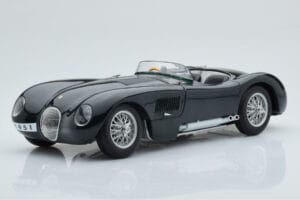
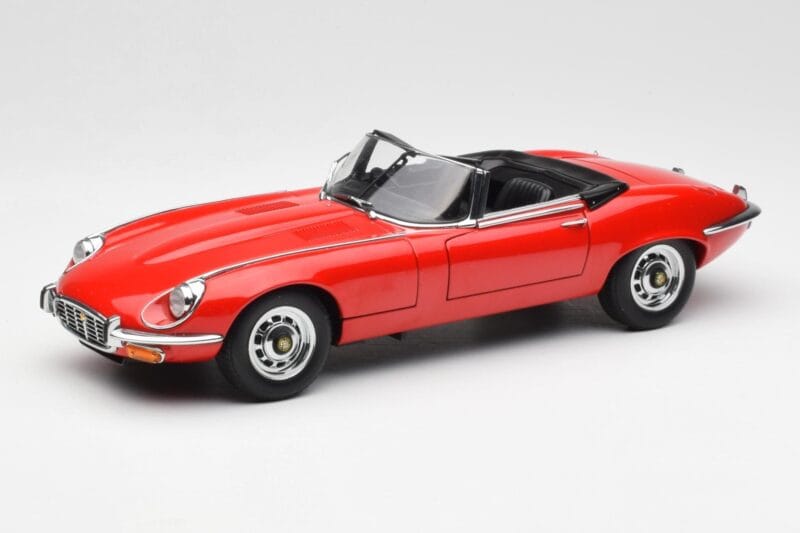
TL;DR: AUTOart's 1:18 diecast Jaguar E-Type Series III V12 Roadster reproduces the final, longer-wheelbase E-Type in red, with opening doors and hood over its V12. This is a used example, box showing traces of storage. A capstone piece for an E-Type or British roadster shelf.
The Series III replaced the E-Type's inline engines with a smooth V12 and stretched the wheelbase, closing out the model's run on a different note than the lean early cars that made its reputation. AUTOart's diecast gives that final chapter its own diecast treatment.
The zinc alloy body carries the weight collectors expect from a diecast at this scale, dense enough that the long, low E-Type silhouette holds its proportions without any sag along the bonnet line. Doors and the long forward-hinged bonnet both open, exposing the V12 engine bay AUTOart has rendered with genuine mechanical detail rather than a simplified block. Panel gaps track evenly along the roadster's curved flanks, a tighter result than the softer tolerances a mass-market diecast typically shows. The red finish reads with real depth under a display light, and being a used piece, the box shows traces of storage while the casting inside remains sound. As with any previously owned opening-panel model, checking door and bonnet hinge action on arrival is sensible before it goes on permanent display.
Where the early E-Type is prized for its lean, almost aggressive lines, the Series III represents Jaguar's shift toward comfort and smoothness, the V12 replacing outright urgency with effortless power. Collectors building a full E-Type generational lineage need this variant to complete the story, since it is mechanically and visually distinct enough from the earlier cars to earn its own place rather than duplicate them. On a British roadster shelf built around 1970s subjects, the V12's presence also connects naturally to other period grand tourers running twelve-cylinder engines. AUTOart's opening-panel diecast construction and detailed engine bay put this ahead of simplified alternatives, and the used condition offers a way into the final E-Type chapter at a more accessible price than a new example.