Back in stock
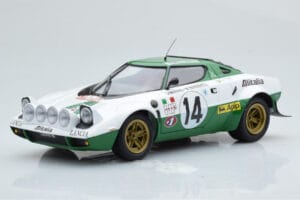
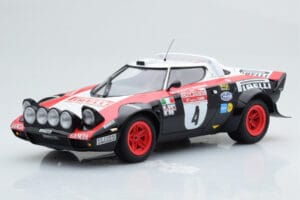
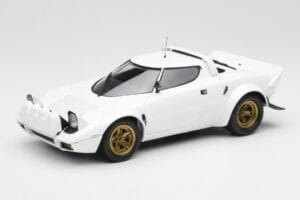
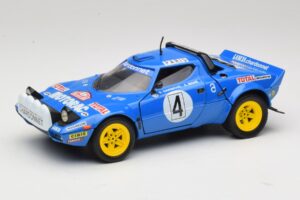
Lancia Stratos Alitalia #14 S. Munari / M. Mannucci Winners Rally Monte Carlo 1975 Minichamps 1:18
Only 2 left
Price:
131.00 €
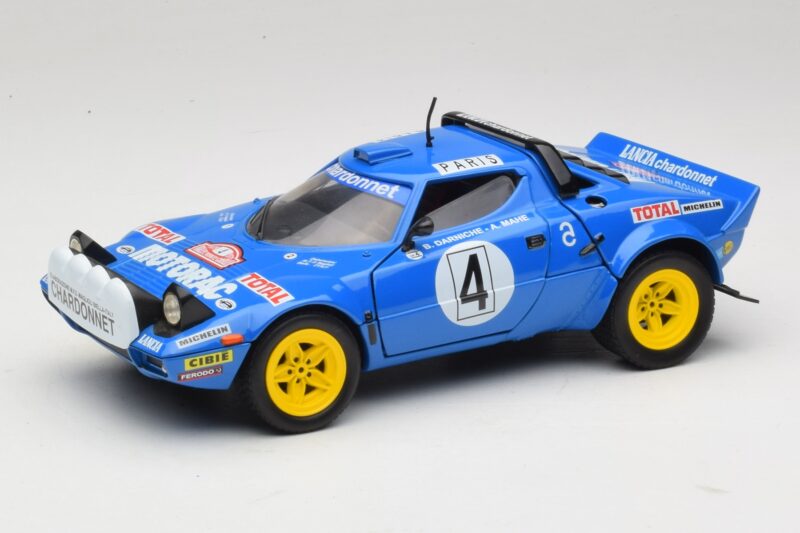
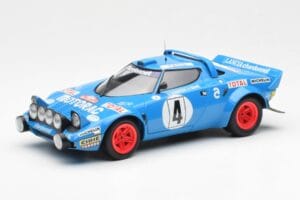
TL;DR: The Solido Lancia Stratos HF 1:18 Monte Carlo 1979 is a diecast replica in the #4 Darniche and Mahe rally livery, with opening parts and a short wedge body about 20 cm long. It suits collectors of 1970s rally cars and classic WRC history.
The Lancia Stratos was designed with one purpose: winning rallies. The Solido Lancia Stratos HF 1:18 Monte Carlo 1979 shows it in the colors of the #4 car driven by Bernard Darniche and co-driver Alain Mahe, and its stubby wedge shape, wide stance and rally markings make it one of the most visually distinctive cars a 1970s competition shelf can hold.
Unlike most rally cars of its era, the Stratos was not adapted from a road car. Lancia built it as a competition machine first, with a Ferrari Dino V6 mounted behind the seats and a very short wheelbase that made it extremely agile on twisting stages. Bertone styled the body, with Marcello Gandini credited for the shape, and the wedge profile, wraparound windshield and wide fenders gave it an unmistakable look. Lancia took three consecutive manufacturer titles in the mid-1970s with the car, so its presence in any rally collection is well earned.
The 1979 Monte Carlo Rally was won by Bernard Darniche and Alain Mahe in a Stratos, a result that gave the aging car one last major victory against newer rivals. The model carries the #4 race number and the crew's names, so it represents a specific competition moment rather than a generic rally Stratos. Check the decals and graphics against photographs of the real car: placement, alignment and sharpness of the printed details are what separate a careful rally model from a casual one, and on a competition livery they carry much of the visual story.
At about 20 cm, the Stratos is one of the shortest sports cars you can find at 1:18, and the zinc-alloy body makes it feel dense and compact in the hand. Diecast brings durability, which suits a car with such exaggerated, wide fenders that stick out where fingers naturally grip. Paint and livery graphics on a metal body should look crisp and even: examine the edges of the printed numbers and the borders between color areas under a lamp. Diecast tolerances are broader than resin, so panel gaps run slightly wider, which fits a purpose-built competition car whose panels were never meant to be perfect.
This model has opening parts, which adds interest on a car whose mechanical layout was central to its design. Move any hinged panel slowly and confirm that it returns flush, with no snagging against neighboring bodywork. On a car with wide fenders and small cabin, hinged sections are compact, so lift the model from the lower body and not from a panel. Because competition liveries include decals and printed details near panel edges, repeated opening can wear them, so keep the parts closed for display and open them occasionally for inspection or photography.
The Stratos is small, wide and angular, so it looks best angled slightly to show the fender flares and the wedge nose together. A low shelf viewpoint emphasizes its squat stance. Positioned on a dark surface, the livery colors pop, and on a lighter one the black elements and wheels stand out as strong contrast points.
Use a directional light that rakes along the flanks, picking out the fender curves and the decal edges. Avoid direct sunlight, which can dull painted surfaces and graphics over many years. Dust with a soft brush, taking care around mirrors, lamps and other small exterior parts that can snag on cloth. Leave some space on both sides so the wide stance is not crowded.
The Stratos works as the anchor for a 1970s rally collection, and its short wedge shape contrasts with the longer, more conventional rally cars of the decade. Solido's diecast sits at an accessible tier: real metal weight, moving parts and a competition livery, without the finishing or part count of hand-assembled pieces. That suits buyers who want a rally icon they can handle and display without worry. Anyone planning to order should note that this is a specific livery from a specific rally, so it pairs best with other models from the same event or era. A Stratos in competition colors tells a rally story that a plain road car cannot.