New arrival
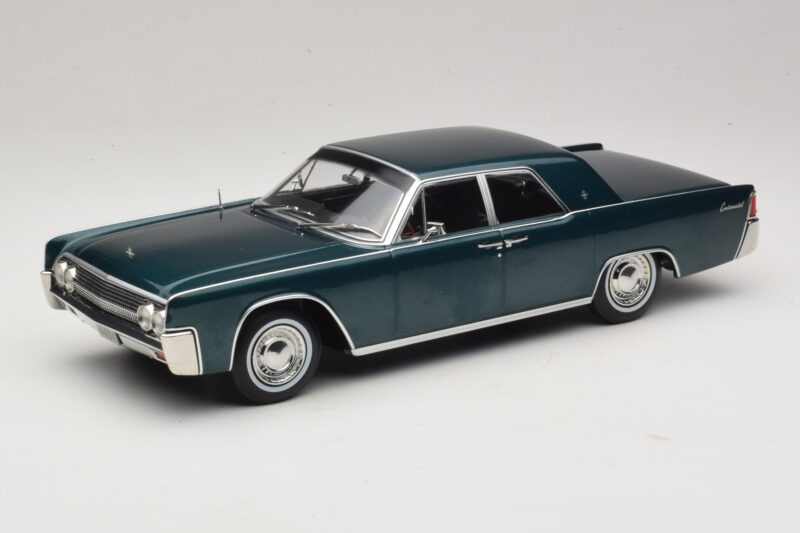
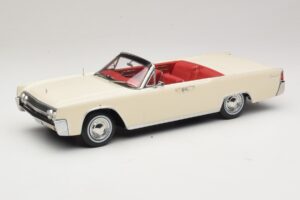
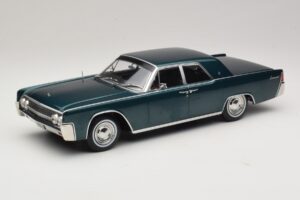
TL;DR: KK-Scale's 1:18 diecast Lincoln Continental reproduces the 1963 fourth-generation sedan in dark green metallic, the trim tied to the car's screen appearance in the Matrix Reloaded and Matrix Revolutions films. A sealed one-piece body with the model's famous rear-hinged door styling captured on the outside.
Elwood Engel's 1961 Lincoln Continental redesign introduced rear-hinged doors and a flat, formal silhouette that stayed in production with only detail changes through 1963, the year this casting represents. Decades later, that same shape found a second life on screen in the Matrix sequels. KK-Scale's dark green metallic 1:18 casting carries both stories in one shell.
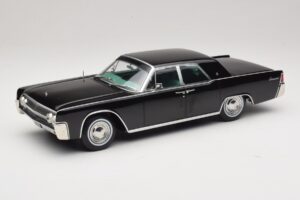
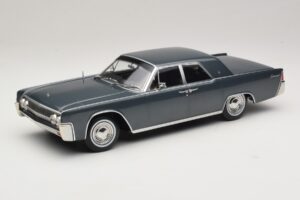
The fourth-generation Continental's most famous feature is its rear-hinged doors, popularly nicknamed suicide doors, a configuration Lincoln used for genuine styling and entry advantage on the real car. This casting is a single fixed shell with no opening parts at all, so the door design shows up entirely in surface treatment: the reversed door line and handle placement are reproduced in the body's shut lines and trim rather than through functioning hinges. That's the correct trade for a model at this tier, and it lets KK-Scale hold tighter, more consistent panel gaps than an articulated version of the same casting typically achieves.
Dark green metallic paint carries real depth under a display lamp, visible flake in the clear coat rather than a flat single-stage finish, a tone that suits the Continental's serious, formal character. The flat-topped fenders and slab sides that defined Engel's design are cast with crisp, straight edges, and the chrome window surrounds, a signature detail on this generation, are plated rather than painted. Wheels carry the correct period hubcap pattern, and the grille's horizontal bar theme is reproduced with fine, separated detail rather than a single molded block.
Lincoln's 1961 redesign, overseen by Elwood Engel, abandoned the chrome-heavy excess of the 1950s for a flat, unornamented formality that looked radically modern against its contemporaries, and the design held through 1969 with only minor yearly updates. The rear-hinged doors weren't a gimmick; they improved rear-seat access on a car this long and low, a genuine engineering solution rather than pure style. By 1963, the formula was well established, giving Lincoln a halo model that defined the brand's identity for the entire decade.
That same unmistakable silhouette later resurfaced on screen in the Matrix sequels, Reloaded and Revolutions, where its flat panels and formal stance read clearly even in fast-moving action sequences, a shape distinctive enough to register at a glance decades after its debut. This particular dark green metallic finish ties directly to that screen appearance, giving the casting a crossover appeal beyond traditional Lincoln collectors, reaching film-car enthusiasts who build displays around specific on-screen vehicles rather than marque history alone.
At 1:18, this Continental's genuinely long body runs close to 27 centimeters, making it one of the larger American sedans a standard cabinet shelf will accommodate, so plan the spacing before adding it to a crowded display. It works equally well in a 1960s Lincoln lineup, alongside the era's convertible variants, or in a film-car collection built around specific screen vehicles rather than marque completism. KK-Scale's diecast price point keeps that dual appeal accessible, well under what a resin-only limited edition covering the same subject would ask. For a sealed-body casting, the real test is whether the door line and chrome surrounds read correctly under light, and on this Continental they do.