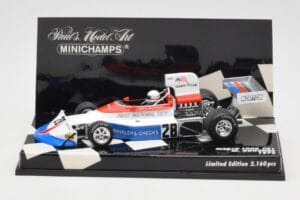
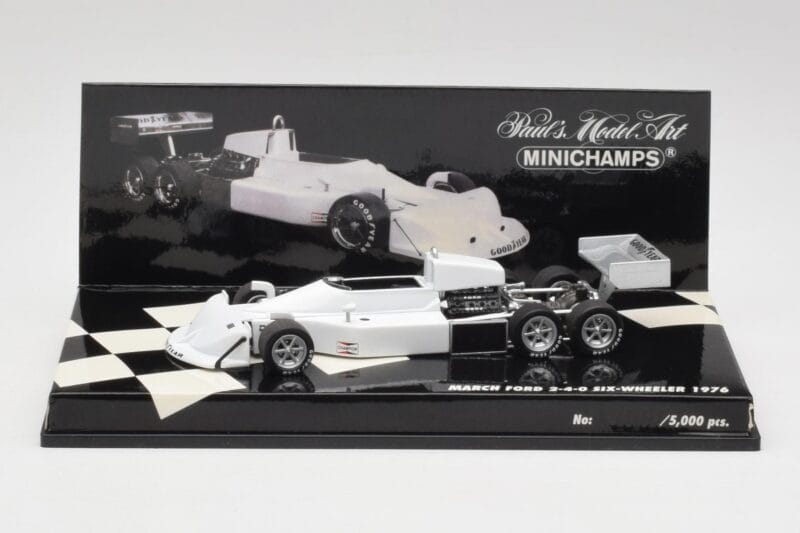
March 2-4-0 Six Wheeler #12 F1 1976 Minichamps 1:43
Sold out
1
/
4
Minichamps' 1:43 diecast March 2-4-0 reproduces the rare six-wheeled Formula 1 experiment, a rear-biased answer to Tyrrell's better-known four-front-wheel P34. A distinctive, compact diecast for collectors chasing 1970s Formula 1's strangest engineering detours.
1 / 4
[{"index":0,"id":"660035","thumb":"https:\/\/models118.com\/wp-content\/uploads\/2026\/06\/f1-march-2-4-0-n12-six-wheeler-1976-minichamps-1-43-300x200.jpg","medium":"https:\/\/models118.com\/wp-content\/uploads\/2026\/06\/f1-march-2-4-0-n12-six-wheeler-1976-minichamps-1-43-800x533.jpg","full":"https:\/\/models118.com\/wp-content\/uploads\/2026\/06\/f1-march-2-4-0-n12-six-wheeler-1976-minichamps-1-43.jpg","srcset":"https:\/\/models118.com\/wp-content\/uploads\/2026\/06\/f1-march-2-4-0-n12-six-wheeler-1976-minichamps-1-43-800x533.jpg 800w, https:\/\/models118.com\/wp-content\/uploads\/2026\/06\/f1-march-2-4-0-n12-six-wheeler-1976-minichamps-1-43-64x43.jpg 64w, https:\/\/models118.com\/wp-content\/uploads\/2026\/06\/f1-march-2-4-0-n12-six-wheeler-1976-minichamps-1-43-300x200.jpg 300w, https:\/\/models118.com\/wp-content\/uploads\/2026\/06\/f1-march-2-4-0-n12-six-wheeler-1976-minichamps-1-43-480x320.jpg 480w, https:\/\/models118.com\/wp-content\/uploads\/2026\/06\/f1-march-2-4-0-n12-six-wheeler-1976-minichamps-1-43.jpg 1800w","sizes":"(max-width: 1023px) 400px, 640px","srcsetAvif":"https:\/\/models118.com\/wp-content\/uploads\/2026\/06\/f1-march-2-4-0-n12-six-wheeler-1976-minichamps-1-43-800x533.jpg.avif 800w, https:\/\/models118.com\/wp-content\/uploads\/2026\/06\/f1-march-2-4-0-n12-six-wheeler-1976-minichamps-1-43-64x43.jpg.avif 64w, https:\/\/models118.com\/wp-content\/uploads\/2026\/06\/f1-march-2-4-0-n12-six-wheeler-1976-minichamps-1-43-300x200.jpg.avif 300w, https:\/\/models118.com\/wp-content\/uploads\/2026\/06\/f1-march-2-4-0-n12-six-wheeler-1976-minichamps-1-43-480x320.jpg.avif 480w, https:\/\/models118.com\/wp-content\/uploads\/2026\/06\/f1-march-2-4-0-n12-six-wheeler-1976-minichamps-1-43.jpg.avif 1800w","srcsetWebp":"https:\/\/models118.com\/wp-content\/uploads\/2026\/06\/f1-march-2-4-0-n12-six-wheeler-1976-minichamps-1-43-800x533.jpg.webp 800w, https:\/\/models118.com\/wp-content\/uploads\/2026\/06\/f1-march-2-4-0-n12-six-wheeler-1976-minichamps-1-43-64x43.jpg.webp 64w, https:\/\/models118.com\/wp-content\/uploads\/2026\/06\/f1-march-2-4-0-n12-six-wheeler-1976-minichamps-1-43-300x200.jpg.webp 300w, https:\/\/models118.com\/wp-content\/uploads\/2026\/06\/f1-march-2-4-0-n12-six-wheeler-1976-minichamps-1-43-480x320.jpg.webp 480w, https:\/\/models118.com\/wp-content\/uploads\/2026\/06\/f1-march-2-4-0-n12-six-wheeler-1976-minichamps-1-43.jpg.webp 1800w","alt":"March 2-4-0 Six Wheeler #12 F1 1976 Minichamps 1:43 436760699 Diecast"},{"index":1,"id":660156,"thumb":"https:\/\/models118.com\/wp-content\/uploads\/2026\/06\/f1-march-2-4-0-n12-six-wheeler-1976-minichamps-1-43-1-300x200.jpg","medium":"https:\/\/models118.com\/wp-content\/uploads\/2026\/06\/f1-march-2-4-0-n12-six-wheeler-1976-minichamps-1-43-1-800x533.jpg","full":"https:\/\/models118.com\/wp-content\/uploads\/2026\/06\/f1-march-2-4-0-n12-six-wheeler-1976-minichamps-1-43-1.jpg","srcset":"https:\/\/models118.com\/wp-content\/uploads\/2026\/06\/f1-march-2-4-0-n12-six-wheeler-1976-minichamps-1-43-1-800x533.jpg 800w, https:\/\/models118.com\/wp-content\/uploads\/2026\/06\/f1-march-2-4-0-n12-six-wheeler-1976-minichamps-1-43-1-64x43.jpg 64w, https:\/\/models118.com\/wp-content\/uploads\/2026\/06\/f1-march-2-4-0-n12-six-wheeler-1976-minichamps-1-43-1-300x200.jpg 300w, https:\/\/models118.com\/wp-content\/uploads\/2026\/06\/f1-march-2-4-0-n12-six-wheeler-1976-minichamps-1-43-1.jpg 1800w","sizes":"(max-width: 1023px) 400px, 640px","srcsetAvif":"https:\/\/models118.com\/wp-content\/uploads\/2026\/06\/f1-march-2-4-0-n12-six-wheeler-1976-minichamps-1-43-1-800x533.jpg.avif 800w, https:\/\/models118.com\/wp-content\/uploads\/2026\/06\/f1-march-2-4-0-n12-six-wheeler-1976-minichamps-1-43-1-64x43.jpg.avif 64w, https:\/\/models118.com\/wp-content\/uploads\/2026\/06\/f1-march-2-4-0-n12-six-wheeler-1976-minichamps-1-43-1-300x200.jpg.avif 300w, https:\/\/models118.com\/wp-content\/uploads\/2026\/06\/f1-march-2-4-0-n12-six-wheeler-1976-minichamps-1-43-1.jpg.avif 1800w","srcsetWebp":"https:\/\/models118.com\/wp-content\/uploads\/2026\/06\/f1-march-2-4-0-n12-six-wheeler-1976-minichamps-1-43-1-800x533.jpg.webp 800w, https:\/\/models118.com\/wp-content\/uploads\/2026\/06\/f1-march-2-4-0-n12-six-wheeler-1976-minichamps-1-43-1-64x43.jpg.webp 64w, https:\/\/models118.com\/wp-content\/uploads\/2026\/06\/f1-march-2-4-0-n12-six-wheeler-1976-minichamps-1-43-1-300x200.jpg.webp 300w, https:\/\/models118.com\/wp-content\/uploads\/2026\/06\/f1-march-2-4-0-n12-six-wheeler-1976-minichamps-1-43-1.jpg.webp 1800w","alt":"March 2-4-0 Six Wheeler #12 F1 1976 Minichamps 1:43 436760699 Diecast - image 2 of 4"},{"index":2,"id":660290,"thumb":"https:\/\/models118.com\/wp-content\/uploads\/2026\/06\/f1-march-2-4-0-n12-six-wheeler-1976-minichamps-1-43-2-300x200.jpg","medium":"https:\/\/models118.com\/wp-content\/uploads\/2026\/06\/f1-march-2-4-0-n12-six-wheeler-1976-minichamps-1-43-2-800x533.jpg","full":"https:\/\/models118.com\/wp-content\/uploads\/2026\/06\/f1-march-2-4-0-n12-six-wheeler-1976-minichamps-1-43-2.jpg","srcset":"https:\/\/models118.com\/wp-content\/uploads\/2026\/06\/f1-march-2-4-0-n12-six-wheeler-1976-minichamps-1-43-2-800x533.jpg 800w, https:\/\/models118.com\/wp-content\/uploads\/2026\/06\/f1-march-2-4-0-n12-six-wheeler-1976-minichamps-1-43-2-64x43.jpg 64w, https:\/\/models118.com\/wp-content\/uploads\/2026\/06\/f1-march-2-4-0-n12-six-wheeler-1976-minichamps-1-43-2-300x200.jpg 300w, https:\/\/models118.com\/wp-content\/uploads\/2026\/06\/f1-march-2-4-0-n12-six-wheeler-1976-minichamps-1-43-2.jpg 1800w","sizes":"(max-width: 1023px) 400px, 640px","srcsetAvif":"https:\/\/models118.com\/wp-content\/uploads\/2026\/06\/f1-march-2-4-0-n12-six-wheeler-1976-minichamps-1-43-2-800x533.jpg.avif 800w, https:\/\/models118.com\/wp-content\/uploads\/2026\/06\/f1-march-2-4-0-n12-six-wheeler-1976-minichamps-1-43-2-64x43.jpg.avif 64w, https:\/\/models118.com\/wp-content\/uploads\/2026\/06\/f1-march-2-4-0-n12-six-wheeler-1976-minichamps-1-43-2-300x200.jpg.avif 300w, https:\/\/models118.com\/wp-content\/uploads\/2026\/06\/f1-march-2-4-0-n12-six-wheeler-1976-minichamps-1-43-2.jpg.avif 1800w","srcsetWebp":"https:\/\/models118.com\/wp-content\/uploads\/2026\/06\/f1-march-2-4-0-n12-six-wheeler-1976-minichamps-1-43-2-800x533.jpg.webp 800w, https:\/\/models118.com\/wp-content\/uploads\/2026\/06\/f1-march-2-4-0-n12-six-wheeler-1976-minichamps-1-43-2-64x43.jpg.webp 64w, https:\/\/models118.com\/wp-content\/uploads\/2026\/06\/f1-march-2-4-0-n12-six-wheeler-1976-minichamps-1-43-2-300x200.jpg.webp 300w, https:\/\/models118.com\/wp-content\/uploads\/2026\/06\/f1-march-2-4-0-n12-six-wheeler-1976-minichamps-1-43-2.jpg.webp 1800w","alt":"March 2-4-0 Six Wheeler #12 F1 1976 Minichamps 1:43 436760699 Diecast - image 3 of 4"},{"index":3,"id":660417,"thumb":"https:\/\/models118.com\/wp-content\/uploads\/2026\/06\/f1-march-2-4-0-n12-six-wheeler-1976-minichamps-1-43-3-300x200.jpg","medium":"https:\/\/models118.com\/wp-content\/uploads\/2026\/06\/f1-march-2-4-0-n12-six-wheeler-1976-minichamps-1-43-3-800x533.jpg","full":"https:\/\/models118.com\/wp-content\/uploads\/2026\/06\/f1-march-2-4-0-n12-six-wheeler-1976-minichamps-1-43-3.jpg","srcset":"https:\/\/models118.com\/wp-content\/uploads\/2026\/06\/f1-march-2-4-0-n12-six-wheeler-1976-minichamps-1-43-3-800x533.jpg 800w, https:\/\/models118.com\/wp-content\/uploads\/2026\/06\/f1-march-2-4-0-n12-six-wheeler-1976-minichamps-1-43-3-64x43.jpg 64w, https:\/\/models118.com\/wp-content\/uploads\/2026\/06\/f1-march-2-4-0-n12-six-wheeler-1976-minichamps-1-43-3-300x200.jpg 300w, https:\/\/models118.com\/wp-content\/uploads\/2026\/06\/f1-march-2-4-0-n12-six-wheeler-1976-minichamps-1-43-3.jpg 1800w","sizes":"(max-width: 1023px) 400px, 640px","srcsetAvif":"https:\/\/models118.com\/wp-content\/uploads\/2026\/06\/f1-march-2-4-0-n12-six-wheeler-1976-minichamps-1-43-3-800x533.jpg.avif 800w, https:\/\/models118.com\/wp-content\/uploads\/2026\/06\/f1-march-2-4-0-n12-six-wheeler-1976-minichamps-1-43-3-64x43.jpg.avif 64w, https:\/\/models118.com\/wp-content\/uploads\/2026\/06\/f1-march-2-4-0-n12-six-wheeler-1976-minichamps-1-43-3-300x200.jpg.avif 300w, https:\/\/models118.com\/wp-content\/uploads\/2026\/06\/f1-march-2-4-0-n12-six-wheeler-1976-minichamps-1-43-3.jpg.avif 1800w","srcsetWebp":"https:\/\/models118.com\/wp-content\/uploads\/2026\/06\/f1-march-2-4-0-n12-six-wheeler-1976-minichamps-1-43-3-800x533.jpg.webp 800w, https:\/\/models118.com\/wp-content\/uploads\/2026\/06\/f1-march-2-4-0-n12-six-wheeler-1976-minichamps-1-43-3-64x43.jpg.webp 64w, https:\/\/models118.com\/wp-content\/uploads\/2026\/06\/f1-march-2-4-0-n12-six-wheeler-1976-minichamps-1-43-3-300x200.jpg.webp 300w, https:\/\/models118.com\/wp-content\/uploads\/2026\/06\/f1-march-2-4-0-n12-six-wheeler-1976-minichamps-1-43-3.jpg.webp 1800w","alt":"March 2-4-0 Six Wheeler #12 F1 1976 Minichamps 1:43 436760699 Diecast - image 4 of 4"}]
March 2-4-0 Six Wheeler #12 F1 1976 Minichamps 1:43
Current price:
85.00 €
Sold out
This model is currently sold out. Enter your email and we'll let you know when it's back in stock.
Shipping to 79 countries
Worldwide delivery
Prices incl. 23% VAT
No hidden costs
Shipping rates by country
Tracked & insured
Pay in EUR €
Local currency
Specifications
- Brand
- March
- Manufacturer
- Minichamps
- Scale
- 1:43
- Material
- Diecast
- Model Condition
- Used Model
- SKU
- 436760699
- Year
- 1976
- Era
- 1970s
- Body Type
- Formula Models
- Vehicle Class
- Formula 1 Models
- Openable Parts
- No
- Packaging Condition
- Traces of Storage
- Model Type
- Race Models
- EAN / GTIN
- 4012138053304
100% authentic
5-layer carton
Foam-filled interior
Easy returns
14 days, no questions asked
Secure payment
256-bit SSL encryption
About the March 2-4-0 Six Wheeler #12 F1 1976 Minichamps 1:43
TL;DR: Minichamps' 1:43 diecast March 2-4-0 reproduces the rare six-wheeled Formula 1 project, an experimental rear-biased layout built as a counterpoint to Tyrrell's better-known four-front-wheel P34. A compact diecast for collectors chasing 1970s Formula 1's stranger engineering detours.
Tyrrell's P34 gets most of the attention when six-wheeled Formula 1 comes up, but March explored the same idea from the opposite direction, adding extra wheels at the rear instead of the front. Minichamps' 1:43 diecast preserves that lesser-known experiment.
An Unusual Layout, Carefully Reproduced at 1:43
Getting a six-wheeled F1 car's proportions right matters more than usual, since the extra wheel pair changes the whole visual rhythm of the car compared to a standard four-wheel layout. Minichamps' diecast holds the March's rear-biased wheel arrangement clearly, distinct enough at a glance from Tyrrell's front-heavy P34 that the two don't read as the same idea executed twice. The #12 livery prints cleanly onto the narrow, period-correct 1970s F1 bodywork, and the compact 1:43 scale suits a subject this specialized well, letting a collector display an unusual engineering footnote without dedicating hero-piece shelf space to it. Handled directly, the diecast carries a solid, honest weight typical of the scale.
Formula 1's Brief Six-Wheel Experiment
The mid-1970s produced a short window where teams genuinely explored extra wheels as a way to cut aerodynamic drag or improve mechanical grip, and while Tyrrell's four-small-front-wheel P34 is the configuration most remembered today, March approached the same problem from the rear axle instead. Projects like the 2-4-0 rarely made it to a full championship campaign, but they represent a period when Formula 1 regulations still allowed genuinely radical chassis experimentation before six-wheel layouts were eventually outlawed. For collectors focused on the sport's engineering oddities rather than its race winners, that experimental status is exactly the appeal.
Telling Both Sides of the Six-Wheel Story
Paired with a Tyrrell P34, this March tells both sides of F1's six-wheel story, a small but genuinely rare corner of 1970s motorsport history.
From the same collection
Last one
Used
Collectors also bought
Browse all 1:43
Used

Last one
Used
Used

Last one
Used
Back in stock
Used

Ford Fiesta RS WRC Ford Abu Dhabi #3 M. Hirvonen / J. Lehtinen Winner Rally Australia 2011 Minichamps 1:18
Only 2 left
Price:
123.00 €
Last one
Used
Mercedes SLS AMG GT3 HTP Motorsport Persson #84 B. Schneider / M. Buhk / M. Gotz Winners 24 Hours of Spa-Francorchamps 2013 Minichamps 1:18
Only 1 left
Price:
110.00 €
Last one
Back in stock

Ford GT Chip Ganassi Racing UK #67 M. Franchitti / A. Priaulx / H. Tincknell 24 Hours of Le Mans 2016 Minichamps 1:18
Only 1 left
Price:
94.00 €
Last one
Back in stock
BMW M6 GT3 Rowe Racing #98 A. Graf / R. Westbrook / N. Catsburg / N. Paltalla 24 Hours of Nurburgring 2016 Minichamps 1:18
Only 1 left
Price:
169.00 €
Recently viewed
{"id":660477,"name":"March 2-4-0 Six Wheeler #12 F1 1976 Minichamps 1:43","price":"85.00 €<\/span><\/bdi><\/span>","image":"https:\/\/models118.com\/wp-content\/uploads\/2026\/06\/f1-march-2-4-0-n12-six-wheeler-1976-minichamps-1-43-400x400.jpg","permalink":"https:\/\/models118.com\/march-2-4-0-six-wheeler-12-f1-1976-minichamps-1-43-436760699\/","brand":"March"}