Last one
Used

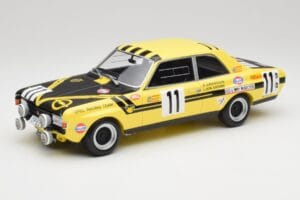
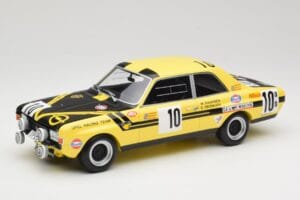
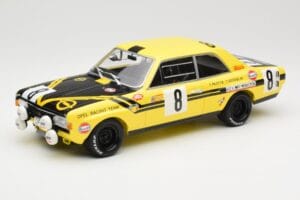
Opel Commodore A Steinmetz #11 E. von Bayern / Johansson 24 Hours of Spa 1970 Minichamps 1:18
Only 1 left
Price:
109.00 €
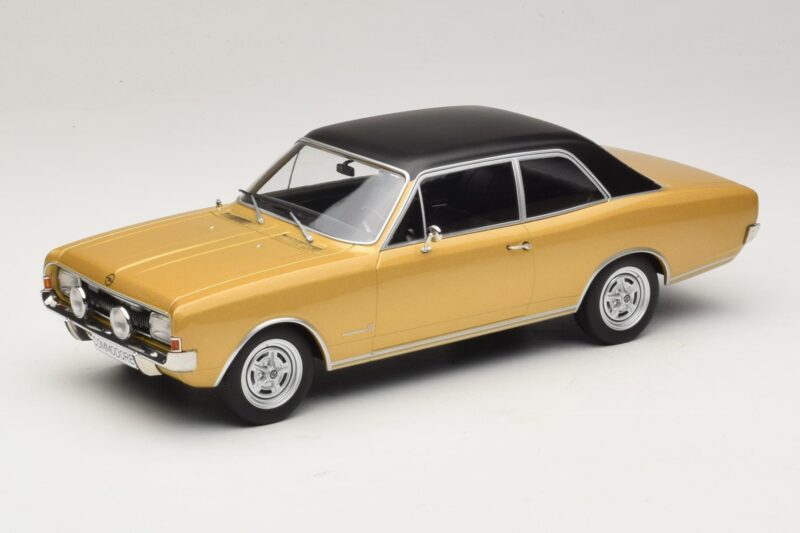
TL;DR: MCG's 1:18 diecast Opel Commodore A reproduces the 1967 six-cylinder executive sedan in period-correct beige. Cast in zinc alloy as a sealed one-piece body, it holds real weight and deep paint gloss at an accessible price point, a solid entry for 1960s German sedan collectors who want something beyond the common Rekord and Kapitän.
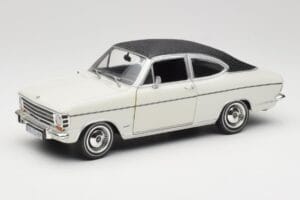
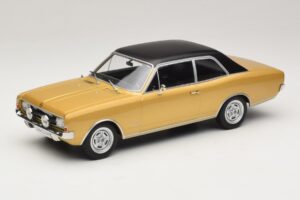
Opel positioned the Commodore A between its bread-and-butter Rekord and its flagship Kapitän, giving buyers a six-cylinder engine and a slightly sportier face without the Kapitän's size or price. MCG reproduces that 1967 model in 1:18 diecast, finished in a beige shade typical of the era's conservative color palette.
The Commodore A shared its basic body and platform with the four-cylinder Rekord C, but Opel gave it a longer front end to house a six-cylinder engine and a distinct grille to mark the difference at a glance. That combination made it a genuine middle option for German buyers who wanted more performance and prestige than a Rekord offered without stepping up to the considerably larger and pricier Kapitän. It sold well enough across its short run to justify a second generation, the Commodore B, launched in 1972.
Beige, along with various greys and muted greens, dominated the color charts of mainstream German sedans through the late 1960s, a period when flashier colors were largely reserved for sports and coupe models. This finish reflects that conservative palette rather than a rare special-order shade, which makes it a historically honest choice for anyone building a period-accurate shelf rather than chasing a car that never actually looked this way in period.
Diecast at this scale carries real heft, and lifting a Commodore A model from its packaging signals that immediately compared to a lighter resin piece. MCG builds this Commodore as a sealed, one-piece zinc-alloy body, which means the entire visual story sits in the exterior: the flat sedan flanks, the period-correct grille, and the way the roofline sits relative to the greenhouse. Metal construction tolerates handling and years of display without the brittleness resin can develop, a practical advantage for a car this understated.
Unlike a modern car's compound curves, the Commodore A's boxy 1960s sedan shape is relatively forgiving for a die to reproduce accurately, and MCG's finish shows it: flat panels stay flat, and the beige gloss reads evenly across the hood and trunk lid under a display light. A sealed body keeps the shut lines around the doors and trunk consistent rather than variable, which matters more on a subject this visually plain, where finish quality is the whole story.
At 1:18, a sedan of the Commodore A's size comes out around 24 to 25 centimeters long, fitting comfortably into a standard cabinet row alongside contemporary Mercedes and BMW sedans from the same decade. Its understated color and shape mean it rewards being placed beside more colorful or sportier period pieces rather than standing alone, where its honest, everyday character provides a useful visual counterpoint. German sedan collecting from this era often organizes around manufacturer generations, and the Commodore A fills a genuine gap between the far more commonly modeled Rekord and Kapitän, letting a collector complete Opel's full 1960s range rather than settling for the two best-known entries.
MCG operates at an accessible price point compared to the resin specialists working the same era, and a Commodore A is exactly the kind of subject where that approach makes sense: a mainstream sedan that never demanded museum-grade reproduction to tell its story honestly. What it lacks in ultra-fine cast detail compared to a hand-finished resin piece, it makes up in metal heft and a price that invites building out a full Opel lineup rather than a single hero piece. For anyone assembling a German sedan wall spanning Rekord, Commodore, and Kapitän, this beige Commodore A is the accessible way to fill the middle chapter.