Last one
Used
This model is currently sold out. Enter your email and we'll let you know when it's back in stock.
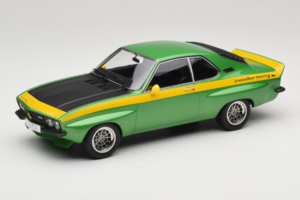
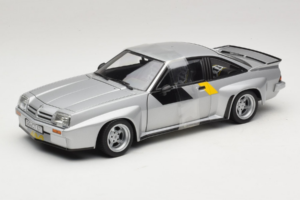
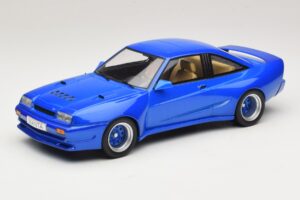
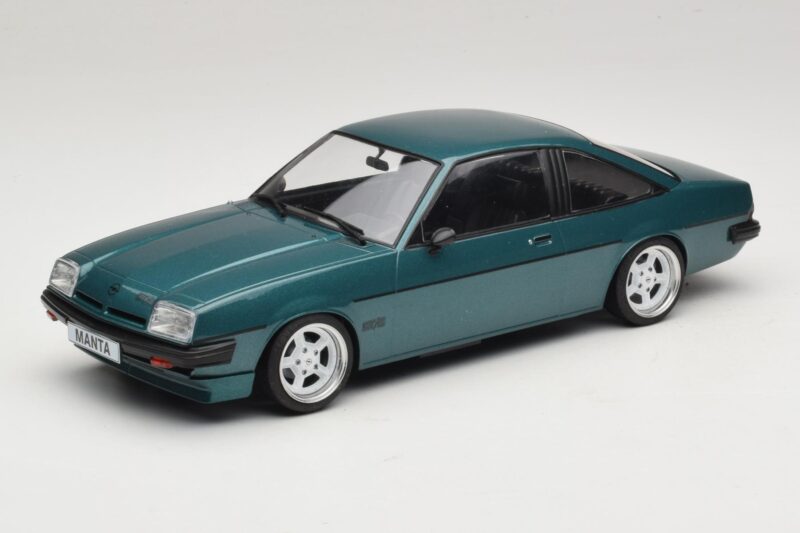
TL;DR: MCG's 1:18 diecast Opel Manta B pairs green metallic paint with aftermarket-style custom wheels, built as a sealed one-piece zinc-alloy body with tight, continuous shut lines rather than opening panels. The deeper wheel design fills the arches the way period Opel tuners chased, on a coupe that never reached American Opel dealers new.
Wheels change a car's stance more than almost any other single part, and this Manta B leans into that truth. MCG pairs a factory-plausible green metallic with a deeper, more aggressive wheel design than Opel's own catalog offered, the kind of upgrade period Manta owners reached for first.
Opel's original wheel options on the Manta B were modest by design: steel wheels or basic alloys that suited a mid-market coupe rather than a performance statement. Owners looking to change the car's character usually started there, since a wider, deeper wheel filled the arch and dropped the visual center of gravity without requiring a single body modification. That made wheels the cheapest, fastest way to transform the Manta B's stance, well before flared arches or lowered suspension entered the picture. MCG's custom-wheel variant recreates that first step in the modification chain rather than jumping straight to a full widebody build.
Green metallic sat comfortably within Opel's factory palette for the era, which makes this a color a Manta B could genuinely have worn from new before an owner ever touched the wheels. That grounding matters for the model's credibility: rather than pairing an invented shade with an invented wheel design, this casting keeps the body finish believable while letting the wheels carry the customization story. Under direct light the metallic flake sits with real depth against the darker wheel finish, and the contrast draws the eye toward the arch opening exactly where a period modifier would have wanted it.
MCG builds this Manta B as one sealed zinc-alloy casting, with no doors, hood, or trunk lid that move. On a wheel-focused variant like this one, that construction choice works in the model's favor: with nothing else on the body competing for attention, the eye goes straight to the arch opening and the wheel design filling it, exactly where the real-world modification would draw a viewer's eye too. The metal body carries genuine weight, noticeably denser than a resin casting at the same scale, and that heft keeps the model planted rather than feeling hollow.
Shut lines around the doors and hatch stay tight and continuous, since there are no hinge tolerances for the casting to accommodate, and that precision extends to the wheel wells, where the arch lip meets the tire sidewall with a consistent, even gap all the way around. Paint depth on the green holds evenly from the roof to the rocker panel, with no fade where the body catches a shadow from the wider wheel and tire underneath it. That evenness matters most exactly where a viewer's eye lands first: the gap between tire and arch.
MCG's Manta B lineup covers factory-style colors, tuning-house liveries like a Mattig-inspired widebody, and this wheel-focused custom variant, and each targets a slightly different collecting instinct. A buyer chasing factory accuracy wants the stock-color version; a buyer chasing the tuning-house story wants the widebody; a buyer who remembers wheels as the entry point into modifying cars in period wants this one. That last angle is underserved by most manufacturers, who tend to jump straight from stock to full custom without a middle step, so this variant fills a real gap in how the Manta B's aftermarket history gets told. Pricing sits in the same accessible diecast bracket as the rest of the range, meaning the decision comes down entirely to which stage of the car's modification story a collector wants represented on the shelf.
At roughly 20 centimeters in 1:18, this Manta B occupies the same footprint as its stablemates in the range, which makes lining up several variants side by side an easy way to show a modification progression rather than a random assortment of colors. Placed between a stock-wheeled Manta B and a full Mattig widebody, this piece reads as the middle chapter: the point where a period owner had committed to changing the car's character but hadn't gone all the way. Because the Manta B never reached American Opel dealers, most US collectors are building this history from scratch, and a wheel-first progression is an intuitive way to explain how a stock coupe slowly became a period tuner icon.