Last one
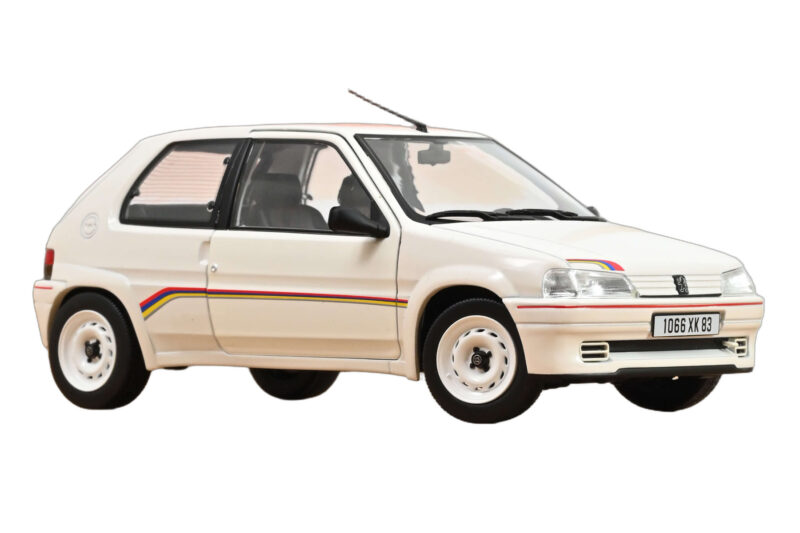
TL;DR: Norev's 1:18 Peugeot 106 Rallye reproduces the 1993 homologation hatch in white diecast, with doors and hood that open over a deliberately stripped cabin. Peugeot built the Rallye around weight reduction rather than power, fitting a 1.3-liter engine into a car light enough to punch above its displacement. A mid-tier entry point into French hot hatch collecting.
Peugeot's approach to homologation specials in the 1990s followed a consistent formula: strip weight rather than add power, and let a small engine feel faster than its numbers suggest. The 106 Rallye, launched in 1993, applied that philosophy to Peugeot's smallest hatchback, and this white diecast reproduces the result exactly as buyers found it on the showroom floor.
Peugeot had already proven the concept with the 205 Rallye a few years earlier, a stripped-out hatch built to qualify for lower rallying classes by trading equipment for lightness rather than chasing raw horsepower. The 106 Rallye continued that lineage on the smaller platform, fitted with a 1.3-liter engine that produced modest peak output but delivered it through a car weighing considerably less than the mainstream 106 range.
Steel wheels in place of alloys, minimal sound deadening, and a no-frills interior were not cost-cutting compromises on this car; they were the entire pitch, a genuine driver's tool built for club rallying and enthusiast buyers who valued response over refinement. That honesty about what the car was, and was not, is part of what makes the Rallye a respected name among French hot hatch collectors decades later.
The 106's compact dimensions leave little room for a diecast manufacturer to hide construction shortcuts, and Norev's zinc alloy casting holds the hatchback's boxy but purposeful stance without looking chunky or oversized in the wheel arches. The Rallye's characteristic grey bumpers and lack of body-color trim are reproduced as distinct panel colors rather than a single painted shell, matching how the real car left the factory.
The doors and hood open on this casting, revealing a cabin styled to match the Rallye's deliberately basic equipment level and an engine bay housing the compact 1.3-liter unit. That functional detail matters on a homologation special, since the sparse cabin is as much a part of the car's identity as anything visible from the outside.
White was the signature color for the 106 Rallye, chosen as much for its motorsport association as for cost, and Norev's finish holds a clean, slightly warm white rather than a stark modern shade, consistent with early 1990s factory paint. The contrast between the white body and the grey unpainted bumpers is sharp and deliberate, exactly as the real car presented it, and that contrast is one of the clearest ways to judge whether a Rallye reproduction gets the details right. Steel wheel replicas rather than alloy wheels reinforce the stripped-down identity at a glance. At 1:18, the Rallye measures a compact 21 centimeters or so, small enough to display several examples of period hot hatches together without crowding a shelf.
For collectors building a French hot hatch theme, the 106 Rallye represents the purist end of the spectrum, the car built for driving rather than showing off, and it pairs naturally with other Peugeot performance hatches from the same decade that took a more powerful, less austere approach. Its accessible price and compact footprint make it an easy first purchase in that theme, with genuine homologation history behind a modest sticker price.