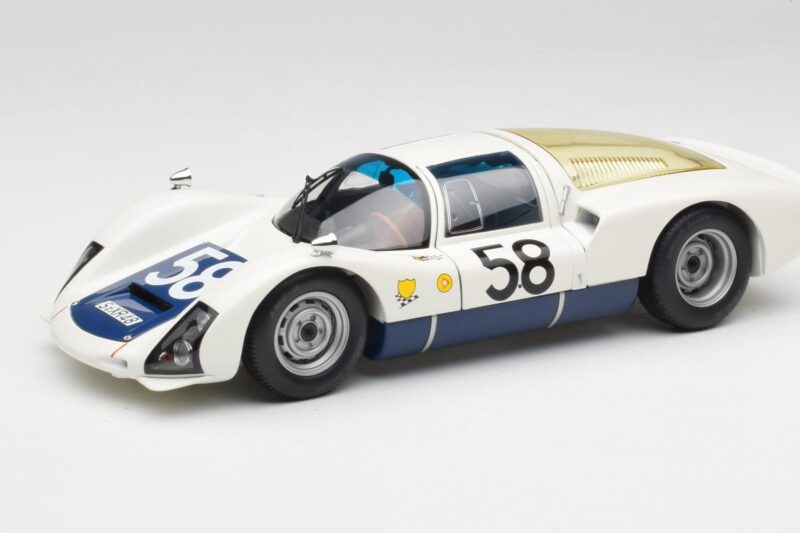
Porsche 906K #58 G. Klass / R. Stommelen 24 Hours of Le Mans 1966 Minichamps 1:18
Sold out
1
/
8
Minichamps' 1:18 diecast reproduces the Porsche 906K #58, the short-tail Carrera 6 that G. Klass and R. Stommelen drove at the 1966 24 Hours of Le Mans. Paired against long-tail 906 variants, this compact body shows Porsche's dual-specification approach to the same race.
1 / 8
[{"index":0,"id":"581201","thumb":"https:\/\/models118.com\/wp-content\/uploads\/2026\/06\/porsche-906k-n58-gklass-rstommelen-24h-le-mans-1966-minichamps-1-18-300x200.jpg","medium":"https:\/\/models118.com\/wp-content\/uploads\/2026\/06\/porsche-906k-n58-gklass-rstommelen-24h-le-mans-1966-minichamps-1-18-800x533.jpg","full":"https:\/\/models118.com\/wp-content\/uploads\/2026\/06\/porsche-906k-n58-gklass-rstommelen-24h-le-mans-1966-minichamps-1-18.jpg","srcset":"https:\/\/models118.com\/wp-content\/uploads\/2026\/06\/porsche-906k-n58-gklass-rstommelen-24h-le-mans-1966-minichamps-1-18-800x533.jpg 800w, https:\/\/models118.com\/wp-content\/uploads\/2026\/06\/porsche-906k-n58-gklass-rstommelen-24h-le-mans-1966-minichamps-1-18-64x43.jpg 64w, https:\/\/models118.com\/wp-content\/uploads\/2026\/06\/porsche-906k-n58-gklass-rstommelen-24h-le-mans-1966-minichamps-1-18-300x200.jpg 300w, https:\/\/models118.com\/wp-content\/uploads\/2026\/06\/porsche-906k-n58-gklass-rstommelen-24h-le-mans-1966-minichamps-1-18-480x320.jpg 480w, https:\/\/models118.com\/wp-content\/uploads\/2026\/06\/porsche-906k-n58-gklass-rstommelen-24h-le-mans-1966-minichamps-1-18.jpg 1800w","sizes":"(max-width: 1023px) 400px, 640px","srcsetAvif":"https:\/\/models118.com\/wp-content\/uploads\/2026\/06\/porsche-906k-n58-gklass-rstommelen-24h-le-mans-1966-minichamps-1-18-800x533.jpg.avif 800w, https:\/\/models118.com\/wp-content\/uploads\/2026\/06\/porsche-906k-n58-gklass-rstommelen-24h-le-mans-1966-minichamps-1-18-64x43.jpg.avif 64w, https:\/\/models118.com\/wp-content\/uploads\/2026\/06\/porsche-906k-n58-gklass-rstommelen-24h-le-mans-1966-minichamps-1-18-300x200.jpg.avif 300w, https:\/\/models118.com\/wp-content\/uploads\/2026\/06\/porsche-906k-n58-gklass-rstommelen-24h-le-mans-1966-minichamps-1-18-480x320.jpg.avif 480w, https:\/\/models118.com\/wp-content\/uploads\/2026\/06\/porsche-906k-n58-gklass-rstommelen-24h-le-mans-1966-minichamps-1-18.jpg.avif 1800w","srcsetWebp":"https:\/\/models118.com\/wp-content\/uploads\/2026\/06\/porsche-906k-n58-gklass-rstommelen-24h-le-mans-1966-minichamps-1-18-800x533.jpg.webp 800w, https:\/\/models118.com\/wp-content\/uploads\/2026\/06\/porsche-906k-n58-gklass-rstommelen-24h-le-mans-1966-minichamps-1-18-64x43.jpg.webp 64w, https:\/\/models118.com\/wp-content\/uploads\/2026\/06\/porsche-906k-n58-gklass-rstommelen-24h-le-mans-1966-minichamps-1-18-300x200.jpg.webp 300w, https:\/\/models118.com\/wp-content\/uploads\/2026\/06\/porsche-906k-n58-gklass-rstommelen-24h-le-mans-1966-minichamps-1-18-480x320.jpg.webp 480w, https:\/\/models118.com\/wp-content\/uploads\/2026\/06\/porsche-906k-n58-gklass-rstommelen-24h-le-mans-1966-minichamps-1-18.jpg.webp 1800w","alt":"Porsche 906K #58 G. Klass \/ R. Stommelen 24 Hours of Le Mans 1966 Minichamps 1:18 100666158 Diecast"},{"index":1,"id":581332,"thumb":"https:\/\/models118.com\/wp-content\/uploads\/2026\/06\/porsche-906k-n58-gklass-rstommelen-24h-le-mans-1966-minichamps-1-18-1-300x200.jpg","medium":"https:\/\/models118.com\/wp-content\/uploads\/2026\/06\/porsche-906k-n58-gklass-rstommelen-24h-le-mans-1966-minichamps-1-18-1-800x533.jpg","full":"https:\/\/models118.com\/wp-content\/uploads\/2026\/06\/porsche-906k-n58-gklass-rstommelen-24h-le-mans-1966-minichamps-1-18-1.jpg","srcset":"https:\/\/models118.com\/wp-content\/uploads\/2026\/06\/porsche-906k-n58-gklass-rstommelen-24h-le-mans-1966-minichamps-1-18-1-800x533.jpg 800w, https:\/\/models118.com\/wp-content\/uploads\/2026\/06\/porsche-906k-n58-gklass-rstommelen-24h-le-mans-1966-minichamps-1-18-1-64x43.jpg 64w, https:\/\/models118.com\/wp-content\/uploads\/2026\/06\/porsche-906k-n58-gklass-rstommelen-24h-le-mans-1966-minichamps-1-18-1-300x200.jpg 300w, https:\/\/models118.com\/wp-content\/uploads\/2026\/06\/porsche-906k-n58-gklass-rstommelen-24h-le-mans-1966-minichamps-1-18-1.jpg 1800w","sizes":"(max-width: 1023px) 400px, 640px","srcsetAvif":"https:\/\/models118.com\/wp-content\/uploads\/2026\/06\/porsche-906k-n58-gklass-rstommelen-24h-le-mans-1966-minichamps-1-18-1-800x533.jpg.avif 800w, https:\/\/models118.com\/wp-content\/uploads\/2026\/06\/porsche-906k-n58-gklass-rstommelen-24h-le-mans-1966-minichamps-1-18-1-64x43.jpg.avif 64w, https:\/\/models118.com\/wp-content\/uploads\/2026\/06\/porsche-906k-n58-gklass-rstommelen-24h-le-mans-1966-minichamps-1-18-1-300x200.jpg.avif 300w, https:\/\/models118.com\/wp-content\/uploads\/2026\/06\/porsche-906k-n58-gklass-rstommelen-24h-le-mans-1966-minichamps-1-18-1.jpg.avif 1800w","srcsetWebp":"https:\/\/models118.com\/wp-content\/uploads\/2026\/06\/porsche-906k-n58-gklass-rstommelen-24h-le-mans-1966-minichamps-1-18-1-800x533.jpg.webp 800w, https:\/\/models118.com\/wp-content\/uploads\/2026\/06\/porsche-906k-n58-gklass-rstommelen-24h-le-mans-1966-minichamps-1-18-1-64x43.jpg.webp 64w, https:\/\/models118.com\/wp-content\/uploads\/2026\/06\/porsche-906k-n58-gklass-rstommelen-24h-le-mans-1966-minichamps-1-18-1-300x200.jpg.webp 300w, https:\/\/models118.com\/wp-content\/uploads\/2026\/06\/porsche-906k-n58-gklass-rstommelen-24h-le-mans-1966-minichamps-1-18-1.jpg.webp 1800w","alt":"Porsche 906K #58 G. Klass \/ R. Stommelen 24 Hours of Le Mans 1966 Minichamps 1:18 100666158 Diecast - image 2 of 8"},{"index":2,"id":581444,"thumb":"https:\/\/models118.com\/wp-content\/uploads\/2026\/06\/porsche-906k-n58-gklass-rstommelen-24h-le-mans-1966-minichamps-1-18-2-300x200.jpg","medium":"https:\/\/models118.com\/wp-content\/uploads\/2026\/06\/porsche-906k-n58-gklass-rstommelen-24h-le-mans-1966-minichamps-1-18-2-800x533.jpg","full":"https:\/\/models118.com\/wp-content\/uploads\/2026\/06\/porsche-906k-n58-gklass-rstommelen-24h-le-mans-1966-minichamps-1-18-2.jpg","srcset":"https:\/\/models118.com\/wp-content\/uploads\/2026\/06\/porsche-906k-n58-gklass-rstommelen-24h-le-mans-1966-minichamps-1-18-2-800x533.jpg 800w, https:\/\/models118.com\/wp-content\/uploads\/2026\/06\/porsche-906k-n58-gklass-rstommelen-24h-le-mans-1966-minichamps-1-18-2-64x43.jpg 64w, https:\/\/models118.com\/wp-content\/uploads\/2026\/06\/porsche-906k-n58-gklass-rstommelen-24h-le-mans-1966-minichamps-1-18-2-300x200.jpg 300w, https:\/\/models118.com\/wp-content\/uploads\/2026\/06\/porsche-906k-n58-gklass-rstommelen-24h-le-mans-1966-minichamps-1-18-2.jpg 1800w","sizes":"(max-width: 1023px) 400px, 640px","srcsetAvif":"https:\/\/models118.com\/wp-content\/uploads\/2026\/06\/porsche-906k-n58-gklass-rstommelen-24h-le-mans-1966-minichamps-1-18-2-800x533.jpg.avif 800w, https:\/\/models118.com\/wp-content\/uploads\/2026\/06\/porsche-906k-n58-gklass-rstommelen-24h-le-mans-1966-minichamps-1-18-2-64x43.jpg.avif 64w, https:\/\/models118.com\/wp-content\/uploads\/2026\/06\/porsche-906k-n58-gklass-rstommelen-24h-le-mans-1966-minichamps-1-18-2-300x200.jpg.avif 300w, https:\/\/models118.com\/wp-content\/uploads\/2026\/06\/porsche-906k-n58-gklass-rstommelen-24h-le-mans-1966-minichamps-1-18-2.jpg.avif 1800w","srcsetWebp":"https:\/\/models118.com\/wp-content\/uploads\/2026\/06\/porsche-906k-n58-gklass-rstommelen-24h-le-mans-1966-minichamps-1-18-2-800x533.jpg.webp 800w, https:\/\/models118.com\/wp-content\/uploads\/2026\/06\/porsche-906k-n58-gklass-rstommelen-24h-le-mans-1966-minichamps-1-18-2-64x43.jpg.webp 64w, https:\/\/models118.com\/wp-content\/uploads\/2026\/06\/porsche-906k-n58-gklass-rstommelen-24h-le-mans-1966-minichamps-1-18-2-300x200.jpg.webp 300w, https:\/\/models118.com\/wp-content\/uploads\/2026\/06\/porsche-906k-n58-gklass-rstommelen-24h-le-mans-1966-minichamps-1-18-2.jpg.webp 1800w","alt":"Porsche 906K #58 G. Klass \/ R. Stommelen 24 Hours of Le Mans 1966 Minichamps 1:18 100666158 Diecast - image 3 of 8"},{"index":3,"id":581570,"thumb":"https:\/\/models118.com\/wp-content\/uploads\/2026\/06\/porsche-906k-n58-gklass-rstommelen-24h-le-mans-1966-minichamps-1-18-3-300x200.jpg","medium":"https:\/\/models118.com\/wp-content\/uploads\/2026\/06\/porsche-906k-n58-gklass-rstommelen-24h-le-mans-1966-minichamps-1-18-3-800x533.jpg","full":"https:\/\/models118.com\/wp-content\/uploads\/2026\/06\/porsche-906k-n58-gklass-rstommelen-24h-le-mans-1966-minichamps-1-18-3.jpg","srcset":"https:\/\/models118.com\/wp-content\/uploads\/2026\/06\/porsche-906k-n58-gklass-rstommelen-24h-le-mans-1966-minichamps-1-18-3-800x533.jpg 800w, https:\/\/models118.com\/wp-content\/uploads\/2026\/06\/porsche-906k-n58-gklass-rstommelen-24h-le-mans-1966-minichamps-1-18-3-64x43.jpg 64w, https:\/\/models118.com\/wp-content\/uploads\/2026\/06\/porsche-906k-n58-gklass-rstommelen-24h-le-mans-1966-minichamps-1-18-3-300x200.jpg 300w, https:\/\/models118.com\/wp-content\/uploads\/2026\/06\/porsche-906k-n58-gklass-rstommelen-24h-le-mans-1966-minichamps-1-18-3.jpg 1800w","sizes":"(max-width: 1023px) 400px, 640px","srcsetAvif":"https:\/\/models118.com\/wp-content\/uploads\/2026\/06\/porsche-906k-n58-gklass-rstommelen-24h-le-mans-1966-minichamps-1-18-3-800x533.jpg.avif 800w, https:\/\/models118.com\/wp-content\/uploads\/2026\/06\/porsche-906k-n58-gklass-rstommelen-24h-le-mans-1966-minichamps-1-18-3-64x43.jpg.avif 64w, https:\/\/models118.com\/wp-content\/uploads\/2026\/06\/porsche-906k-n58-gklass-rstommelen-24h-le-mans-1966-minichamps-1-18-3-300x200.jpg.avif 300w, https:\/\/models118.com\/wp-content\/uploads\/2026\/06\/porsche-906k-n58-gklass-rstommelen-24h-le-mans-1966-minichamps-1-18-3.jpg.avif 1800w","srcsetWebp":"https:\/\/models118.com\/wp-content\/uploads\/2026\/06\/porsche-906k-n58-gklass-rstommelen-24h-le-mans-1966-minichamps-1-18-3-800x533.jpg.webp 800w, https:\/\/models118.com\/wp-content\/uploads\/2026\/06\/porsche-906k-n58-gklass-rstommelen-24h-le-mans-1966-minichamps-1-18-3-64x43.jpg.webp 64w, https:\/\/models118.com\/wp-content\/uploads\/2026\/06\/porsche-906k-n58-gklass-rstommelen-24h-le-mans-1966-minichamps-1-18-3-300x200.jpg.webp 300w, https:\/\/models118.com\/wp-content\/uploads\/2026\/06\/porsche-906k-n58-gklass-rstommelen-24h-le-mans-1966-minichamps-1-18-3.jpg.webp 1800w","alt":"Porsche 906K #58 G. Klass \/ R. Stommelen 24 Hours of Le Mans 1966 Minichamps 1:18 100666158 Diecast - image 4 of 8"},{"index":4,"id":581689,"thumb":"https:\/\/models118.com\/wp-content\/uploads\/2026\/06\/porsche-906k-n58-gklass-rstommelen-24h-le-mans-1966-minichamps-1-18-4-300x200.jpg","medium":"https:\/\/models118.com\/wp-content\/uploads\/2026\/06\/porsche-906k-n58-gklass-rstommelen-24h-le-mans-1966-minichamps-1-18-4-800x533.jpg","full":"https:\/\/models118.com\/wp-content\/uploads\/2026\/06\/porsche-906k-n58-gklass-rstommelen-24h-le-mans-1966-minichamps-1-18-4.jpg","srcset":"https:\/\/models118.com\/wp-content\/uploads\/2026\/06\/porsche-906k-n58-gklass-rstommelen-24h-le-mans-1966-minichamps-1-18-4-800x533.jpg 800w, https:\/\/models118.com\/wp-content\/uploads\/2026\/06\/porsche-906k-n58-gklass-rstommelen-24h-le-mans-1966-minichamps-1-18-4-64x43.jpg 64w, https:\/\/models118.com\/wp-content\/uploads\/2026\/06\/porsche-906k-n58-gklass-rstommelen-24h-le-mans-1966-minichamps-1-18-4-300x200.jpg 300w, https:\/\/models118.com\/wp-content\/uploads\/2026\/06\/porsche-906k-n58-gklass-rstommelen-24h-le-mans-1966-minichamps-1-18-4.jpg 1800w","sizes":"(max-width: 1023px) 400px, 640px","srcsetAvif":"https:\/\/models118.com\/wp-content\/uploads\/2026\/06\/porsche-906k-n58-gklass-rstommelen-24h-le-mans-1966-minichamps-1-18-4-800x533.jpg.avif 800w, https:\/\/models118.com\/wp-content\/uploads\/2026\/06\/porsche-906k-n58-gklass-rstommelen-24h-le-mans-1966-minichamps-1-18-4-64x43.jpg.avif 64w, https:\/\/models118.com\/wp-content\/uploads\/2026\/06\/porsche-906k-n58-gklass-rstommelen-24h-le-mans-1966-minichamps-1-18-4-300x200.jpg.avif 300w, https:\/\/models118.com\/wp-content\/uploads\/2026\/06\/porsche-906k-n58-gklass-rstommelen-24h-le-mans-1966-minichamps-1-18-4.jpg.avif 1800w","srcsetWebp":"https:\/\/models118.com\/wp-content\/uploads\/2026\/06\/porsche-906k-n58-gklass-rstommelen-24h-le-mans-1966-minichamps-1-18-4-800x533.jpg.webp 800w, https:\/\/models118.com\/wp-content\/uploads\/2026\/06\/porsche-906k-n58-gklass-rstommelen-24h-le-mans-1966-minichamps-1-18-4-64x43.jpg.webp 64w, https:\/\/models118.com\/wp-content\/uploads\/2026\/06\/porsche-906k-n58-gklass-rstommelen-24h-le-mans-1966-minichamps-1-18-4-300x200.jpg.webp 300w, https:\/\/models118.com\/wp-content\/uploads\/2026\/06\/porsche-906k-n58-gklass-rstommelen-24h-le-mans-1966-minichamps-1-18-4.jpg.webp 1800w","alt":"Porsche 906K #58 G. Klass \/ R. Stommelen 24 Hours of Le Mans 1966 Minichamps 1:18 100666158 Diecast - image 5 of 8"},{"index":5,"id":581811,"thumb":"https:\/\/models118.com\/wp-content\/uploads\/2026\/06\/porsche-906k-n58-gklass-rstommelen-24h-le-mans-1966-minichamps-1-18-5-300x200.jpg","medium":"https:\/\/models118.com\/wp-content\/uploads\/2026\/06\/porsche-906k-n58-gklass-rstommelen-24h-le-mans-1966-minichamps-1-18-5-800x533.jpg","full":"https:\/\/models118.com\/wp-content\/uploads\/2026\/06\/porsche-906k-n58-gklass-rstommelen-24h-le-mans-1966-minichamps-1-18-5.jpg","srcset":"https:\/\/models118.com\/wp-content\/uploads\/2026\/06\/porsche-906k-n58-gklass-rstommelen-24h-le-mans-1966-minichamps-1-18-5-800x533.jpg 800w, https:\/\/models118.com\/wp-content\/uploads\/2026\/06\/porsche-906k-n58-gklass-rstommelen-24h-le-mans-1966-minichamps-1-18-5-64x43.jpg 64w, https:\/\/models118.com\/wp-content\/uploads\/2026\/06\/porsche-906k-n58-gklass-rstommelen-24h-le-mans-1966-minichamps-1-18-5-300x200.jpg 300w, https:\/\/models118.com\/wp-content\/uploads\/2026\/06\/porsche-906k-n58-gklass-rstommelen-24h-le-mans-1966-minichamps-1-18-5.jpg 1800w","sizes":"(max-width: 1023px) 400px, 640px","srcsetAvif":"https:\/\/models118.com\/wp-content\/uploads\/2026\/06\/porsche-906k-n58-gklass-rstommelen-24h-le-mans-1966-minichamps-1-18-5-800x533.jpg.avif 800w, https:\/\/models118.com\/wp-content\/uploads\/2026\/06\/porsche-906k-n58-gklass-rstommelen-24h-le-mans-1966-minichamps-1-18-5-64x43.jpg.avif 64w, https:\/\/models118.com\/wp-content\/uploads\/2026\/06\/porsche-906k-n58-gklass-rstommelen-24h-le-mans-1966-minichamps-1-18-5-300x200.jpg.avif 300w, https:\/\/models118.com\/wp-content\/uploads\/2026\/06\/porsche-906k-n58-gklass-rstommelen-24h-le-mans-1966-minichamps-1-18-5.jpg.avif 1800w","srcsetWebp":"https:\/\/models118.com\/wp-content\/uploads\/2026\/06\/porsche-906k-n58-gklass-rstommelen-24h-le-mans-1966-minichamps-1-18-5-800x533.jpg.webp 800w, https:\/\/models118.com\/wp-content\/uploads\/2026\/06\/porsche-906k-n58-gklass-rstommelen-24h-le-mans-1966-minichamps-1-18-5-64x43.jpg.webp 64w, https:\/\/models118.com\/wp-content\/uploads\/2026\/06\/porsche-906k-n58-gklass-rstommelen-24h-le-mans-1966-minichamps-1-18-5-300x200.jpg.webp 300w, https:\/\/models118.com\/wp-content\/uploads\/2026\/06\/porsche-906k-n58-gklass-rstommelen-24h-le-mans-1966-minichamps-1-18-5.jpg.webp 1800w","alt":"Porsche 906K #58 G. Klass \/ R. Stommelen 24 Hours of Le Mans 1966 Minichamps 1:18 100666158 Diecast - image 6 of 8"},{"index":6,"id":581944,"thumb":"https:\/\/models118.com\/wp-content\/uploads\/2026\/06\/porsche-906k-n58-gklass-rstommelen-24h-le-mans-1966-minichamps-1-18-6-300x200.jpg","medium":"https:\/\/models118.com\/wp-content\/uploads\/2026\/06\/porsche-906k-n58-gklass-rstommelen-24h-le-mans-1966-minichamps-1-18-6-800x533.jpg","full":"https:\/\/models118.com\/wp-content\/uploads\/2026\/06\/porsche-906k-n58-gklass-rstommelen-24h-le-mans-1966-minichamps-1-18-6.jpg","srcset":"https:\/\/models118.com\/wp-content\/uploads\/2026\/06\/porsche-906k-n58-gklass-rstommelen-24h-le-mans-1966-minichamps-1-18-6-800x533.jpg 800w, https:\/\/models118.com\/wp-content\/uploads\/2026\/06\/porsche-906k-n58-gklass-rstommelen-24h-le-mans-1966-minichamps-1-18-6-64x43.jpg 64w, https:\/\/models118.com\/wp-content\/uploads\/2026\/06\/porsche-906k-n58-gklass-rstommelen-24h-le-mans-1966-minichamps-1-18-6-300x200.jpg 300w, https:\/\/models118.com\/wp-content\/uploads\/2026\/06\/porsche-906k-n58-gklass-rstommelen-24h-le-mans-1966-minichamps-1-18-6.jpg 1800w","sizes":"(max-width: 1023px) 400px, 640px","srcsetAvif":"https:\/\/models118.com\/wp-content\/uploads\/2026\/06\/porsche-906k-n58-gklass-rstommelen-24h-le-mans-1966-minichamps-1-18-6-800x533.jpg.avif 800w, https:\/\/models118.com\/wp-content\/uploads\/2026\/06\/porsche-906k-n58-gklass-rstommelen-24h-le-mans-1966-minichamps-1-18-6-64x43.jpg.avif 64w, https:\/\/models118.com\/wp-content\/uploads\/2026\/06\/porsche-906k-n58-gklass-rstommelen-24h-le-mans-1966-minichamps-1-18-6-300x200.jpg.avif 300w, https:\/\/models118.com\/wp-content\/uploads\/2026\/06\/porsche-906k-n58-gklass-rstommelen-24h-le-mans-1966-minichamps-1-18-6.jpg.avif 1800w","srcsetWebp":"https:\/\/models118.com\/wp-content\/uploads\/2026\/06\/porsche-906k-n58-gklass-rstommelen-24h-le-mans-1966-minichamps-1-18-6-800x533.jpg.webp 800w, https:\/\/models118.com\/wp-content\/uploads\/2026\/06\/porsche-906k-n58-gklass-rstommelen-24h-le-mans-1966-minichamps-1-18-6-64x43.jpg.webp 64w, https:\/\/models118.com\/wp-content\/uploads\/2026\/06\/porsche-906k-n58-gklass-rstommelen-24h-le-mans-1966-minichamps-1-18-6-300x200.jpg.webp 300w, https:\/\/models118.com\/wp-content\/uploads\/2026\/06\/porsche-906k-n58-gklass-rstommelen-24h-le-mans-1966-minichamps-1-18-6.jpg.webp 1800w","alt":"Porsche 906K #58 G. Klass \/ R. Stommelen 24 Hours of Le Mans 1966 Minichamps 1:18 100666158 Diecast - image 7 of 8"},{"index":7,"id":582077,"thumb":"https:\/\/models118.com\/wp-content\/uploads\/2026\/06\/porsche-906k-n58-gklass-rstommelen-24h-le-mans-1966-minichamps-1-18-7-300x200.jpg","medium":"https:\/\/models118.com\/wp-content\/uploads\/2026\/06\/porsche-906k-n58-gklass-rstommelen-24h-le-mans-1966-minichamps-1-18-7-800x533.jpg","full":"https:\/\/models118.com\/wp-content\/uploads\/2026\/06\/porsche-906k-n58-gklass-rstommelen-24h-le-mans-1966-minichamps-1-18-7.jpg","srcset":"https:\/\/models118.com\/wp-content\/uploads\/2026\/06\/porsche-906k-n58-gklass-rstommelen-24h-le-mans-1966-minichamps-1-18-7-800x533.jpg 800w, https:\/\/models118.com\/wp-content\/uploads\/2026\/06\/porsche-906k-n58-gklass-rstommelen-24h-le-mans-1966-minichamps-1-18-7-64x43.jpg 64w, https:\/\/models118.com\/wp-content\/uploads\/2026\/06\/porsche-906k-n58-gklass-rstommelen-24h-le-mans-1966-minichamps-1-18-7-300x200.jpg 300w, https:\/\/models118.com\/wp-content\/uploads\/2026\/06\/porsche-906k-n58-gklass-rstommelen-24h-le-mans-1966-minichamps-1-18-7.jpg 1800w","sizes":"(max-width: 1023px) 400px, 640px","srcsetAvif":"https:\/\/models118.com\/wp-content\/uploads\/2026\/06\/porsche-906k-n58-gklass-rstommelen-24h-le-mans-1966-minichamps-1-18-7-800x533.jpg.avif 800w, https:\/\/models118.com\/wp-content\/uploads\/2026\/06\/porsche-906k-n58-gklass-rstommelen-24h-le-mans-1966-minichamps-1-18-7-64x43.jpg.avif 64w, https:\/\/models118.com\/wp-content\/uploads\/2026\/06\/porsche-906k-n58-gklass-rstommelen-24h-le-mans-1966-minichamps-1-18-7-300x200.jpg.avif 300w, https:\/\/models118.com\/wp-content\/uploads\/2026\/06\/porsche-906k-n58-gklass-rstommelen-24h-le-mans-1966-minichamps-1-18-7.jpg.avif 1800w","srcsetWebp":"https:\/\/models118.com\/wp-content\/uploads\/2026\/06\/porsche-906k-n58-gklass-rstommelen-24h-le-mans-1966-minichamps-1-18-7-800x533.jpg.webp 800w, https:\/\/models118.com\/wp-content\/uploads\/2026\/06\/porsche-906k-n58-gklass-rstommelen-24h-le-mans-1966-minichamps-1-18-7-64x43.jpg.webp 64w, https:\/\/models118.com\/wp-content\/uploads\/2026\/06\/porsche-906k-n58-gklass-rstommelen-24h-le-mans-1966-minichamps-1-18-7-300x200.jpg.webp 300w, https:\/\/models118.com\/wp-content\/uploads\/2026\/06\/porsche-906k-n58-gklass-rstommelen-24h-le-mans-1966-minichamps-1-18-7.jpg.webp 1800w","alt":"Porsche 906K #58 G. Klass \/ R. Stommelen 24 Hours of Le Mans 1966 Minichamps 1:18 100666158 Diecast - image 8 of 8"}]
Porsche 906K #58 G. Klass / R. Stommelen 24 Hours of Le Mans 1966 Minichamps 1:18
Current price:
227.00 €
Sold out
This model is currently sold out. Enter your email and we'll let you know when it's back in stock.
Shipping to 79 countries
Worldwide delivery
Prices incl. 23% VAT
No hidden costs
Shipping rates by country
Tracked & insured
Pay in EUR €
Local currency
Specifications
- Brand
- Porsche
- Manufacturer
- Minichamps
- Scale
- 1:18
- Material
- Diecast
- Model Condition
- Used Model
- SKU
- 100666158
- Year
- 1966
- Era
- 1960s
- Body Type
- Prototype Models
- Vehicle Class
- Le Mans Prototypes
- Openable Parts
- Yes
- Packaging Condition
- Traces of Storage
- Model Type
- Race Models
- EAN / GTIN
- 4012138131149
100% authentic
5-layer carton
Foam-filled interior
Easy returns
14 days, no questions asked
Secure payment
256-bit SSL encryption
About the Porsche 906K #58 G. Klass / R. Stommelen 24 Hours of Le Mans 1966 Minichamps 1:18
TL;DR: Minichamps' 1:18 diecast Porsche 906K #58 reproduces the short-tail Carrera 6 that G. Klass and R. Stommelen drove at the 1966 24 Hours of Le Mans. Unlike the long-tail 906LH built for Mulsanne-straight speed, this short-tail body prioritized cornering agility over top speed.
Not every Porsche entry at the 1966 24 Hours of Le Mans wore the stretched long-tail body built for the Mulsanne straight. This short-tail 906K shows the other half of Porsche's strategy that year, betting on balance rather than raw speed.
Porsche's Dual-Specification Strategy at Le Mans 1966
Two Bodies for Two Kinds of Circuit
Le Mans in 1966 was not a single homogenous test of top speed. The circuit mixed the long Mulsanne straight, where a low-drag long tail paid off, with tighter infield sections like the Porsche Curves, where the standard short-tail Kurzheck body handled with more precision. Fielding both specifications across its 906 entries let Porsche cover both demands rather than betting the whole program on one approach, and car #58 represents the short-tail side of that split.
Shared Mechanicals, Different Aerodynamics
The shorter rear deck cut aerodynamic downforce less aggressively at speed and kept the chassis responsive through direction changes, an advantage where drivers spent real time in mid-speed corners rather than at full throttle. Both specifications wore the same 2.0-liter flat six and similar mechanical underpinnings, so aerodynamics were the primary variable Porsche's engineers weighed heading into the race.
Diecast Detail That Sets the Short-Tail Apart
Reading the Shape Next to a Long-Tail Sibling
Set next to a long-tail 906 on the same shelf, this short-tail casting reads as the more compact, purposeful shape, the rear deck ending abruptly rather than tapering into a stretched fairing. Minichamps carries the gullwing doors through faithfully, hinged to lift and settle without drooping, and car #58's number and sponsor graphics print sharp and flat, holding their edges under direct light.
A Rewarding Side-by-Side Comparison
Building a 906 display around both specifications side by side is one of the more rewarding comparisons available in 1960s prototype collecting, since the visual difference is real rather than a subtle trim variation. Kept away from direct sunlight, the printed livery holds its contrast far longer than it would under a sunlit window.
Klass, Stommelen, and Porsche's Racing Depth in 1966
Two Careers, One Season
Rolf Stommelen went on to a long career spanning Formula 1, endurance racing, and America's IMSA series, making his early Porsche prototype outings part of a much longer story. Gunther Klass, his co-driver here, was among the manufacturer's promising young talents in the mid-1960s. Displayed beside the long-tail 906LH from the same season, this pair does more to explain Porsche's 1966 Le Mans thinking than either car could on its own.
From the same collection
Last one
Used
Last one
Back in stock
Porsche 911 GT3 R Manthey Racing #911 F. Scherer / K. Estre / R. Dumas / L. Vanthoor / E. Bamber 24 Hours of Nurburgring 2018 Minichamps 1:18
Only 1 left
Price:
137.00 €
Last one
Back in stock
Porsche 911 GT3 R Rowe Racing #998 F. Makowiecki / A. Pilet / N. Tandy 2nd Place 24 Hours of Spa-Francorchamps 2019 Minichamps 1:18
Only 1 left
Price:
108.00 €
Last one
Used
Back in stock
Porsche 911 934 Tebernum Racing Team #52 T. Schenken Nurburgring 300km 1976 Minichamps 1:18
Only 1 left
Price:
147.00 €
Last one
Used
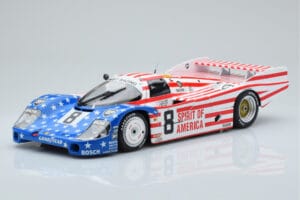
Porsche 956L Spirit of America #8 G. Follmer / J. Morton / K. Miller 24 Hours of Le Mans 1986 Minichamps 1:18
Only 1 left
Price:
119.00 €
Collectors also bought
Browse all 1:18
Used

Used
Last one
Used
Back in stock
Used

Ford Fiesta RS WRC Ford Abu Dhabi #3 M. Hirvonen / J. Lehtinen Winner Rally Australia 2011 Minichamps 1:18
Only 2 left
Price:
123.00 €
Last one
Used
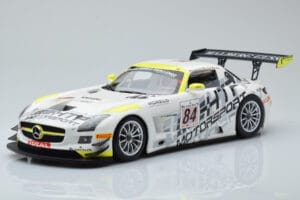
Mercedes SLS AMG GT3 HTP Motorsport Persson #84 B. Schneider / M. Buhk / M. Gotz Winners 24 Hours of Spa-Francorchamps 2013 Minichamps 1:18
Only 1 left
Price:
110.00 €
Last one
Back in stock
BMW M6 GT3 Rowe Racing #98 A. Graf / R. Westbrook / N. Catsburg / N. Paltalla 24 Hours of Nurburgring 2016 Minichamps 1:18
Only 1 left
Price:
169.00 €
Last one
Back in stock
Opel Commodore A Steinmetz #8 Tuerlinx / T. Pilette 24 Hours of Spa 1972 Minichamps 1:18
Only 1 left
Price:
128.00 €
Used
Back in stock
Recently viewed
{"id":582199,"name":"Porsche 906K #58 G. Klass \/ R. Stommelen 24 Hours of Le Mans 1966 Minichamps 1:18","price":"227.00 €<\/span><\/bdi><\/span>","image":"https:\/\/models118.com\/wp-content\/uploads\/2026\/06\/porsche-906k-n58-gklass-rstommelen-24h-le-mans-1966-minichamps-1-18-400x400.jpg","permalink":"https:\/\/models118.com\/porsche-906k-58-g-klass-r-stommelen-24-hours-of-le-mans-1966-minichamps-1-18-100666158\/","brand":"Porsche"}