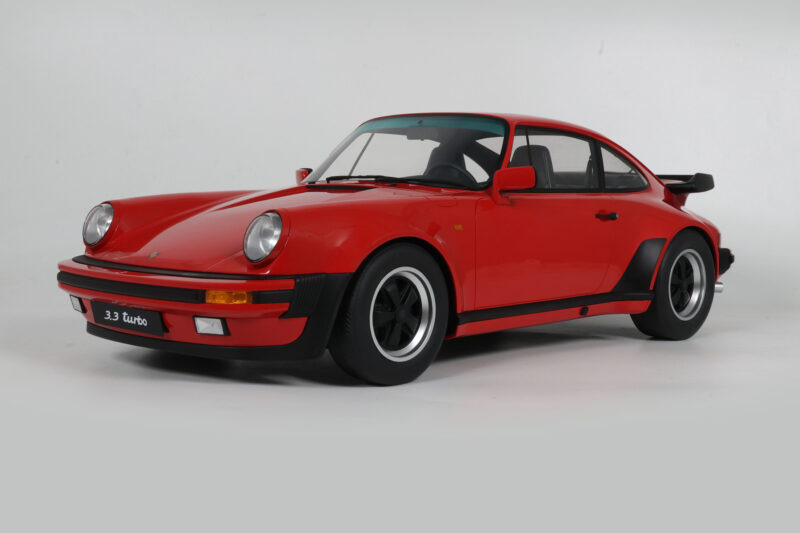
Porsche 911 930 Turbo 3.3 India Red GT Spirit 1:8
Sold out
1
/
2
GT Spirit's 1:8 resin Porsche 911 930 Turbo 3.3 puts the 1989 India Red coupe on the shelf at nearly museum scale, roughly 53cm nose to tail. The sealed one-piece body keeps every shut line and the signature whale-tail spoiler crisp under close inspection, while the deep resin paint captures the period color with a warmth diecast at smaller scales rarely matches. A striking anchor piece for a serious Porsche display.
1 / 2
[{"index":0,"id":"1664426","thumb":"https:\/\/models118.com\/wp-content\/uploads\/2026\/09\/porsche-911-930-turbo-3-3-india-red-gt-spirit-1-8-gts802301-1-1-300x200.jpg","medium":"https:\/\/models118.com\/wp-content\/uploads\/2026\/09\/porsche-911-930-turbo-3-3-india-red-gt-spirit-1-8-gts802301-1-1-800x533.jpg","full":"https:\/\/models118.com\/wp-content\/uploads\/2026\/09\/porsche-911-930-turbo-3-3-india-red-gt-spirit-1-8-gts802301-1-1.jpg","srcset":"https:\/\/models118.com\/wp-content\/uploads\/2026\/09\/porsche-911-930-turbo-3-3-india-red-gt-spirit-1-8-gts802301-1-1-800x533.jpg 800w, https:\/\/models118.com\/wp-content\/uploads\/2026\/09\/porsche-911-930-turbo-3-3-india-red-gt-spirit-1-8-gts802301-1-1-300x200.jpg 300w, https:\/\/models118.com\/wp-content\/uploads\/2026\/09\/porsche-911-930-turbo-3-3-india-red-gt-spirit-1-8-gts802301-1-1-64x43.jpg 64w, https:\/\/models118.com\/wp-content\/uploads\/2026\/09\/porsche-911-930-turbo-3-3-india-red-gt-spirit-1-8-gts802301-1-1.jpg 1800w","sizes":"(max-width: 1023px) 400px, 640px","srcsetAvif":"https:\/\/models118.com\/wp-content\/uploads\/2026\/09\/porsche-911-930-turbo-3-3-india-red-gt-spirit-1-8-gts802301-1-1-800x533.jpg.avif 800w, https:\/\/models118.com\/wp-content\/uploads\/2026\/09\/porsche-911-930-turbo-3-3-india-red-gt-spirit-1-8-gts802301-1-1-300x200.jpg.avif 300w, https:\/\/models118.com\/wp-content\/uploads\/2026\/09\/porsche-911-930-turbo-3-3-india-red-gt-spirit-1-8-gts802301-1-1-64x43.jpg.avif 64w, https:\/\/models118.com\/wp-content\/uploads\/2026\/09\/porsche-911-930-turbo-3-3-india-red-gt-spirit-1-8-gts802301-1-1.jpg.avif 1800w","srcsetWebp":"https:\/\/models118.com\/wp-content\/uploads\/2026\/09\/porsche-911-930-turbo-3-3-india-red-gt-spirit-1-8-gts802301-1-1-800x533.jpg.webp 800w, https:\/\/models118.com\/wp-content\/uploads\/2026\/09\/porsche-911-930-turbo-3-3-india-red-gt-spirit-1-8-gts802301-1-1-300x200.jpg.webp 300w, https:\/\/models118.com\/wp-content\/uploads\/2026\/09\/porsche-911-930-turbo-3-3-india-red-gt-spirit-1-8-gts802301-1-1-64x43.jpg.webp 64w, https:\/\/models118.com\/wp-content\/uploads\/2026\/09\/porsche-911-930-turbo-3-3-india-red-gt-spirit-1-8-gts802301-1-1.jpg.webp 1800w","alt":"Porsche 911 930 Turbo 3.3 India Red GT Spirit 1:8 GTS802301 Resin"},{"index":1,"id":1664427,"thumb":"https:\/\/models118.com\/wp-content\/uploads\/2026\/09\/porsche-911-930-turbo-3-3-india-red-gt-spirit-1-8-gts802301-1-300x200.jpg","medium":"https:\/\/models118.com\/wp-content\/uploads\/2026\/09\/porsche-911-930-turbo-3-3-india-red-gt-spirit-1-8-gts802301-1-800x533.jpg","full":"https:\/\/models118.com\/wp-content\/uploads\/2026\/09\/porsche-911-930-turbo-3-3-india-red-gt-spirit-1-8-gts802301-1.jpg","srcset":"https:\/\/models118.com\/wp-content\/uploads\/2026\/09\/porsche-911-930-turbo-3-3-india-red-gt-spirit-1-8-gts802301-1-800x533.jpg 800w, https:\/\/models118.com\/wp-content\/uploads\/2026\/09\/porsche-911-930-turbo-3-3-india-red-gt-spirit-1-8-gts802301-1-300x200.jpg 300w, https:\/\/models118.com\/wp-content\/uploads\/2026\/09\/porsche-911-930-turbo-3-3-india-red-gt-spirit-1-8-gts802301-1-64x43.jpg 64w, https:\/\/models118.com\/wp-content\/uploads\/2026\/09\/porsche-911-930-turbo-3-3-india-red-gt-spirit-1-8-gts802301-1.jpg 1800w","sizes":"(max-width: 1023px) 400px, 640px","srcsetAvif":"https:\/\/models118.com\/wp-content\/uploads\/2026\/09\/porsche-911-930-turbo-3-3-india-red-gt-spirit-1-8-gts802301-1-800x533.jpg.avif 800w, https:\/\/models118.com\/wp-content\/uploads\/2026\/09\/porsche-911-930-turbo-3-3-india-red-gt-spirit-1-8-gts802301-1-300x200.jpg.avif 300w, https:\/\/models118.com\/wp-content\/uploads\/2026\/09\/porsche-911-930-turbo-3-3-india-red-gt-spirit-1-8-gts802301-1-64x43.jpg.avif 64w, https:\/\/models118.com\/wp-content\/uploads\/2026\/09\/porsche-911-930-turbo-3-3-india-red-gt-spirit-1-8-gts802301-1.jpg.avif 1800w","srcsetWebp":"https:\/\/models118.com\/wp-content\/uploads\/2026\/09\/porsche-911-930-turbo-3-3-india-red-gt-spirit-1-8-gts802301-1-800x533.jpg.webp 800w, https:\/\/models118.com\/wp-content\/uploads\/2026\/09\/porsche-911-930-turbo-3-3-india-red-gt-spirit-1-8-gts802301-1-300x200.jpg.webp 300w, https:\/\/models118.com\/wp-content\/uploads\/2026\/09\/porsche-911-930-turbo-3-3-india-red-gt-spirit-1-8-gts802301-1-64x43.jpg.webp 64w, https:\/\/models118.com\/wp-content\/uploads\/2026\/09\/porsche-911-930-turbo-3-3-india-red-gt-spirit-1-8-gts802301-1.jpg.webp 1800w","alt":"Porsche 911 930 Turbo 3.3 India Red GT Spirit 1:8 GTS802301 Resin - image 2 of 2"}]
Porsche 911 930 Turbo 3.3 India Red GT Spirit 1:8
Current price:
1,050.00 €
Sold out
This model is currently sold out. Enter your email and we'll let you know when it's back in stock.
Shipping to 78 countries
Worldwide delivery
Prices incl. 23% VAT
No hidden costs
Shipping rates by country
Tracked & insured
Pay in EUR €
Local currency
100% authentic
Direct from manufacturers
5-layer carton
Foam-filled interior
Easy returns
14 days, no questions asked
Secure payment
256-bit SSL encryption
About the Porsche 911 930 Turbo 3.3 India Red GT Spirit 1:8
TL;DR: GT Spirit's 1:8 resin Porsche 911 930 Turbo 3.3 reproduces the 1989 India Red coupe at nearly double 1:18 size, roughly 53cm long. The body is a sealed one-piece resin casting with no opening panels, built to hold the whale-tail spoiler's lines and deep period paint under close, museum-scale inspection.
The 930 Turbo redefined what a production Porsche could be when it landed in 1975, its turbocharger and towering rear wing announcing a car built for speed most drivers had to earn the hard way. By 1989, the 3.3-liter version with its intercooler was the final and most potent iteration before the 964 generation took over. GT Spirit's 1:8 scale puts that history at genuine display scale.
The 3.3 Turbo's Final Years on the Road
Intercooled Power Behind the Whale Tail
The 930 Turbo's turbocharged flat-six grew to 3.3 liters in 1978, gaining an intercooler tucked beneath the raised rear spoiler collectors call the whale tail. That spoiler wasn't a styling flourish, it fed the intercooler and stabilized the rear at speed, a necessity on a car whose turbo lag punished the unprepared driver who lifted mid-corner. By 1989, the model year this casting represents, the 3.3 Turbo was in its final form before Porsche moved to the 964-based Turbo, making this one of the last classic 930s built on the original bodyshell design that had barely changed since 1975.
India Red Against Period Porsche Colors
India Red was one of the vivid solid colors Porsche offered through the 1980s, a warmer, slightly brick-leaning red that reads differently under light than the brighter Guards Red most 911s wear in period photography. Against the black whale tail and factory Fuchs-style wheels, the color gives this 930 a distinct identity on a shelf that otherwise fills up with Guards Red and Grand Prix White examples. Choosing a less common factory color is itself a collecting decision, one that rewards someone who has already seen the common shades and wants the model that stands apart.
GT Spirit's Resin Build at Nearly Double Scale
Why 1:8 Demands a Sealed Body
Most 1:18 Porsches on a collector's shelf measure around 22cm nose to tail. This 930 Turbo, built at 1:8, comes in at roughly 53cm, a scale usually reserved for museum commissions and technical display pieces rather than typical collector diecast. At that size, a sealed one-piece resin body is the more demanding choice, not the easier one: there's no engine bay or door aperture to distract from an imperfect line, so every panel gap, every shutline, and every curve of the whale tail has to be right, because a flaw that would vanish at 1:18 becomes visible at arm's length here.
Paint Depth and the Whale-Tail Casting
Resin holds a paint finish differently than diecast, and at this scale the difference is obvious. The India Red sits with a depth and evenness across the hood and roof that a smaller cast piece struggles to match, and the whale tail's undercut, the vents feeding the intercooler, and the rain gutters along the roofline all read as sculpted rather than molded. Lifted from its base, the model carries genuine heft for a resin piece this large, a reminder that scale, not just material, drives how substantial a model feels in hand.
Where a 1:8 Porsche Fits on a Shelf
A model at this scale isn't a companion piece, it's a centerpiece. Most collectors build displays around 1:18 as the anchor scale, with 1:43 filling in breadth and 1:12 reserved for occasional showpieces; 1:8 sits above all of them, closer to a static museum exhibit than a shelf filler. That changes how it should be positioned: it wants space around it, ideally its own shelf or a dedicated stand rather than a crowded row of smaller Porsches competing for attention. Comparing this 930 Turbo to other 911 eras helps frame why the 3.3 still commands collector interest decades later: it was the last 911 Turbo built on the narrow-bodied, air-cooled architecture that traces back to the original 1963 car, before Porsche widened the body and eventually moved to water cooling. A resin build of this specific car, at this specific scale, is a way to hold onto that transitional moment in Porsche's history physically, at a size that actually does the whale tail's proportions justice. For someone assembling an air-cooled 911 collection across scales, this piece functions less as one more Porsche and more as the exhibit case for the whole story.
Living With a Museum-Scale Model
Owning a model this large changes the practical questions. Cabinet depth matters more than usual since a 53cm car needs real clearance front to back, and direct sunlight will fade India Red's resin finish faster than it would a smaller diecast tucked into shadow, so placement away from windows matters. Dust is a bigger commitment too, simply because there's more surface to keep clean. None of that makes the piece impractical, it just means treating it the way a genuine display commission deserves rather than as another shelf filler. For a collector who already owns 1:18 or 1:43 Porsches and wants one piece that anchors the whole display, this 1:8 930 Turbo earns that role through scale alone, and the India Red finish makes sure it earns a second look even next to smaller, more common 911s nearby.
From the same collection

Last one
Used
Last one
Used
Back in stock

Porsche 911 934 Tebernum Racing Team #52 T. Schenken Nurburgring 300km 1976 Minichamps 1:18
Only 1 left
Price:
147.00 €
Last one
Used
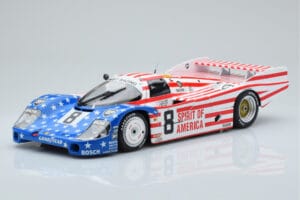
Porsche 956L Spirit of America #8 G. Follmer / J. Morton / K. Miller 24 Hours of Le Mans 1986 Minichamps 1:18
Only 1 left
Price:
119.00 €
Used

Porsche 911 997 GT3 Cup #124 Mattheus / Geoffroy / Vanbellingen / Fumal 24 Hours of Spa 2005 Minichamps 1:43
Only 3 left
Price:
33.00 €
Last one
Used

Porsche 911 997 GT3 Cup Porsche Carrera Cup #3 R. Westbrook 2007 Minichamps 1:43
Only 1 left
Price:
33.00 €
Collectors also bought
Browse all 1:8







Recently viewed
{"id":1663747,"name":"Porsche 911 930 Turbo 3.3 India Red GT Spirit 1:8","price":"1,050.00 €<\/span><\/bdi><\/span>","image":"https:\/\/models118.com\/wp-content\/uploads\/2026\/09\/porsche-911-930-turbo-3-3-india-red-gt-spirit-1-8-gts802301-1-1-400x400.jpg","permalink":"https:\/\/models118.com\/porsche-911-930-turbo-3-3-india-red-gt-spirit-1-8-gts802301\/","brand":"Porsche"}