Back in stock

This model is currently sold out. Enter your email and we'll let you know when it's back in stock.
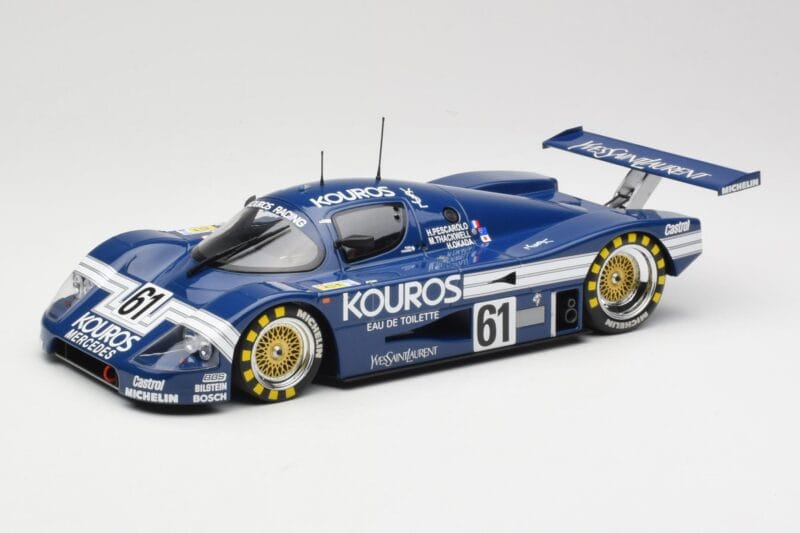
TL;DR: Minichamps' 1:18 diecast Sauber Mercedes C9 recreates Mike Thackwell and Henri Pescarolo's Kouros Racing #61 entry at the 1987 24 Hours of Le Mans. Zinc-alloy build with the iconic silver Sauber livery, an anchor for Group C prototype displays.
The Sauber-Mercedes partnership revived the three-pointed star's Le Mans presence decades after Mercedes' original prewar and 1950s efforts, and the C9 became one of Group C's defining prototypes.
Henri Pescarolo entered this campaign as one of endurance racing's most respected veterans, having already won Le Mans multiple times in earlier decades, while Mike Thackwell brought sharp single-seater pedigree to the Kouros-sponsored Sauber effort. The C9's turbocharged Mercedes engine and long, low-drag bodywork made it one of the fastest cars ever to lap the Mulsanne Straight, a fact that would push organizers toward chicanes in subsequent years. Sauber's partnership with Mercedes marked the German manufacturer's serious return to top-level endurance racing after a long absence, and the silver livery carried deliberate visual continuity with Mercedes' historic racing color. This specific Le Mans entry captures a pivotal season in that comeback.
The zinc-alloy body carries substantial weight, clearly denser than lighter toy-grade plastic construction, a straightforward marker of genuine diecast quality. Expect opening doors on functional hinges, along with a detailed cockpit showing period safety equipment and instrumentation. Panel gaps run slightly wider than sealed resin construction, an honest trait of hinged diecast rather than a flaw unique to this piece. The C9's low, wedge-shaped bodywork, designed for minimal drag at Le Mans speeds, scales dramatically at 1:18, giving the model genuine shelf presence among other prototype subjects.
This C9 pairs naturally with rival Group C prototypes from Porsche and Jaguar, letting a collector recreate the fierce late-1980s Le Mans prototype battles on a single shelf.