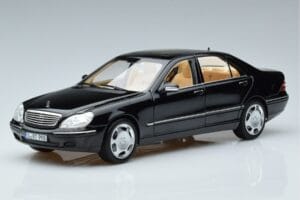
Mercedes S-Class W220 S600 Limited Edition Norev 1:18
Price:
91.00 €
This model is currently sold out. Enter your email and we'll let you know when it's back in stock.
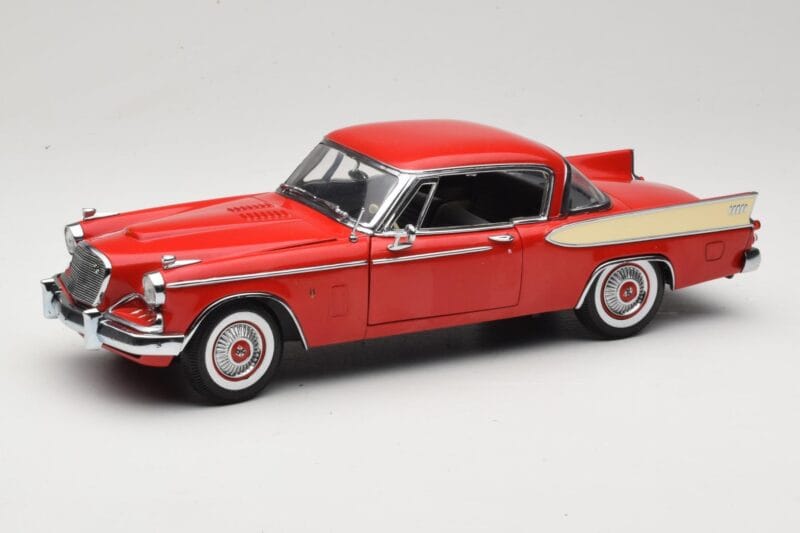
TL;DR: Motor City's 1:18 diecast 1957 Studebaker Golden Hawk in Apache Red reproduces the independent automaker's supercharged performance halo car of the late 1950s. Diecast construction captures the tailfin-era coupe's distinctive grille and rear fin styling at an accessible price.
Studebaker built the Golden Hawk to compete with the Big Three's performance coupes using a supercharged engine and dramatic styling, and the car remains a favorite among collectors drawn to independent American manufacturers outside the mainstream Detroit story.
The Golden Hawk's tall, narrow grille and sweeping tailfins set it apart visually from contemporary Ford and Chevrolet coupes, and this diecast keeps those defining lines clear across the Apache Red finish. The paint sits vivid without veering toward a factory-metallic depth, a reasonable trade-off for the model's accessible tier. Chrome trim around the grille and side spears carries the era's ornamental detailing, an important visual signature for a car whose brand identity depended on standing out from bigger competitors with smaller marketing budgets.
For collectors building a display around 1950s American design rather than the usual Big Three names, the Golden Hawk offers genuine variety, a supercharged performance halo from a manufacturer that no longer exists. Displayed alongside mainstream contemporaries from Ford or Chevrolet, it highlights how smaller independent brands pursued their own styling language to compete for attention. Its tailfin-era proportions also pair naturally with other late-1950s classics regardless of brand, anchoring a broader era-based grouping.