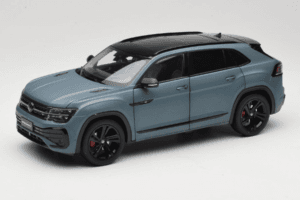
Volkswagen Golf GTI Mk8 Blue Norev 1:18
Price:
115.00 €
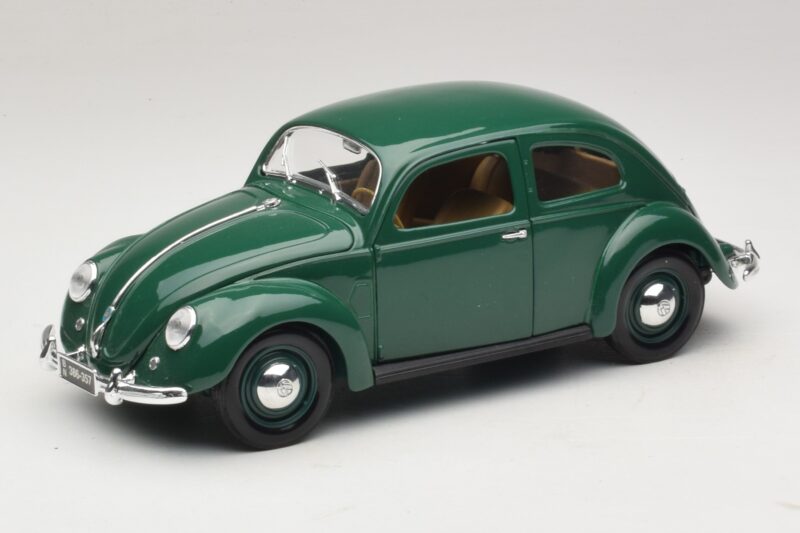
TL;DR: Maisto's 1:18 diecast Volkswagen Beetle reproduces the 1951 split-window coupe in green, with doors, hood, and trunk that open to show the air-cooled rear engine and the front luggage well. An entry-tier diecast built for a vintage lineup rather than museum-grade finish.
The Beetle needs no introduction, but an opening-panel 1:18 of the early split-window car is rarer than the postwar oval-window versions that have filled diecast catalogs for decades. Maisto goes after that rounder, earlier shape, and the moving panels let a collector see exactly what made the rear-engine layout work.
With openable_parts confirmed, this Beetle earns its hinges. The doors swing open on a workable detent, the hood lifts at the front to show a shallow luggage well instead of an engine, and the rear deck lifts to reveal the flat-four powerplant sitting behind the rear axle rather than in front of it. That layout, rear engine, rear drive, trunk up front, is the single most distinctive engineering trait of the air-cooled Beetle, and a model that opens all three points lets a collector demonstrate it rather than just describe it.
Maisto casts the body in zinc alloy diecast, and the construction sits at the accessible end of the 1:18 market. That means broader casting tolerances than a hand-finished resin piece, visible panel seams where the doors meet the body, and a chrome treatment on the bumpers and trim that reads bright rather than deeply plated. None of that is a flaw at this price point; it is simply what mass production buys. The green paint covers the body evenly, and the glass is clear enough to see the dash layout from outside, a small detail Maisto does not skip even on its entry-level line. For a collector comparing this against pricier resin Beetles from specialist producers, the trade is straightforward: less surface polish, more hands-on interaction.
Through 1953, the Beetle carried a divided rear window, a feature later replaced by the single oval pane that most postwar diecast reproduces. This 1951 example sits inside that earlier window, closer to the original Porsche-designed shape than the oval-window cars that dominate American memory of the Beetle. Volkswagen built the car in Wolfsburg, West Germany, as part of the country's postwar industrial recovery, and the air-cooled flat-four engine and torsion-bar suspension stayed remarkably consistent across three subsequent decades of production. Rounded fenders and a single rear window split by a thin bar give this early body a softer look than the cars built after the mid-1950s facelift, and Maisto's tooling follows that earlier shape closely.
The Beetle's arrival in the United States began in the early 1950s, making this exact model year part of the car's first wave of American imports, well before the Beetle became a counterculture fixture later in the decade. For collectors building a postwar import timeline, a split-window 1951 car marks the starting point of that story rather than its more famous middle chapters. Mechanically simple and visually distinctive, the Beetle has aged into one of the most recognizable silhouettes in automotive history, and a model built around a documented engineering quirk, like the rear-mounted engine this Maisto model opens up to show, gives that recognition something concrete to point to.
At 1:18, this Beetle occupies a size class that reads well next to other postwar European imports without dominating a cabinet shelf. The price sits firmly at the accessible end of the scale model market, which makes it a sensible starting point for a vintage import collection or a companion piece next to pricier hero cars. Opening doors and a lift-up deck lid add genuine play value and display flexibility, letting a collector pose the car with the engine bay visible for variety. It will not match a premium resin casting for shutline precision, but for a car whose main story is mechanical rather than cosmetic, showing the layout matters more than polishing it.