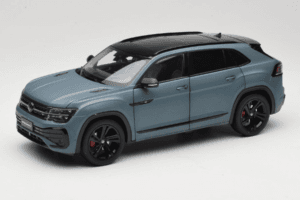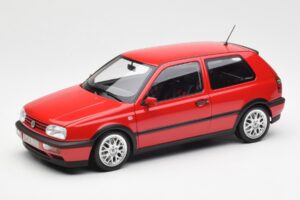
Volkswagen Golf GTI Mk8 Blue Norev 1:18
Price:
115.00 €
You save 4.00 €
Lowest price in the 30 days before the reduction: 80.00 €
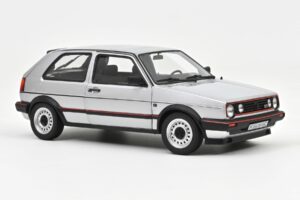
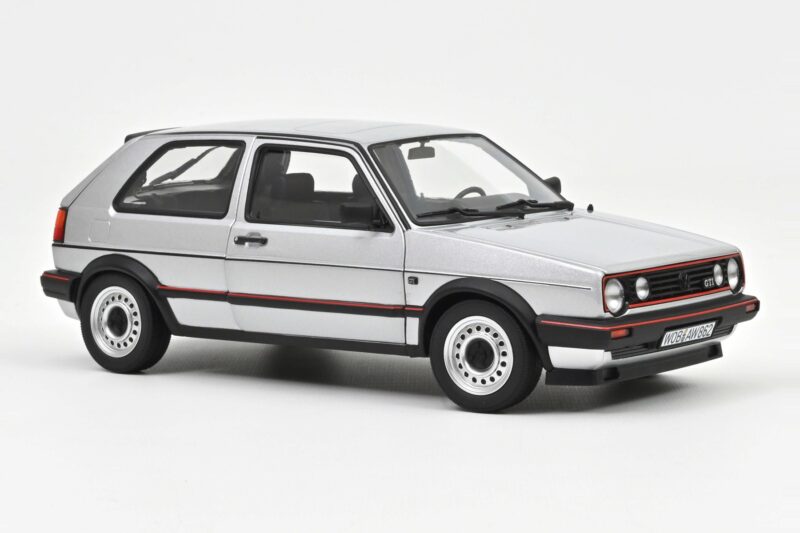
TL;DR: Norev's 1:18 Volkswagen Golf GTI Mk2 reproduces the late-1980s hot hatch in Diamond Silver, with an opening panel, the signature red grille trim, and a zinc alloy build at a mass-market price. A straightforward, accessible piece for collectors tracing the Golf GTI lineage from the original Mk1.
The Golf GTI Mk1 invented the hot hatch formula in 1976, and the Mk2 spent the following decade proving the idea wasn't a fluke. By 1989, the GTI badge on a Golf meant something specific to buyers across Europe, and Norev's 1:18 casting leans into that reputation rather than treating the car as just another hatchback.
Volkswagen's original GTI proved that a practical hatchback could also be genuinely quick, and the formula caught on across the industry almost immediately. The Mk2, built from the mid-1980s into the early 1990s, grew larger and more refined than its predecessor without losing the core idea: a light body, a willing engine, and handling sharp enough to embarrass more expensive cars at a stoplight. By the time this 1989 example rolled off the line, the GTI had become shorthand for affordable performance across an entire generation of European drivers, a reputation this casting leans on rather than invents.
The red grille surround and GTI badging that define this car visually trace straight back to the original Mk1, a design signature Volkswagen kept deliberately consistent across generations. Norev's casting picks up that red trim precisely, along with the honeycomb grille pattern and the subtle wheel arch flares that separated a GTI from a base Golf parked next to it. That consistency across decades is part of why Volkswagen's GTI badge still carries weight with collectors who never owned the original.
This Golf includes a panel that opens with genuine hinge resistance, settling wherever it's left rather than drifting shut or flopping wide. That matters for display flexibility: posed open, it exposes Norev's interior work, including a reference to the GTI's distinctive tartan-pattern seat upholstery and a dashboard laid out with legible gauge faces.
Diamond Silver was a genuine period color option on the Mk2, and Norev's paint shop captures its metallic flake without tipping into a generic gunmetal gray. Lifted from its tray, the model carries the real heft of zinc alloy diecast, a density that signals durable metal construction over decades of handling rather than a lightweight composite shell. Panel gaps around the opening mechanism run slightly wider than a sealed casting would allow, a fair trade for the display flexibility the hinge provides, and one that collectors weighing diecast against resin alternatives should factor into any comparison.
At roughly 22cm in 1:18, this Golf sits comfortably on a standard shelf alongside other hatchback castings from the same era. Mass-market diecast is the right call for a GTI: the car democratized performance driving for an entire generation of buyers who couldn't afford a sports car, and pricing a replica into resin territory would undercut exactly what made the original matter. This is the pick for collectors building a hot hatch lineage from the Mk1 forward, or anyone who learned to drive stick in one of these and wants that memory back on a shelf.