Used
Back in stock
This model is currently sold out. Enter your email and we'll let you know when it's back in stock.
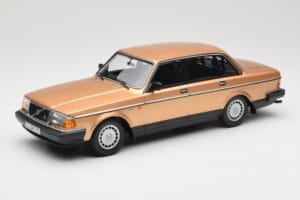
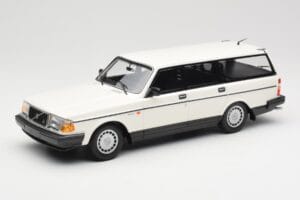
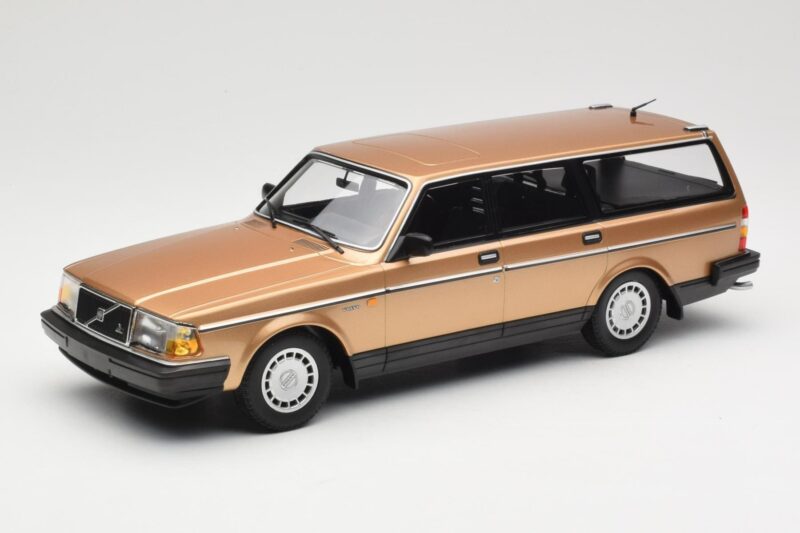
TL;DR: Minichamps' 1:18 diecast Volvo 240 GL Estate reproduces the 1986 Swedish wagon in gold metallic zinc alloy. Straight-edged panels, upright glass, and honest proportions make it a shelf anchor for wagon-themed or Scandinavian displays rather than a hero piece for a supercar row.
The Volvo 240 is a car defined by right angles, and that geometry either flatters or exposes a diecast casting immediately.
Zinc alloy rewards a boxy subject like the 240 because flat panels show off crisp tooling in a way a curved supercar body never will. Held in the hand, the weight signals real metal rather than a lightweight promotional casting, and that heft matters on a wagon this size, where a hollow-feeling model would undercut the car's reputation for solidity. The gold metallic finish sits on those flat surfaces evenly, catching light along the beltline without the flake pattern doing much work, since matte flat panels rely on consistent paint depth rather than curvature to look convincing. Diecast at this tier typically brings opening doors and a hatch, giving the estate's cargo area a reason to exist beyond static display, and buyers should expect the interior molding to stay simple: correct dashboard shape and seat form rather than mapped stitching detail.
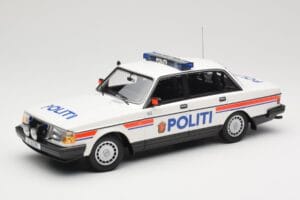
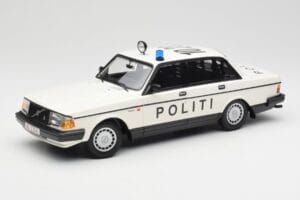
Volvo built the 240 on a reputation for durability rather than speed, and the estate variant carried that further into practical, family-hauling territory across nearly two decades of production. Its slab sides and glasshouse are instantly recognizable, a design language that barely changed from the mid-1970s into the early 1990s, which makes any single year's paint code more of a personal preference than a chronology decision. Displayed beside other 1980s European family cars, the gold-over-boxy-body combination reads as period-correct rather than dated, and at 1:18 the wagon's proportions read clearly across a room in a way a smaller scale would compress. It works well paired with other Volvo liveries from the same tooling, since the estate body and sedan share a family resemblance that lets a themed run of 240s sit together convincingly. For a collector assembling a Scandinavian or estate-car corner of a display, this gold example is the calm, civilian counterpoint to the emergency-liveried versions of the same casting, and it holds its own without needing a dramatic backstory to justify the spot it occupies.