


Ferrari Dino 246 GT Yellow MCG 1:18
1
/
6
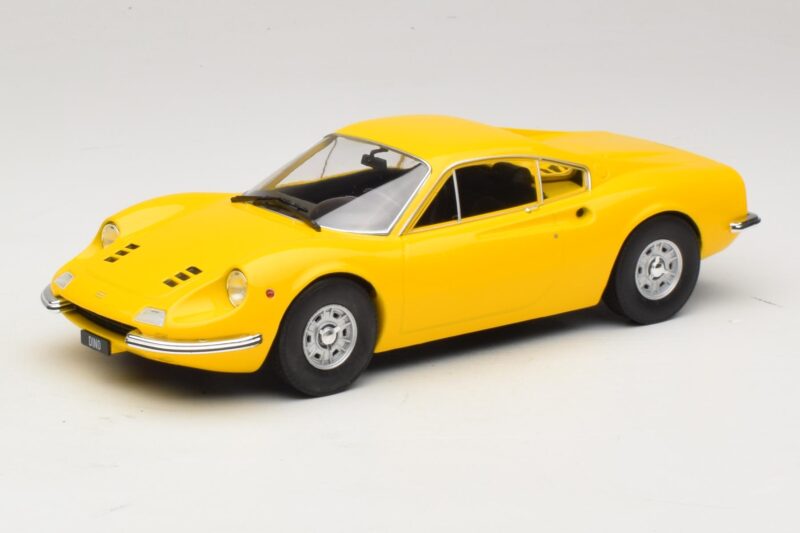
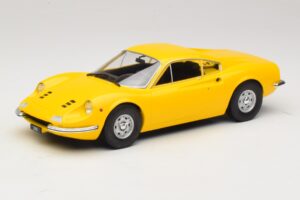
MCG's 1:18 diecast Ferrari Dino 246 GT arrives in yellow, reproducing the 1969 Pininfarina coupe that Ferrari sold without a Prancing Horse badge. The zinc alloy body is cast as a single sealed shell, so the door and hood lines run as tight, continuous grooves rather than hinge gaps. Under a shelf light, the yellow clear coat holds an even gloss across the wedge-shaped nose and rear haunches Pininfarina drew for the 246. At mid-tier pricing, this is an accessible way to add the mid-engine Dino to a Ferrari display without committing to a V12 flagship.
1 / 6
[{"index":0,"id":"1656294","thumb":"https:\/\/models118.com\/wp-content\/uploads\/2026\/08\/ferrari-dino-246-gt-yellow-mcg-1-18-mcg18168-1-1-300x200.jpg","medium":"https:\/\/models118.com\/wp-content\/uploads\/2026\/08\/ferrari-dino-246-gt-yellow-mcg-1-18-mcg18168-1-1-800x533.jpg","full":"https:\/\/models118.com\/wp-content\/uploads\/2026\/08\/ferrari-dino-246-gt-yellow-mcg-1-18-mcg18168-1-1.jpg","srcset":"https:\/\/models118.com\/wp-content\/uploads\/2026\/08\/ferrari-dino-246-gt-yellow-mcg-1-18-mcg18168-1-1-800x533.jpg 800w, https:\/\/models118.com\/wp-content\/uploads\/2026\/08\/ferrari-dino-246-gt-yellow-mcg-1-18-mcg18168-1-1-300x200.jpg 300w, https:\/\/models118.com\/wp-content\/uploads\/2026\/08\/ferrari-dino-246-gt-yellow-mcg-1-18-mcg18168-1-1-64x43.jpg 64w, https:\/\/models118.com\/wp-content\/uploads\/2026\/08\/ferrari-dino-246-gt-yellow-mcg-1-18-mcg18168-1-1.jpg 1800w","sizes":"(max-width: 1023px) 400px, 640px","srcsetAvif":"https:\/\/models118.com\/wp-content\/uploads\/2026\/08\/ferrari-dino-246-gt-yellow-mcg-1-18-mcg18168-1-1-800x533.jpg.avif 800w, https:\/\/models118.com\/wp-content\/uploads\/2026\/08\/ferrari-dino-246-gt-yellow-mcg-1-18-mcg18168-1-1-300x200.jpg.avif 300w, https:\/\/models118.com\/wp-content\/uploads\/2026\/08\/ferrari-dino-246-gt-yellow-mcg-1-18-mcg18168-1-1-64x43.jpg.avif 64w, https:\/\/models118.com\/wp-content\/uploads\/2026\/08\/ferrari-dino-246-gt-yellow-mcg-1-18-mcg18168-1-1.jpg.avif 1800w","srcsetWebp":"https:\/\/models118.com\/wp-content\/uploads\/2026\/08\/ferrari-dino-246-gt-yellow-mcg-1-18-mcg18168-1-1-800x533.jpg.webp 800w, https:\/\/models118.com\/wp-content\/uploads\/2026\/08\/ferrari-dino-246-gt-yellow-mcg-1-18-mcg18168-1-1-300x200.jpg.webp 300w, https:\/\/models118.com\/wp-content\/uploads\/2026\/08\/ferrari-dino-246-gt-yellow-mcg-1-18-mcg18168-1-1-64x43.jpg.webp 64w, https:\/\/models118.com\/wp-content\/uploads\/2026\/08\/ferrari-dino-246-gt-yellow-mcg-1-18-mcg18168-1-1.jpg.webp 1800w","alt":"Ferrari Dino 246 GT Yellow MCG 1:18 MCG18168 Diecast"},{"index":1,"id":1656297,"thumb":"https:\/\/models118.com\/wp-content\/uploads\/2026\/08\/ferrari-dino-246-gt-yellow-mcg-1-18-mcg18168-1-300x200.jpg","medium":"https:\/\/models118.com\/wp-content\/uploads\/2026\/08\/ferrari-dino-246-gt-yellow-mcg-1-18-mcg18168-1-800x533.jpg","full":"https:\/\/models118.com\/wp-content\/uploads\/2026\/08\/ferrari-dino-246-gt-yellow-mcg-1-18-mcg18168-1.jpg","srcset":"https:\/\/models118.com\/wp-content\/uploads\/2026\/08\/ferrari-dino-246-gt-yellow-mcg-1-18-mcg18168-1-800x533.jpg 800w, https:\/\/models118.com\/wp-content\/uploads\/2026\/08\/ferrari-dino-246-gt-yellow-mcg-1-18-mcg18168-1-300x200.jpg 300w, https:\/\/models118.com\/wp-content\/uploads\/2026\/08\/ferrari-dino-246-gt-yellow-mcg-1-18-mcg18168-1-64x43.jpg 64w, https:\/\/models118.com\/wp-content\/uploads\/2026\/08\/ferrari-dino-246-gt-yellow-mcg-1-18-mcg18168-1.jpg 1800w","sizes":"(max-width: 1023px) 400px, 640px","srcsetAvif":"https:\/\/models118.com\/wp-content\/uploads\/2026\/08\/ferrari-dino-246-gt-yellow-mcg-1-18-mcg18168-1-800x533.jpg.avif 800w, https:\/\/models118.com\/wp-content\/uploads\/2026\/08\/ferrari-dino-246-gt-yellow-mcg-1-18-mcg18168-1-300x200.jpg.avif 300w, https:\/\/models118.com\/wp-content\/uploads\/2026\/08\/ferrari-dino-246-gt-yellow-mcg-1-18-mcg18168-1-64x43.jpg.avif 64w, https:\/\/models118.com\/wp-content\/uploads\/2026\/08\/ferrari-dino-246-gt-yellow-mcg-1-18-mcg18168-1.jpg.avif 1800w","srcsetWebp":"https:\/\/models118.com\/wp-content\/uploads\/2026\/08\/ferrari-dino-246-gt-yellow-mcg-1-18-mcg18168-1-800x533.jpg.webp 800w, https:\/\/models118.com\/wp-content\/uploads\/2026\/08\/ferrari-dino-246-gt-yellow-mcg-1-18-mcg18168-1-300x200.jpg.webp 300w, https:\/\/models118.com\/wp-content\/uploads\/2026\/08\/ferrari-dino-246-gt-yellow-mcg-1-18-mcg18168-1-64x43.jpg.webp 64w, https:\/\/models118.com\/wp-content\/uploads\/2026\/08\/ferrari-dino-246-gt-yellow-mcg-1-18-mcg18168-1.jpg.webp 1800w","alt":"Ferrari Dino 246 GT Yellow MCG 1:18 MCG18168 Diecast - image 2 of 6"},{"index":2,"id":1656298,"thumb":"https:\/\/models118.com\/wp-content\/uploads\/2026\/08\/ferrari-dino-246-gt-yellow-mcg-1-18-mcg18168-2-300x200.jpg","medium":"https:\/\/models118.com\/wp-content\/uploads\/2026\/08\/ferrari-dino-246-gt-yellow-mcg-1-18-mcg18168-2-800x533.jpg","full":"https:\/\/models118.com\/wp-content\/uploads\/2026\/08\/ferrari-dino-246-gt-yellow-mcg-1-18-mcg18168-2.jpg","srcset":"https:\/\/models118.com\/wp-content\/uploads\/2026\/08\/ferrari-dino-246-gt-yellow-mcg-1-18-mcg18168-2-800x533.jpg 800w, https:\/\/models118.com\/wp-content\/uploads\/2026\/08\/ferrari-dino-246-gt-yellow-mcg-1-18-mcg18168-2-300x200.jpg 300w, https:\/\/models118.com\/wp-content\/uploads\/2026\/08\/ferrari-dino-246-gt-yellow-mcg-1-18-mcg18168-2-64x43.jpg 64w, https:\/\/models118.com\/wp-content\/uploads\/2026\/08\/ferrari-dino-246-gt-yellow-mcg-1-18-mcg18168-2.jpg 1800w","sizes":"(max-width: 1023px) 400px, 640px","srcsetAvif":"https:\/\/models118.com\/wp-content\/uploads\/2026\/08\/ferrari-dino-246-gt-yellow-mcg-1-18-mcg18168-2-800x533.jpg.avif 800w, https:\/\/models118.com\/wp-content\/uploads\/2026\/08\/ferrari-dino-246-gt-yellow-mcg-1-18-mcg18168-2-300x200.jpg.avif 300w, https:\/\/models118.com\/wp-content\/uploads\/2026\/08\/ferrari-dino-246-gt-yellow-mcg-1-18-mcg18168-2-64x43.jpg.avif 64w, https:\/\/models118.com\/wp-content\/uploads\/2026\/08\/ferrari-dino-246-gt-yellow-mcg-1-18-mcg18168-2.jpg.avif 1800w","srcsetWebp":"https:\/\/models118.com\/wp-content\/uploads\/2026\/08\/ferrari-dino-246-gt-yellow-mcg-1-18-mcg18168-2-800x533.jpg.webp 800w, https:\/\/models118.com\/wp-content\/uploads\/2026\/08\/ferrari-dino-246-gt-yellow-mcg-1-18-mcg18168-2-300x200.jpg.webp 300w, https:\/\/models118.com\/wp-content\/uploads\/2026\/08\/ferrari-dino-246-gt-yellow-mcg-1-18-mcg18168-2-64x43.jpg.webp 64w, https:\/\/models118.com\/wp-content\/uploads\/2026\/08\/ferrari-dino-246-gt-yellow-mcg-1-18-mcg18168-2.jpg.webp 1800w","alt":"Ferrari Dino 246 GT Yellow MCG 1:18 MCG18168 Diecast - image 3 of 6"},{"index":3,"id":1656300,"thumb":"https:\/\/models118.com\/wp-content\/uploads\/2026\/08\/ferrari-dino-246-gt-yellow-mcg-1-18-mcg18168-3-300x200.jpg","medium":"https:\/\/models118.com\/wp-content\/uploads\/2026\/08\/ferrari-dino-246-gt-yellow-mcg-1-18-mcg18168-3-800x533.jpg","full":"https:\/\/models118.com\/wp-content\/uploads\/2026\/08\/ferrari-dino-246-gt-yellow-mcg-1-18-mcg18168-3.jpg","srcset":"https:\/\/models118.com\/wp-content\/uploads\/2026\/08\/ferrari-dino-246-gt-yellow-mcg-1-18-mcg18168-3-800x533.jpg 800w, https:\/\/models118.com\/wp-content\/uploads\/2026\/08\/ferrari-dino-246-gt-yellow-mcg-1-18-mcg18168-3-300x200.jpg 300w, https:\/\/models118.com\/wp-content\/uploads\/2026\/08\/ferrari-dino-246-gt-yellow-mcg-1-18-mcg18168-3-64x43.jpg 64w, https:\/\/models118.com\/wp-content\/uploads\/2026\/08\/ferrari-dino-246-gt-yellow-mcg-1-18-mcg18168-3.jpg 1800w","sizes":"(max-width: 1023px) 400px, 640px","srcsetAvif":"https:\/\/models118.com\/wp-content\/uploads\/2026\/08\/ferrari-dino-246-gt-yellow-mcg-1-18-mcg18168-3-800x533.jpg.avif 800w, https:\/\/models118.com\/wp-content\/uploads\/2026\/08\/ferrari-dino-246-gt-yellow-mcg-1-18-mcg18168-3-300x200.jpg.avif 300w, https:\/\/models118.com\/wp-content\/uploads\/2026\/08\/ferrari-dino-246-gt-yellow-mcg-1-18-mcg18168-3-64x43.jpg.avif 64w, https:\/\/models118.com\/wp-content\/uploads\/2026\/08\/ferrari-dino-246-gt-yellow-mcg-1-18-mcg18168-3.jpg.avif 1800w","srcsetWebp":"https:\/\/models118.com\/wp-content\/uploads\/2026\/08\/ferrari-dino-246-gt-yellow-mcg-1-18-mcg18168-3-800x533.jpg.webp 800w, https:\/\/models118.com\/wp-content\/uploads\/2026\/08\/ferrari-dino-246-gt-yellow-mcg-1-18-mcg18168-3-300x200.jpg.webp 300w, https:\/\/models118.com\/wp-content\/uploads\/2026\/08\/ferrari-dino-246-gt-yellow-mcg-1-18-mcg18168-3-64x43.jpg.webp 64w, https:\/\/models118.com\/wp-content\/uploads\/2026\/08\/ferrari-dino-246-gt-yellow-mcg-1-18-mcg18168-3.jpg.webp 1800w","alt":"Ferrari Dino 246 GT Yellow MCG 1:18 MCG18168 Diecast - image 4 of 6"},{"index":4,"id":1656302,"thumb":"https:\/\/models118.com\/wp-content\/uploads\/2026\/08\/ferrari-dino-246-gt-yellow-mcg-1-18-mcg18168-4-300x200.jpg","medium":"https:\/\/models118.com\/wp-content\/uploads\/2026\/08\/ferrari-dino-246-gt-yellow-mcg-1-18-mcg18168-4-800x533.jpg","full":"https:\/\/models118.com\/wp-content\/uploads\/2026\/08\/ferrari-dino-246-gt-yellow-mcg-1-18-mcg18168-4.jpg","srcset":"https:\/\/models118.com\/wp-content\/uploads\/2026\/08\/ferrari-dino-246-gt-yellow-mcg-1-18-mcg18168-4-800x533.jpg 800w, https:\/\/models118.com\/wp-content\/uploads\/2026\/08\/ferrari-dino-246-gt-yellow-mcg-1-18-mcg18168-4-300x200.jpg 300w, https:\/\/models118.com\/wp-content\/uploads\/2026\/08\/ferrari-dino-246-gt-yellow-mcg-1-18-mcg18168-4-64x43.jpg 64w, https:\/\/models118.com\/wp-content\/uploads\/2026\/08\/ferrari-dino-246-gt-yellow-mcg-1-18-mcg18168-4.jpg 1800w","sizes":"(max-width: 1023px) 400px, 640px","srcsetAvif":"https:\/\/models118.com\/wp-content\/uploads\/2026\/08\/ferrari-dino-246-gt-yellow-mcg-1-18-mcg18168-4-800x533.jpg.avif 800w, https:\/\/models118.com\/wp-content\/uploads\/2026\/08\/ferrari-dino-246-gt-yellow-mcg-1-18-mcg18168-4-300x200.jpg.avif 300w, https:\/\/models118.com\/wp-content\/uploads\/2026\/08\/ferrari-dino-246-gt-yellow-mcg-1-18-mcg18168-4-64x43.jpg.avif 64w, https:\/\/models118.com\/wp-content\/uploads\/2026\/08\/ferrari-dino-246-gt-yellow-mcg-1-18-mcg18168-4.jpg.avif 1800w","srcsetWebp":"https:\/\/models118.com\/wp-content\/uploads\/2026\/08\/ferrari-dino-246-gt-yellow-mcg-1-18-mcg18168-4-800x533.jpg.webp 800w, https:\/\/models118.com\/wp-content\/uploads\/2026\/08\/ferrari-dino-246-gt-yellow-mcg-1-18-mcg18168-4-300x200.jpg.webp 300w, https:\/\/models118.com\/wp-content\/uploads\/2026\/08\/ferrari-dino-246-gt-yellow-mcg-1-18-mcg18168-4-64x43.jpg.webp 64w, https:\/\/models118.com\/wp-content\/uploads\/2026\/08\/ferrari-dino-246-gt-yellow-mcg-1-18-mcg18168-4.jpg.webp 1800w","alt":"Ferrari Dino 246 GT Yellow MCG 1:18 MCG18168 Diecast - image 5 of 6"},{"index":5,"id":1656305,"thumb":"https:\/\/models118.com\/wp-content\/uploads\/2026\/08\/ferrari-dino-246-gt-yellow-mcg-1-18-mcg18168-5-300x200.jpg","medium":"https:\/\/models118.com\/wp-content\/uploads\/2026\/08\/ferrari-dino-246-gt-yellow-mcg-1-18-mcg18168-5-800x533.jpg","full":"https:\/\/models118.com\/wp-content\/uploads\/2026\/08\/ferrari-dino-246-gt-yellow-mcg-1-18-mcg18168-5.jpg","srcset":"https:\/\/models118.com\/wp-content\/uploads\/2026\/08\/ferrari-dino-246-gt-yellow-mcg-1-18-mcg18168-5-800x533.jpg 800w, https:\/\/models118.com\/wp-content\/uploads\/2026\/08\/ferrari-dino-246-gt-yellow-mcg-1-18-mcg18168-5-300x200.jpg 300w, https:\/\/models118.com\/wp-content\/uploads\/2026\/08\/ferrari-dino-246-gt-yellow-mcg-1-18-mcg18168-5-64x43.jpg 64w, https:\/\/models118.com\/wp-content\/uploads\/2026\/08\/ferrari-dino-246-gt-yellow-mcg-1-18-mcg18168-5.jpg 1800w","sizes":"(max-width: 1023px) 400px, 640px","srcsetAvif":"https:\/\/models118.com\/wp-content\/uploads\/2026\/08\/ferrari-dino-246-gt-yellow-mcg-1-18-mcg18168-5-800x533.jpg.avif 800w, https:\/\/models118.com\/wp-content\/uploads\/2026\/08\/ferrari-dino-246-gt-yellow-mcg-1-18-mcg18168-5-300x200.jpg.avif 300w, https:\/\/models118.com\/wp-content\/uploads\/2026\/08\/ferrari-dino-246-gt-yellow-mcg-1-18-mcg18168-5-64x43.jpg.avif 64w, https:\/\/models118.com\/wp-content\/uploads\/2026\/08\/ferrari-dino-246-gt-yellow-mcg-1-18-mcg18168-5.jpg.avif 1800w","srcsetWebp":"https:\/\/models118.com\/wp-content\/uploads\/2026\/08\/ferrari-dino-246-gt-yellow-mcg-1-18-mcg18168-5-800x533.jpg.webp 800w, https:\/\/models118.com\/wp-content\/uploads\/2026\/08\/ferrari-dino-246-gt-yellow-mcg-1-18-mcg18168-5-300x200.jpg.webp 300w, https:\/\/models118.com\/wp-content\/uploads\/2026\/08\/ferrari-dino-246-gt-yellow-mcg-1-18-mcg18168-5-64x43.jpg.webp 64w, https:\/\/models118.com\/wp-content\/uploads\/2026\/08\/ferrari-dino-246-gt-yellow-mcg-1-18-mcg18168-5.jpg.webp 1800w","alt":"Ferrari Dino 246 GT Yellow MCG 1:18 MCG18168 Diecast - image 6 of 6"}]
Ferrari Dino 246 GT Yellow MCG 1:18
Current price:
62.00 €
Only 3 units left
Estimated delivery: 05-08.10.2026
Shipping rates by country
10% discount on your first order — create a free account
Shipping to 78 countries
Worldwide delivery
Prices incl. 23% VAT
No hidden costs
Shipping rates by country
Tracked & insured
Pay in EUR €
Local currency
100% authentic
Direct from manufacturers
5-layer carton
Foam-filled interior
Easy returns
14 days, no questions asked
Secure payment
256-bit SSL encryption
About the Ferrari Dino 246 GT Yellow MCG 1:18
TL;DR: MCG's 1:18 Ferrari Dino 246 GT reproduces the 1969 Pininfarina coupe in yellow, cast as a sealed zinc alloy body with no opening panels. The Dino carried a shield badge instead of the Prancing Horse, Ferrari's way of pricing a mid-engine V6 sports car below its V12 flagships. A mid-tier diecast entry point into Ferrari collecting.
Ferrari's decision to badge this car as a Dino rather than a Ferrari was a calculated gamble, positioning a V6 sports car apart from the V12 mystique without diluting either. Pininfarina drew the 246 GT's tapered nose and flying buttress roofline to fight Porsche's 911 on its own turf. MCG's yellow diecast puts that shape within reach of a display shelf.
The Dino Badge and Ferrari's Pininfarina Gamble
A V6 Without the Prancing Horse
Ferrari named the car after Alfredo "Dino" Ferrari, Enzo's son, who pushed for a V6 engine before his death in 1956. When the production car arrived, it wore a shield badge reading "Dino," not the Prancing Horse, and buyers at the dealership were technically not buying a Ferrari at all. The V6 also powered a Fiat-badged Dino coupe and spider, built on the same engine-sharing arrangement that helped Ferrari homologate the unit for Formula 2. Pricing the car below the V12 GT models let Ferrari compete directly with Porsche's 911 without undercutting its own flagship lineup. That badge decision still shapes how collectors judge the car today.
Pininfarina's Wedge After the 206 GT
The 246 GT that followed in 1969 replaced the earlier 206 GT's aluminum body with steel, and Ferrari enlarged the V6 from 2.0 to 2.4 liters to add usable torque for road driving. Pininfarina's design house shaped the car, and Scaglietti's workshops built the bodies, giving the 246 the same coachbuilt lineage as Ferrari's V12 models despite its lower badge status. The wedge nose, flying buttress rear pillars, and low waistline came from a design language Pininfarina had been refining since the mid-1960s concept studies, and the production 246 GT is where that language finally reached the street in numbers the rarer 206 never achieved.
MCG's Ferrari Dino 246 GT in Yellow Diecast
Zinc Alloy Weight and a Sealed Body
Lift this Dino from its display base and the zinc alloy body announces itself immediately. That density is what separates diecast from lighter resin castings at the same scale, and it is part of why die-cast has stayed the default material for accessible 1:18 Ferraris. MCG casts this Dino as a single sealed shell, with no doors, hood, or trunk that opens. That construction choice removes the assembly tolerances a hinge requires, so the shut lines along the roofline and rear haunches run as continuous grooves rather than gaps that widen or narrow depending on how carefully a panel was fitted. The trade is straightforward: no engine bay to inspect, but a body that reads as one uninterrupted shape from any angle on the shelf.
Reading Giallo Under Shelf Light
Ferrari offered yellow across its catalog sparingly in period, more often reserved for cars ordered outside Italy, which makes a yellow Dino a genuine change of pace next to the Rosso Corsa cars that dominate most Ferrari displays. MCG's paint sits on the metal shell with an even gloss that holds up under a single spotlight, and because the body has no panel breaks, the color reads as one continuous field across the nose, doors, and rear deck rather than several separately painted sections that can drift slightly in shade. At this price point, that consistency is the detail worth checking first.
Sizing the Dino Alongside Other 1:18 Ferraris
At 1:18, the Dino's real-world length of roughly 4.25 meters translates to a model around 23 centimeters long, small enough to sit comfortably in a standard cabinet row without crowding the sports cars around it. That footprint puts it in the same physical class as most V12 Ferrari models on the shelf, even though the Dino is mechanically a different animal entirely. Where this MCG diecast sits against alternatives comes down to construction rather than subject matter. Hand-finished resin from specialists further up the market can hold sharper edges and tighter panel definition because resin tolerates finer casting detail than a die allows, and that precision shows in razor-thin trim lines and crisper badge lettering. Diecast trades some of that ultimate sharpness for real mass in the hand and a lower price of entry, which is exactly the calculation MCG is built around. For a Ferrari whose own history was about undercutting the V12 price point, an accessible diecast reproduction carries a certain honesty that a museum-tier resin piece, as good as it might look, does not quite replicate. Either approach is legitimate, and knowing which trade-off this particular model makes, real metal weight over hand-finished exclusivity, is worth stating plainly rather than dressing up.
Where This Dino Fits on a Themed Shelf
A yellow Dino works best as the contrast piece in a Ferrari lineup rather than the anchor. Set beside a red 275 GTB or a black Testarossa, the lighter body color breaks up a shelf that can otherwise read as one long wash of Rosso Corsa, and it reminds a viewer that Maranello built more than just red cars during the era. It also works as a standalone entry point for a collector drawn to the Dino story specifically, the badge history, the Porsche rivalry, the Pininfarina styling, without needing a themed collection to justify the purchase. MCG's price point makes that kind of single-model interest easy to satisfy, which is arguably the whole point of building an accessible diecast line around cars that more expensive manufacturers already cover at a premium. Either way, the yellow finish is doing real work here, not just decorating an otherwise identical casting.
From the same collection
Last one
Used
Last one
Used

Last one
Back in stock

Ferrari 250 GTO #1 P. Rodriguez / W. Mairesse Paris 1000km 1962 CMC 1:18
Only 4 left
Price:
626.00 €


Collectors also bought
Browse all 1:18
Back in stock

Back in stock
Back in stock

Last one
Back in stock
Last one

Recently viewed
{"id":1656237,"name":"Ferrari Dino 246 GT Yellow MCG 1:18","price":"62.00 €<\/span><\/bdi><\/span>","image":"https:\/\/models118.com\/wp-content\/uploads\/2026\/08\/ferrari-dino-246-gt-yellow-mcg-1-18-mcg18168-1-1-400x400.jpg","permalink":"https:\/\/models118.com\/ferrari-dino-246-gt-yellow-mcg-1-18-mcg18168\/","brand":"Ferrari"}