


Ferrari Dino 246 GT Red MCG 1:18
1
/
6
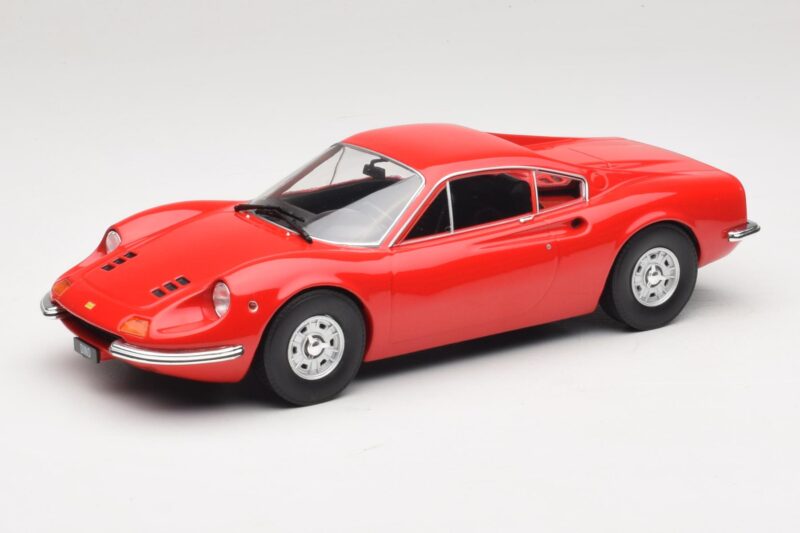
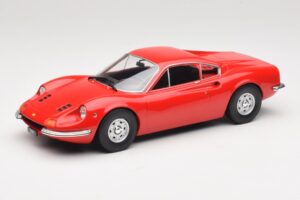
MCG's 1:18 diecast Ferrari Dino 246 GT wears red, though the nose still carries the Dino shield instead of Ferrari's Prancing Horse, a marketing move meant to undercut Porsche's 911 on price. Cast as a single sealed body, the zinc alloy shell holds tight, uninterrupted shut lines along the doors, hood and tail. The red clear coat sits deep over the curved rear haunches and low Pininfarina nose that defined the mid-engine 246. A practical, mid-tier way to bring Maranello's smallest V6 sports car onto a themed Ferrari shelf.
1 / 6
[{"index":0,"id":"1656295","thumb":"https:\/\/models118.com\/wp-content\/uploads\/2026\/08\/ferrari-dino-246-gt-red-mcg-1-18-mcg18359-1-1-300x200.jpg","medium":"https:\/\/models118.com\/wp-content\/uploads\/2026\/08\/ferrari-dino-246-gt-red-mcg-1-18-mcg18359-1-1-800x533.jpg","full":"https:\/\/models118.com\/wp-content\/uploads\/2026\/08\/ferrari-dino-246-gt-red-mcg-1-18-mcg18359-1-1.jpg","srcset":"https:\/\/models118.com\/wp-content\/uploads\/2026\/08\/ferrari-dino-246-gt-red-mcg-1-18-mcg18359-1-1-800x533.jpg 800w, https:\/\/models118.com\/wp-content\/uploads\/2026\/08\/ferrari-dino-246-gt-red-mcg-1-18-mcg18359-1-1-300x200.jpg 300w, https:\/\/models118.com\/wp-content\/uploads\/2026\/08\/ferrari-dino-246-gt-red-mcg-1-18-mcg18359-1-1-64x43.jpg 64w, https:\/\/models118.com\/wp-content\/uploads\/2026\/08\/ferrari-dino-246-gt-red-mcg-1-18-mcg18359-1-1.jpg 1800w","sizes":"(max-width: 1023px) 400px, 640px","srcsetAvif":"https:\/\/models118.com\/wp-content\/uploads\/2026\/08\/ferrari-dino-246-gt-red-mcg-1-18-mcg18359-1-1-800x533.jpg.avif 800w, https:\/\/models118.com\/wp-content\/uploads\/2026\/08\/ferrari-dino-246-gt-red-mcg-1-18-mcg18359-1-1-300x200.jpg.avif 300w, https:\/\/models118.com\/wp-content\/uploads\/2026\/08\/ferrari-dino-246-gt-red-mcg-1-18-mcg18359-1-1-64x43.jpg.avif 64w, https:\/\/models118.com\/wp-content\/uploads\/2026\/08\/ferrari-dino-246-gt-red-mcg-1-18-mcg18359-1-1.jpg.avif 1800w","srcsetWebp":"https:\/\/models118.com\/wp-content\/uploads\/2026\/08\/ferrari-dino-246-gt-red-mcg-1-18-mcg18359-1-1-800x533.jpg.webp 800w, https:\/\/models118.com\/wp-content\/uploads\/2026\/08\/ferrari-dino-246-gt-red-mcg-1-18-mcg18359-1-1-300x200.jpg.webp 300w, https:\/\/models118.com\/wp-content\/uploads\/2026\/08\/ferrari-dino-246-gt-red-mcg-1-18-mcg18359-1-1-64x43.jpg.webp 64w, https:\/\/models118.com\/wp-content\/uploads\/2026\/08\/ferrari-dino-246-gt-red-mcg-1-18-mcg18359-1-1.jpg.webp 1800w","alt":"Ferrari Dino 246 GT Red MCG 1:18 MCG18359 Diecast"},{"index":1,"id":1656296,"thumb":"https:\/\/models118.com\/wp-content\/uploads\/2026\/08\/ferrari-dino-246-gt-red-mcg-1-18-mcg18359-1-300x200.jpg","medium":"https:\/\/models118.com\/wp-content\/uploads\/2026\/08\/ferrari-dino-246-gt-red-mcg-1-18-mcg18359-1-800x533.jpg","full":"https:\/\/models118.com\/wp-content\/uploads\/2026\/08\/ferrari-dino-246-gt-red-mcg-1-18-mcg18359-1.jpg","srcset":"https:\/\/models118.com\/wp-content\/uploads\/2026\/08\/ferrari-dino-246-gt-red-mcg-1-18-mcg18359-1-800x533.jpg 800w, https:\/\/models118.com\/wp-content\/uploads\/2026\/08\/ferrari-dino-246-gt-red-mcg-1-18-mcg18359-1-300x200.jpg 300w, https:\/\/models118.com\/wp-content\/uploads\/2026\/08\/ferrari-dino-246-gt-red-mcg-1-18-mcg18359-1-64x43.jpg 64w, https:\/\/models118.com\/wp-content\/uploads\/2026\/08\/ferrari-dino-246-gt-red-mcg-1-18-mcg18359-1.jpg 1800w","sizes":"(max-width: 1023px) 400px, 640px","srcsetAvif":"https:\/\/models118.com\/wp-content\/uploads\/2026\/08\/ferrari-dino-246-gt-red-mcg-1-18-mcg18359-1-800x533.jpg.avif 800w, https:\/\/models118.com\/wp-content\/uploads\/2026\/08\/ferrari-dino-246-gt-red-mcg-1-18-mcg18359-1-300x200.jpg.avif 300w, https:\/\/models118.com\/wp-content\/uploads\/2026\/08\/ferrari-dino-246-gt-red-mcg-1-18-mcg18359-1-64x43.jpg.avif 64w, https:\/\/models118.com\/wp-content\/uploads\/2026\/08\/ferrari-dino-246-gt-red-mcg-1-18-mcg18359-1.jpg.avif 1800w","srcsetWebp":"https:\/\/models118.com\/wp-content\/uploads\/2026\/08\/ferrari-dino-246-gt-red-mcg-1-18-mcg18359-1-800x533.jpg.webp 800w, https:\/\/models118.com\/wp-content\/uploads\/2026\/08\/ferrari-dino-246-gt-red-mcg-1-18-mcg18359-1-300x200.jpg.webp 300w, https:\/\/models118.com\/wp-content\/uploads\/2026\/08\/ferrari-dino-246-gt-red-mcg-1-18-mcg18359-1-64x43.jpg.webp 64w, https:\/\/models118.com\/wp-content\/uploads\/2026\/08\/ferrari-dino-246-gt-red-mcg-1-18-mcg18359-1.jpg.webp 1800w","alt":"Ferrari Dino 246 GT Red MCG 1:18 MCG18359 Diecast - image 2 of 6"},{"index":2,"id":1656299,"thumb":"https:\/\/models118.com\/wp-content\/uploads\/2026\/08\/ferrari-dino-246-gt-red-mcg-1-18-mcg18359-2-300x200.jpg","medium":"https:\/\/models118.com\/wp-content\/uploads\/2026\/08\/ferrari-dino-246-gt-red-mcg-1-18-mcg18359-2-800x533.jpg","full":"https:\/\/models118.com\/wp-content\/uploads\/2026\/08\/ferrari-dino-246-gt-red-mcg-1-18-mcg18359-2.jpg","srcset":"https:\/\/models118.com\/wp-content\/uploads\/2026\/08\/ferrari-dino-246-gt-red-mcg-1-18-mcg18359-2-800x533.jpg 800w, https:\/\/models118.com\/wp-content\/uploads\/2026\/08\/ferrari-dino-246-gt-red-mcg-1-18-mcg18359-2-300x200.jpg 300w, https:\/\/models118.com\/wp-content\/uploads\/2026\/08\/ferrari-dino-246-gt-red-mcg-1-18-mcg18359-2-64x43.jpg 64w, https:\/\/models118.com\/wp-content\/uploads\/2026\/08\/ferrari-dino-246-gt-red-mcg-1-18-mcg18359-2.jpg 1800w","sizes":"(max-width: 1023px) 400px, 640px","srcsetAvif":"https:\/\/models118.com\/wp-content\/uploads\/2026\/08\/ferrari-dino-246-gt-red-mcg-1-18-mcg18359-2-800x533.jpg.avif 800w, https:\/\/models118.com\/wp-content\/uploads\/2026\/08\/ferrari-dino-246-gt-red-mcg-1-18-mcg18359-2-300x200.jpg.avif 300w, https:\/\/models118.com\/wp-content\/uploads\/2026\/08\/ferrari-dino-246-gt-red-mcg-1-18-mcg18359-2-64x43.jpg.avif 64w, https:\/\/models118.com\/wp-content\/uploads\/2026\/08\/ferrari-dino-246-gt-red-mcg-1-18-mcg18359-2.jpg.avif 1800w","srcsetWebp":"https:\/\/models118.com\/wp-content\/uploads\/2026\/08\/ferrari-dino-246-gt-red-mcg-1-18-mcg18359-2-800x533.jpg.webp 800w, https:\/\/models118.com\/wp-content\/uploads\/2026\/08\/ferrari-dino-246-gt-red-mcg-1-18-mcg18359-2-300x200.jpg.webp 300w, https:\/\/models118.com\/wp-content\/uploads\/2026\/08\/ferrari-dino-246-gt-red-mcg-1-18-mcg18359-2-64x43.jpg.webp 64w, https:\/\/models118.com\/wp-content\/uploads\/2026\/08\/ferrari-dino-246-gt-red-mcg-1-18-mcg18359-2.jpg.webp 1800w","alt":"Ferrari Dino 246 GT Red MCG 1:18 MCG18359 Diecast - image 3 of 6"},{"index":3,"id":1656301,"thumb":"https:\/\/models118.com\/wp-content\/uploads\/2026\/08\/ferrari-dino-246-gt-red-mcg-1-18-mcg18359-3-300x200.jpg","medium":"https:\/\/models118.com\/wp-content\/uploads\/2026\/08\/ferrari-dino-246-gt-red-mcg-1-18-mcg18359-3-800x533.jpg","full":"https:\/\/models118.com\/wp-content\/uploads\/2026\/08\/ferrari-dino-246-gt-red-mcg-1-18-mcg18359-3.jpg","srcset":"https:\/\/models118.com\/wp-content\/uploads\/2026\/08\/ferrari-dino-246-gt-red-mcg-1-18-mcg18359-3-800x533.jpg 800w, https:\/\/models118.com\/wp-content\/uploads\/2026\/08\/ferrari-dino-246-gt-red-mcg-1-18-mcg18359-3-300x200.jpg 300w, https:\/\/models118.com\/wp-content\/uploads\/2026\/08\/ferrari-dino-246-gt-red-mcg-1-18-mcg18359-3-64x43.jpg 64w, https:\/\/models118.com\/wp-content\/uploads\/2026\/08\/ferrari-dino-246-gt-red-mcg-1-18-mcg18359-3.jpg 1800w","sizes":"(max-width: 1023px) 400px, 640px","srcsetAvif":"https:\/\/models118.com\/wp-content\/uploads\/2026\/08\/ferrari-dino-246-gt-red-mcg-1-18-mcg18359-3-800x533.jpg.avif 800w, https:\/\/models118.com\/wp-content\/uploads\/2026\/08\/ferrari-dino-246-gt-red-mcg-1-18-mcg18359-3-300x200.jpg.avif 300w, https:\/\/models118.com\/wp-content\/uploads\/2026\/08\/ferrari-dino-246-gt-red-mcg-1-18-mcg18359-3-64x43.jpg.avif 64w, https:\/\/models118.com\/wp-content\/uploads\/2026\/08\/ferrari-dino-246-gt-red-mcg-1-18-mcg18359-3.jpg.avif 1800w","srcsetWebp":"https:\/\/models118.com\/wp-content\/uploads\/2026\/08\/ferrari-dino-246-gt-red-mcg-1-18-mcg18359-3-800x533.jpg.webp 800w, https:\/\/models118.com\/wp-content\/uploads\/2026\/08\/ferrari-dino-246-gt-red-mcg-1-18-mcg18359-3-300x200.jpg.webp 300w, https:\/\/models118.com\/wp-content\/uploads\/2026\/08\/ferrari-dino-246-gt-red-mcg-1-18-mcg18359-3-64x43.jpg.webp 64w, https:\/\/models118.com\/wp-content\/uploads\/2026\/08\/ferrari-dino-246-gt-red-mcg-1-18-mcg18359-3.jpg.webp 1800w","alt":"Ferrari Dino 246 GT Red MCG 1:18 MCG18359 Diecast - image 4 of 6"},{"index":4,"id":1656303,"thumb":"https:\/\/models118.com\/wp-content\/uploads\/2026\/08\/ferrari-dino-246-gt-red-mcg-1-18-mcg18359-4-300x200.jpg","medium":"https:\/\/models118.com\/wp-content\/uploads\/2026\/08\/ferrari-dino-246-gt-red-mcg-1-18-mcg18359-4-800x533.jpg","full":"https:\/\/models118.com\/wp-content\/uploads\/2026\/08\/ferrari-dino-246-gt-red-mcg-1-18-mcg18359-4.jpg","srcset":"https:\/\/models118.com\/wp-content\/uploads\/2026\/08\/ferrari-dino-246-gt-red-mcg-1-18-mcg18359-4-800x533.jpg 800w, https:\/\/models118.com\/wp-content\/uploads\/2026\/08\/ferrari-dino-246-gt-red-mcg-1-18-mcg18359-4-300x200.jpg 300w, https:\/\/models118.com\/wp-content\/uploads\/2026\/08\/ferrari-dino-246-gt-red-mcg-1-18-mcg18359-4-64x43.jpg 64w, https:\/\/models118.com\/wp-content\/uploads\/2026\/08\/ferrari-dino-246-gt-red-mcg-1-18-mcg18359-4.jpg 1800w","sizes":"(max-width: 1023px) 400px, 640px","srcsetAvif":"https:\/\/models118.com\/wp-content\/uploads\/2026\/08\/ferrari-dino-246-gt-red-mcg-1-18-mcg18359-4-800x533.jpg.avif 800w, https:\/\/models118.com\/wp-content\/uploads\/2026\/08\/ferrari-dino-246-gt-red-mcg-1-18-mcg18359-4-300x200.jpg.avif 300w, https:\/\/models118.com\/wp-content\/uploads\/2026\/08\/ferrari-dino-246-gt-red-mcg-1-18-mcg18359-4-64x43.jpg.avif 64w, https:\/\/models118.com\/wp-content\/uploads\/2026\/08\/ferrari-dino-246-gt-red-mcg-1-18-mcg18359-4.jpg.avif 1800w","srcsetWebp":"https:\/\/models118.com\/wp-content\/uploads\/2026\/08\/ferrari-dino-246-gt-red-mcg-1-18-mcg18359-4-800x533.jpg.webp 800w, https:\/\/models118.com\/wp-content\/uploads\/2026\/08\/ferrari-dino-246-gt-red-mcg-1-18-mcg18359-4-300x200.jpg.webp 300w, https:\/\/models118.com\/wp-content\/uploads\/2026\/08\/ferrari-dino-246-gt-red-mcg-1-18-mcg18359-4-64x43.jpg.webp 64w, https:\/\/models118.com\/wp-content\/uploads\/2026\/08\/ferrari-dino-246-gt-red-mcg-1-18-mcg18359-4.jpg.webp 1800w","alt":"Ferrari Dino 246 GT Red MCG 1:18 MCG18359 Diecast - image 5 of 6"},{"index":5,"id":1656304,"thumb":"https:\/\/models118.com\/wp-content\/uploads\/2026\/08\/ferrari-dino-246-gt-red-mcg-1-18-mcg18359-5-300x200.jpg","medium":"https:\/\/models118.com\/wp-content\/uploads\/2026\/08\/ferrari-dino-246-gt-red-mcg-1-18-mcg18359-5-800x533.jpg","full":"https:\/\/models118.com\/wp-content\/uploads\/2026\/08\/ferrari-dino-246-gt-red-mcg-1-18-mcg18359-5.jpg","srcset":"https:\/\/models118.com\/wp-content\/uploads\/2026\/08\/ferrari-dino-246-gt-red-mcg-1-18-mcg18359-5-800x533.jpg 800w, https:\/\/models118.com\/wp-content\/uploads\/2026\/08\/ferrari-dino-246-gt-red-mcg-1-18-mcg18359-5-300x200.jpg 300w, https:\/\/models118.com\/wp-content\/uploads\/2026\/08\/ferrari-dino-246-gt-red-mcg-1-18-mcg18359-5-64x43.jpg 64w, https:\/\/models118.com\/wp-content\/uploads\/2026\/08\/ferrari-dino-246-gt-red-mcg-1-18-mcg18359-5.jpg 1800w","sizes":"(max-width: 1023px) 400px, 640px","srcsetAvif":"https:\/\/models118.com\/wp-content\/uploads\/2026\/08\/ferrari-dino-246-gt-red-mcg-1-18-mcg18359-5-800x533.jpg.avif 800w, https:\/\/models118.com\/wp-content\/uploads\/2026\/08\/ferrari-dino-246-gt-red-mcg-1-18-mcg18359-5-300x200.jpg.avif 300w, https:\/\/models118.com\/wp-content\/uploads\/2026\/08\/ferrari-dino-246-gt-red-mcg-1-18-mcg18359-5-64x43.jpg.avif 64w, https:\/\/models118.com\/wp-content\/uploads\/2026\/08\/ferrari-dino-246-gt-red-mcg-1-18-mcg18359-5.jpg.avif 1800w","srcsetWebp":"https:\/\/models118.com\/wp-content\/uploads\/2026\/08\/ferrari-dino-246-gt-red-mcg-1-18-mcg18359-5-800x533.jpg.webp 800w, https:\/\/models118.com\/wp-content\/uploads\/2026\/08\/ferrari-dino-246-gt-red-mcg-1-18-mcg18359-5-300x200.jpg.webp 300w, https:\/\/models118.com\/wp-content\/uploads\/2026\/08\/ferrari-dino-246-gt-red-mcg-1-18-mcg18359-5-64x43.jpg.webp 64w, https:\/\/models118.com\/wp-content\/uploads\/2026\/08\/ferrari-dino-246-gt-red-mcg-1-18-mcg18359-5.jpg.webp 1800w","alt":"Ferrari Dino 246 GT Red MCG 1:18 MCG18359 Diecast - image 6 of 6"}]
Ferrari Dino 246 GT Red MCG 1:18
Current price:
62.00 €
Last one in stock
Estimated delivery: 05-08.10.2026
Shipping rates by country
10% discount on your first order — create a free account
Shipping to 78 countries
Worldwide delivery
Prices incl. 23% VAT
No hidden costs
Shipping rates by country
Tracked & insured
Pay in EUR €
Local currency
100% authentic
Direct from manufacturers
5-layer carton
Foam-filled interior
Easy returns
14 days, no questions asked
Secure payment
256-bit SSL encryption
About the Ferrari Dino 246 GT Red MCG 1:18
TL;DR: MCG's 1:18 Ferrari Dino 246 GT reproduces the 1969 Pininfarina coupe in red, cast as a sealed zinc alloy body with no opening panels. Ferrari sold the car under a Dino shield rather than the Prancing Horse, aiming the mid-engine V6 squarely at Porsche's 911. A mid-tier diecast way into that rivalry.
Painting a Dino in racing red creates a small irony: the nose badge reads "Dino," not Ferrari, even though the color is the one buyers associate most with Maranello. Ferrari built the 246 GT specifically to answer Porsche's 911, a lighter, mid-engine alternative to its V12 grand tourers. MCG's red diecast brings that rivalry back to a display shelf at a genuinely accessible price.
Racing Red on a Car That Never Wore the Horse
Answering the Porsche 911
By the late 1960s, Porsche's 911 had proven that a smaller, lighter sports car could out-handle heavier V12 grand tourers on a twisting road, and Ferrari needed an answer that did not cannibalize its own flagship pricing. The solution was a mid-engine V6 sold under a separate Dino identity, named for Alfredo "Dino" Ferrari, Enzo's son, who had championed a V6 racing engine before his death in 1956. Selling the car without the Prancing Horse let Ferrari price it well below the V12 GTs while still building genuine competition into the chassis and suspension geometry. The red paint on this particular example follows Ferrari's house color even though the badge on the nose deliberately does not.
From Aluminum 206 to Steel 246
The Dino line started as the 206 GT in 1967, a small run of aluminum-bodied cars built around a 2.0-liter V6. The 246 GT that replaced it in 1969, the car reproduced here, switched to a steel body and grew the engine to 2.4 liters for more usable torque on the road rather than the racetrack. Pininfarina's design house drew the shape, and Scaglietti's workshops built it, the same partnership responsible for Ferrari's V12 grand tourers of the period. That shared coachbuilding lineage is easy to miss under a shield badge instead of a horse, but the bodywork quality was never the part Ferrari compromised on.
MCG's Ferrari Dino 246 GT in Red Diecast
Sealed Body, Tight Shut Lines
The weight is the first thing that registers when this model comes out of its packaging. Zinc alloy diecast carries real mass compared with resin at the same scale, and that density is a large part of why die-cast has remained the standard material for Ferrari models at accessible price points. MCG builds this Dino as a single sealed shell rather than a body with hinged doors and hood. Without hinge clearances to engineer around, the panel gaps along the roof, doors, and rear deck run tight and consistent rather than varying slightly from unit to unit. There is no engine bay to open on this casting, and the trade-off is a body that holds its shape and its shut lines over years of handling.
Rosso Under Direct Light
Red is the color most collectors expect on a Ferrari shelf, and MCG applies it here with an even, deep gloss over the metal body. Because there are no panel breaks to interrupt the surface, the finish reads as one continuous field from the nose to the tail rather than several sections painted separately and matched by eye. Under a direct spotlight, the curvature of the rear haunches and the low tapered nose catch the light differently across the body, which is exactly the kind of surface detail a sealed casting is built to show off. It is a straightforward, honest execution of the color everyone expects.
Scale Footprint and Positioning Among 1:18 Ferraris
At 1:18, the Dino's roughly 4.25-meter overall length shrinks to a model around 23 centimeters long, comfortably sized for a standard cabinet shelf without dominating the cars around it. That footprint sits in the same general size class as most V12-engined Ferrari models at this scale, even though the mechanical layout underneath could not be more different. Positioning this MCG diecast against the wider market comes down to construction choices rather than subject rarity. Specialist resin producers further up the price ladder can achieve sharper panel edges and finer badge lettering because resin casts to tighter tolerances than a die allows, and that shows in thinner trim lines and crisper lettering under close inspection. Diecast gives up some of that ultimate sharpness in exchange for genuine metal weight and a lower entry price, which is the calculation MCG's catalog is built around. For a car whose entire commercial story was built on offering a Ferrari-adjacent sports car below flagship pricing, an accessible diecast reproduction carries a kind of thematic honesty that a museum-grade resin piece does not automatically match, however sharp its edges. Both approaches are legitimate collecting choices, and the honest way to shop either is by naming the trade-off up front rather than dressing metal up as something it is not, or apologizing for a sealed body that was never meant to open.
Pairing This Dino With a Ferrari Timeline
A red Dino slots naturally into any Ferrari shelf built around house colors, sitting comfortably beside a 275 GTB or a 512 BB without looking out of place. What it adds beyond color continuity is a genuinely different mechanical story: a mid-engine, V6-powered answer to Porsche at a moment when Ferrari's identity was almost entirely built around front-engine V12s. Collectors assembling a chronological Ferrari lineup often treat the Dino as the odd entry that explains a branch the company eventually returned to with the 308 and everything that followed. MCG's price point makes that specific historical footnote easy to own without committing serious money to a single model. The red finish does not need a themed collection to justify it. On its own, it tells a complete story about a Ferrari that Ferrari itself was reluctant to call by name. That reluctance, oddly enough, is part of the appeal for anyone who collects the marque's stranger detours.
From the same collection
Last one
Used
Last one
Used

Last one
Back in stock

Ferrari 250 GTO #1 P. Rodriguez / W. Mairesse Paris 1000km 1962 CMC 1:18
Only 4 left
Price:
626.00 €


Collectors also bought
Browse all 1:18
Back in stock

Back in stock
Back in stock

Last one
Back in stock
Last one

Recently viewed
{"id":1656238,"name":"Ferrari Dino 246 GT Red MCG 1:18","price":"62.00 €<\/span><\/bdi><\/span>","image":"https:\/\/models118.com\/wp-content\/uploads\/2026\/08\/ferrari-dino-246-gt-red-mcg-1-18-mcg18359-1-1-400x400.jpg","permalink":"https:\/\/models118.com\/ferrari-dino-246-gt-red-mcg-1-18-mcg18359\/","brand":"Ferrari"}