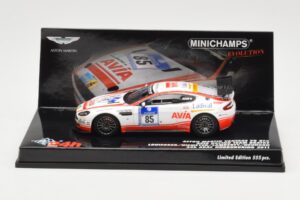
Used

Aston Martin DBRS9 BMS Scuderia Italia #23 Zani / Mugelli FIA GT3 European Championship Spa 2006 Minichamps 1:43
Only 3 left
Price:
37.00 €
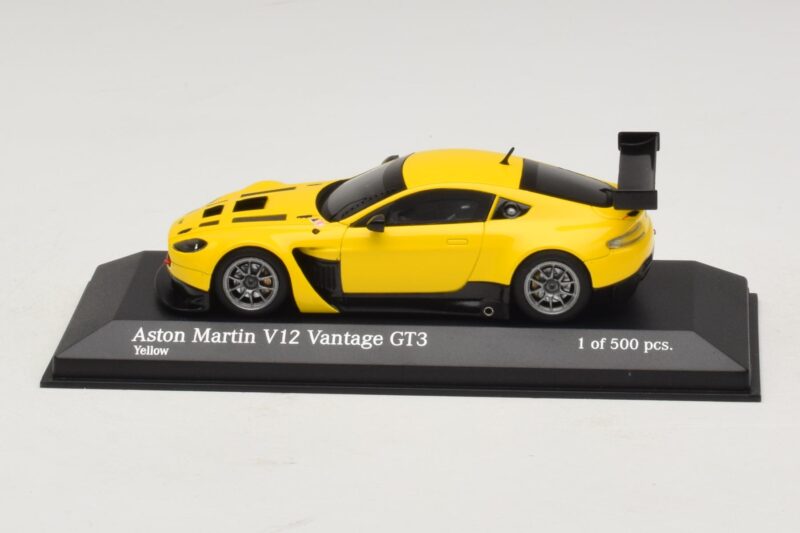
TL;DR: Minichamps' 1:43 diecast Aston Martin V12 Vantage GT3 reproduces the naturally aspirated GT3 racer in a high-visibility yellow livery from its 2012 competition seasons. The sealed-body casting holds the GT3 aero package's splitter, arches, and rear wing as one clean surface, with printed graphics rather than applied decals. A bright counterpoint for collectors building a varied GT3 endurance racing shelf.
Yellow is a color GT3 teams reach for when visibility matters as much as speed, especially in the low-light hours of a long endurance race, and this Vantage wears that high-contrast scheme rather than a more conventional factory color. Minichamps casts the same aero-heavy GT3 bodywork, but the yellow base coat changes how every panel line and wing strut reads under light.
GT3 regulations require cars to carry clear, legible numbers and class markings, and yellow is one of the standard colors teams pick specifically because it stands out under floodlights during night sections of longer endurance races. Minichamps casts this Vantage as a single zinc alloy shell with no opening panels, which keeps the yellow base coat and its printed graphics running as one unbroken surface across the doors, roof, and rear deck rather than being interrupted by a shut line. The saturation holds evenly across the bodywork, without the patchy unevenness that a poorly applied yellow can show on a small casting, and the black number panels and sponsor lettering sit flat against it with sharp, legible edges.
Underneath the bright finish, the casting holds the same aero-focused proportions any V12 Vantage GT3 needs: a deep front splitter, flared arches packed tight around wide racing tires, and a tall rear wing mounted on visible struts. That shape doesn't change with the livery, but the yellow paint makes the aero surfaces easier to read from a distance than a darker color would, since the wing's mounting points and the splitter's leading edge catch shadow differently against a bright background. Side skirts and rear diffuser elements are picked out with the correct contrasting texture, distinguishing the composite race panels from the painted bodywork around them.
GT3 as a category exists to let wildly different manufacturers, front-engined V12s, turbocharged V8s, mid-engined platforms, race competitively against each other on the same grid, and it manages that through a Balance of Performance system that adjusts weight, power, and aerodynamic allowances car by car. That regulatory framework is why a V12 Vantage GT3 could run alongside cars with fundamentally different engine layouts and still finish within striking distance on a given weekend, and it is also why GT3 grids through the early 2010s carried such visual variety, since teams differentiated themselves through livery rather than raw specification advantages.
Aston Martin kept the V12 Vantage GT3 running its naturally aspirated 6.0-liter engine even as turbocharging spread through the GT3 field, a choice that gave the car a distinctive sound and throttle response under Balance of Performance regulation rather than a straightforward power edge. That character is part of why the model still draws collector interest years after its competitive career, standing apart from the turbocharged V8 machinery that increasingly defined the category as the decade went on. For a shelf built around engine variety within one racing class, this naturally aspirated V12 remains one of the more distinctive entries.
GT3 collecting often comes down to livery variety rather than mechanical difference, since the underlying race car stays largely the same across a season while sponsor colors change from entry to entry. Setting this yellow Vantage next to a red example from the same competition years turns a single racing class into a genuine display of contrast, which is a more interesting shelf strategy than collecting identical cars in different scales. Minichamps' mid-tier diecast approach applies the same construction quality to both color schemes, sealed body, printed graphics, aero-correct proportions, so the choice between red and yellow comes down to what fits the rest of a collection rather than any difference in build quality.