Used

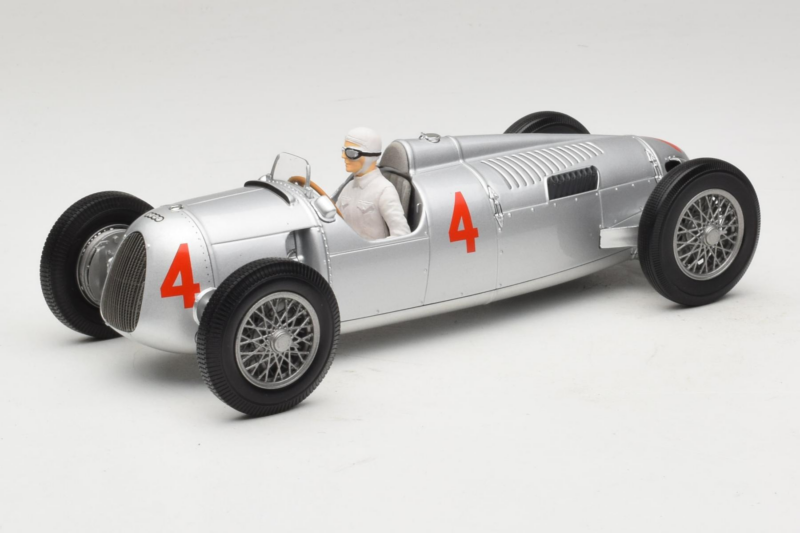
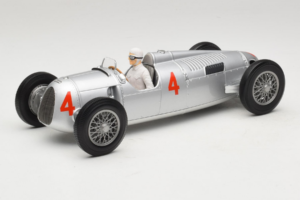
TL;DR: Minichamps' 1:18 diecast Auto Union Typ C carries Achille Varzi's #4 livery from his 1936 Monaco Grand Prix runner-up finish, a car from motorsport's original Silver Arrows era. At roughly 46cm with an exposed rear-mounted engine layout, it is a serious pre-war Grand Prix centerpiece.
The Typ C's rear-mounted V16 engine was radical for 1936, a layout most rivals would not attempt again for decades, and Auto Union's Silver Arrows program made it one of the era's most feared Grand Prix machines.
The Typ C's narrow, cigar-shaped bodywork and exposed wheels leave little room to hide construction shortcuts, and Minichamps' 1:18 tooling handles that exposure well, rendering the long tail and stubby nose with the clean proportions the real car's rear-engine layout demanded. Varzi's #4 racing number and period sponsor-free livery, typical of the era, are applied with precise tampo printing against the bare aluminum-toned finish Auto Union raced in. Diecast construction gives real substance to a chassis whose actual engineering was genuinely ahead of its time, and the exposed suspension and engine cover details reward close inspection under direct light. This is a subject with essentially no room for a mediocre casting to hide, and the detail here holds up.
Achille Varzi's 2nd place finish at Monaco in 1936 came during motorsport's fiercest pre-war rivalry, Auto Union against Mercedes-Benz, both fielding radical engineering against each other on Europe's toughest circuits. Auto Union's mid-engine approach was genuinely unusual for the period and would not become standard Grand Prix practice for another two decades, making this car a real technical outlier rather than just another pre-war racer. For a collection tracing motorsport's engineering history through the 1930s, a documented result like this Monaco placing gives the model real historical anchoring beyond livery aesthetics alone.