Last one
Used
Back in stock
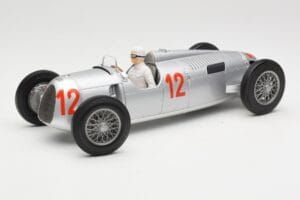
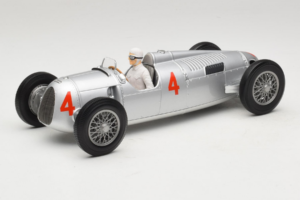
Auto Union Type C #12 H. Stuck Hungarian GP Budapest 1936 Minichamps 1:18
Only 1 left
Price:
142.00 €
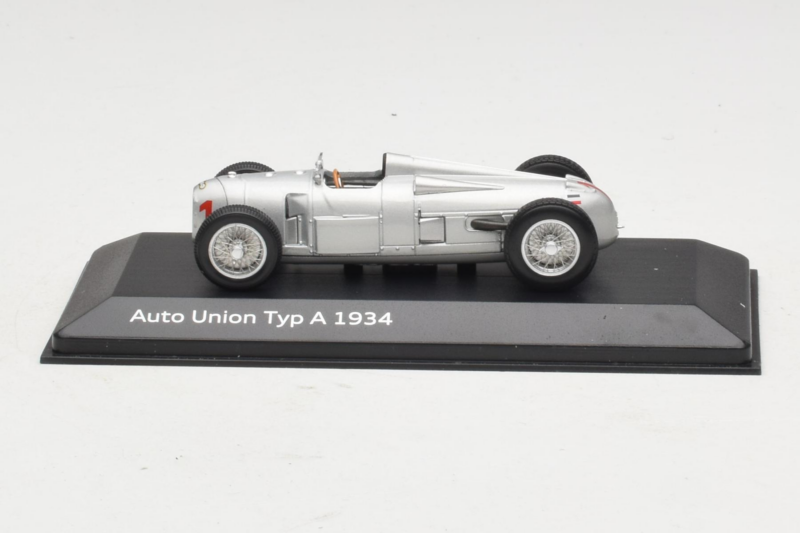
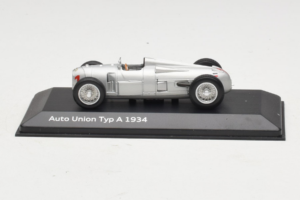
TL;DR: Minichamps' 1:43 diecast reproduces the #1 Auto Union Type A driven by Hans Stuck in 1934, one of the original Silver Arrows built with Ferdinand Porsche's engineering input. A rich pre-war subject for a Grand Prix or hillclimb racing collection.
Before the Silver Arrows became a wartime legend, they were a genuine engineering gamble: a rear-mid-engined V16 racer that terrified some drivers and made a champion of Hans Stuck.
The Type A's rear-mounted engine and slender, almost cigar-shaped body set it apart from the front-engined norm of 1934 Grand Prix racing, and that unusual layout is exactly what a good model needs to get right. This diecast holds the car's narrow nose and long tail correctly proportioned, with the exposed wheels and minimal bodywork typical of the era rendered without the softening a modern subject would receive. The bare-metal aesthetic of the original Silver Arrows, stripped of paint to save weight, comes through in the model's finish, a period detail that separates this from later, more heavily bodied racers.
Stuck built much of his early reputation in hillclimb competition, where the Auto Union's power and unusual balance suited tight, technical courses as well as it suited Grand Prix circuits. His success with the marque helped cement Auto Union's status as a genuine rival to Mercedes during the height of the Silver Arrow era, a rivalry that shaped a generation of European motorsport. For a collector building a pre-war racing shelf, this Type A represents both a specific driver's legacy and an engineering approach, Ferdinand Porsche's rear-engine thinking, that would echo for decades afterward.