Used
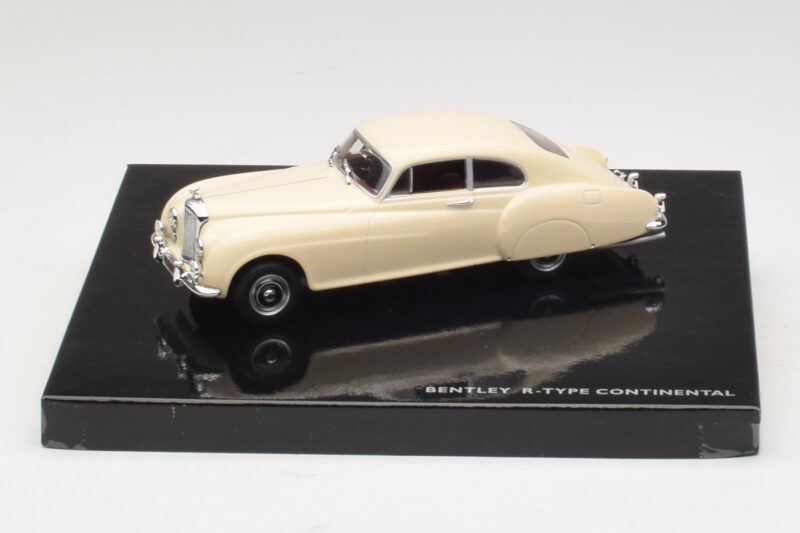
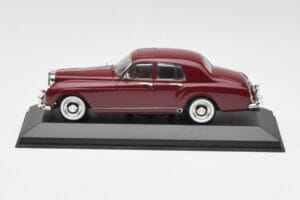
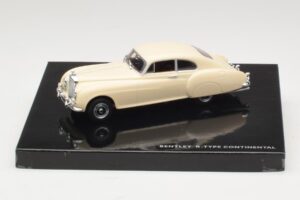
TL;DR: Minichamps' 1:43 Bentley R-Type Continental in ivory reproduces the coachbuilt fastback grand tourer originally bodied by H.J. Mulliner in the 1950s. Cast as a sealed zinc-alloy body, it carries the car's low, sweeping roofline and correct rear haunch proportions, a distinguished centerpiece for a vintage British grand touring collection.
Few post-war grand tourers combined outright pace with visual restraint the way the R-Type Continental did. Bodied by coachbuilder H.J. Mulliner rather than Bentley's standard steel shell, it was among the fastest four-seat cars in the world at launch, a genuine high-speed tourer wrapped in understated ivory coachwork rather than flamboyant styling.
Minichamps casts the R-Type Continental as a single zinc-alloy shell, and the fastback's continuous, sweeping roofline benefits from that fixed construction: the long rear deck and tapered tail flow as one uninterrupted surface, without the panel break a conventional trunk lid would introduce. The low, raked windscreen and narrow greenhouse read correctly against the car's long hood, capturing the proportions that made this shape aerodynamically advanced for its period. Weight in the hand feels substantial for the model's compact size, the density expected of a zinc-alloy casting, and panel lines along the doors and rear haunches stay consistent in width, signaling careful mold work on a body this curvaceous.
The ivory finish sits close to a shade the R-Type Continental actually wore from period coachbuilders, applied evenly across the fastback's compound curves without pooling in the pronounced rear haunches. Chrome-look trim around the grille shell, headlamp surrounds, and bumpers carries convincing brightness against the pale body color, and the wire-look wheels reflect the era's spoke pattern rather than a generic disc design. Badge work at the grille and rear deck stays legible under magnification, a small but telling sign of careful tampo application on a subject whose appeal depends on refined detail rather than aggressive styling.
The R-Type Continental paired Bentley's chassis and running gear with lightweight aluminum coachwork built by H.J. Mulliner, one of the era's most respected British coachbuilders, resulting in a car substantially faster than the standard steel-bodied R-Type. Its fastback shape wasn't styling for its own sake, wind-tunnel-informed proportions genuinely reduced drag, letting the car cruise at sustained high speeds that few contemporaries could match. That combination of coachbuilt exclusivity and genuine engineering purpose is what separates the Continental from ordinary luxury sedans of the period, and it's the reason this specific variant still commands particular respect among vintage British car enthusiasts.
Cars like the R-Type Continental represented the last era of true coachbuilt exclusivity before manufacturers moved toward standardized in-house bodies for cost reasons. Each Continental was, in effect, closer to a bespoke commission than a catalog order, which is part of why surviving examples remain prized well beyond typical vintage Bentley values. A model this well detailed gives a collector access to that coachbuilt distinction without the six-figure entry price the real car now commands.
This R-Type Continental works as a genuine centerpiece rather than a supporting piece, its elegant fastback shape and coachbuilt history giving it presence beyond its compact 1:43 footprint. It pairs naturally with other high-end British grand tourers from the same decades, Jaguar and Aston Martin subjects among them, showing how different manufacturers approached the same high-speed touring brief. Judging fidelity on a shape this sculptural means checking the roofline's taper, the rear haunch curvature, and the grille shell proportions against period photographs, since the Continental's coachbuilt body varied subtly between individual commissions in period. For a collector seeking one considered, elegant anchor piece for a vintage British collection rather than a broad sweep of ordinary sedans, this is exactly that kind of car.