Last one
Used
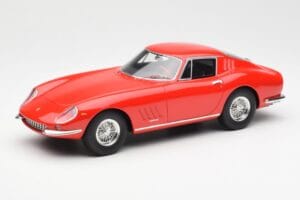
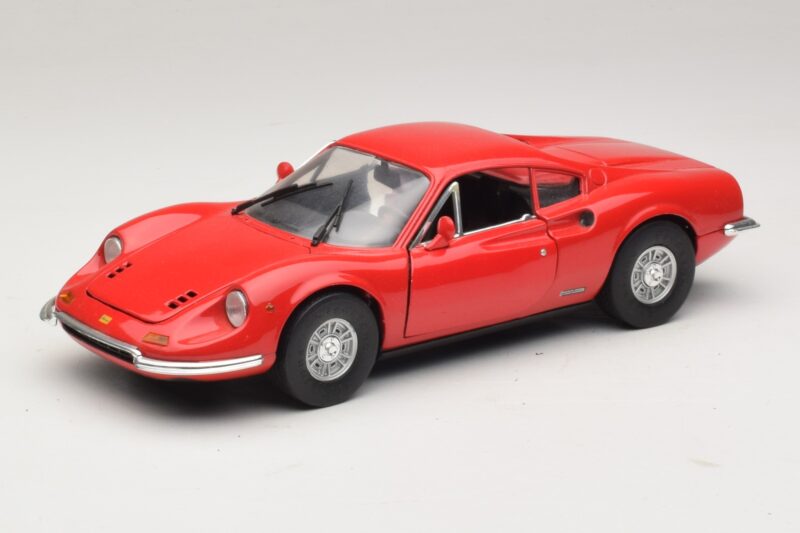
TL;DR: Majorette's 1:18 diecast Ferrari Dino 246 GT recreates the 1972 Pininfarina-bodied coupe in red, with opening doors, hood, and trunk exposing the transverse-mounted V6. Built to a mass-market diecast standard, it suits a Ferrari shelf on a budget rather than a hero display piece.
The Dino 246 GT never wore a Ferrari badge, and that quirk of marketing history still shapes how collectors approach it. Majorette's diecast take skips the ceremony and focuses on the shape: Pininfarina's low coupe roofline, the integrated bumpers, and a stance that reads correctly even at a budget-conscious price.
Lift the hood on this Dino and the transverse-mounted V6 sits exposed, a layout that still surprises buyers used to seeing Ferrari engines mounted lengthwise up front. The doors swing clear on their hinges, the trunk lifts to show the shallow rear luggage space the real car offered, and all three panels settle where they're left rather than drifting shut. That kind of hands-on access is the whole point of this piece. A sealed-body diecast would hide the cabin behind glazing; here, the driver's seat, the dash, and the gear lever are all reachable with a fingertip, which matters on a car whose mid-engine packaging is half the story.
Zinc alloy gives this model real heft when it clears its packaging, a density no plastic toy can match. That same metal construction is what lets the hinges hold their panels open without sagging, since diecast tolerates the wear of repeated handling far better than resin ever could. Majorette has built its reputation on accessible, toy-adjacent diecast rather than hand-finished limited runs, and this Dino sits at that end of the market: the panel gaps run a touch wider than a premium resin casting would allow, and the interior detail is simplified rather than hand-painted. None of that undercuts the core shape, which is where this price tier earns its keep.
Ferrari sold the Dino 246 GT under a separate marque, named for Enzo Ferrari's son Alfredino, specifically so the car wouldn't be judged against the V12 front-engine cars that carried the Prancing Horse. The V6 sat behind the cabin, a packaging decision that gave the 246 sharper handling than its badge-mates and influenced how Ferrari built mid-engine road cars for decades after. Collectors who know this history treat the lack of a Ferrari crest on the nose as a feature of the story, not an omission this model got wrong.
Pininfarina drew the 246's bodywork with a low scalloped intake ahead of the rear wheel and a roofline that curves without a hard break, a shape this diecast reproduces at its own price point rather than chasing museum-grade panel fit. Built from 1969 into the early 1970s, the 246 was Ferrari's first series-produced mid-engine road car, a template the 308 and everything after it followed. A 1972 example, like the one this model represents, sits toward the end of that production run, after the factory had worked out the early build issues.
A Majorette diecast at this price point isn't competing with hand-built resin Ferraris, and it shouldn't be judged by that yardstick. It works as an entry point into Ferrari collecting, or as the piece that lets a new collector handle opening panels and a visible engine bay before committing to a pricier, sealed-body resin casting later. At 1:18, the Dino's compact mid-engine proportions read clearly on a standard cabinet shelf without demanding the floor space a 1:12 or a longer front-engine Ferrari would need. Pair it with other 1970s mid-engine Italian coupes, or let it stand alone as the car that proved Ferrari could build something other than a V12 grand tourer.