Last one
This model is currently sold out. Enter your email and we'll let you know when it's back in stock.
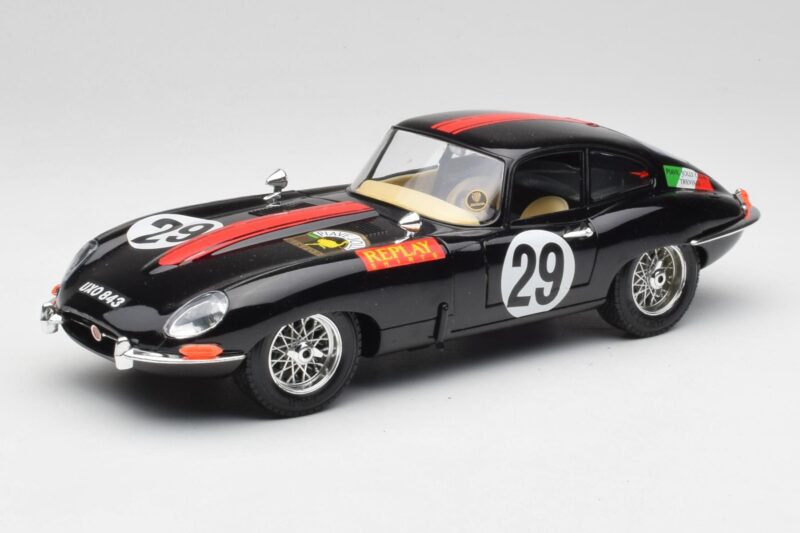
TL;DR: Bburago's 1:18 diecast Jaguar E-Type #29 in black race livery reproduces the sports car in historic GT competition trim rather than road-going form. Mass-market diecast pricing makes this an accessible way to add a raced E-Type to a period motorsport shelf.
The E-Type is remembered mainly as a road car, but its lightweight construction made it a genuine competitor on period racetracks too, and this number 29 livery honors that side of the car.
The black paint here carries the number 29 roundel and simple period-style graphics rather than a road car's chrome brightwork, and Bburago's tooling captures the E-Type's long bonnet and fastback roofline just as convincingly in this competition guise as it does in showroom trim. As a mass-market diecast brand, Bburago prioritizes an accessible price point over the panel-gap precision a resin specialist would chase, but the E-Type's shape reads clearly regardless, since it was never a car that needed elaborate racing addenda to look purposeful. The doors open on functioning hinges into a simply detailed cabin, appropriate to a car stripped for competition use.
Jaguar's own competition department and independent teams campaigned lightweight E-Types in period GT racing during the 1960s, exploiting the car's relatively low weight and strong power output to compete against contemporary rivals from Ferrari and Aston Martin. Those racing E-Types differed from road cars mainly in weight-saving details rather than dramatic bodywork changes, which is part of why a livery like this one still reads as recognizably E-Type rather than as a heavily modified racer. That dual road-and-track identity is a significant part of the model's lasting appeal.
Displayed beside a road-going E-Type from the same series, this racing example shows the shape's dual life as both a showroom favorite and a genuine competition machine.