New arrival
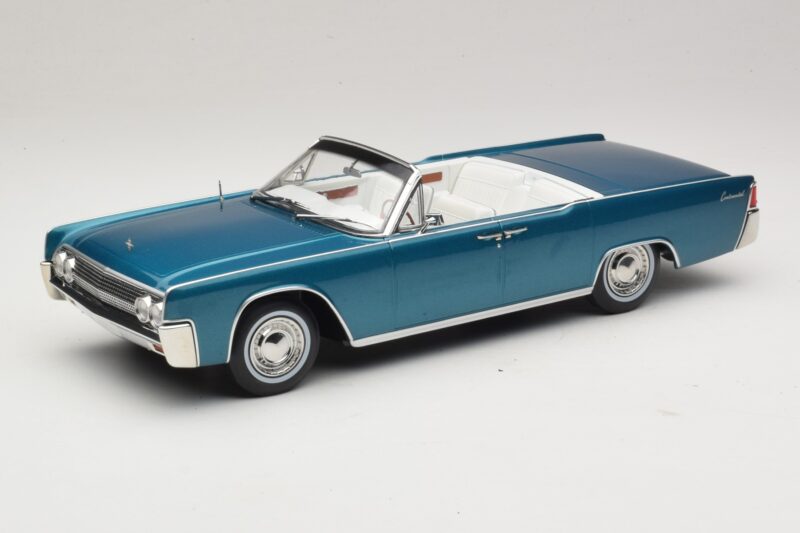
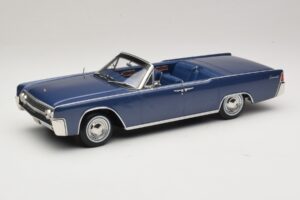
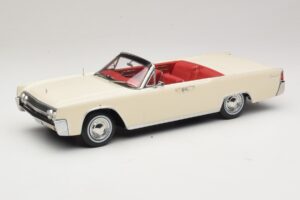
TL;DR: KK-Scale's 1:18 diecast Lincoln Continental Convertible reproduces the 1963 open-top fourth-generation body in turquoise metallic, a sealed one-piece casting with the model's rear-hinged door styling captured in the body lines and a correctly molded folded-top silhouette. A bright counterpoint to KK-Scale's sedan version of the same car.
Lincoln's fourth-generation Continental convertible carried the same formal, rear-hinged-door styling as its sedan sibling, but folding the roof away turned a serious luxury car into something closer to a parade piece. Turquoise metallic plays into that lighter character far more than the sedan's darker tones typically allow. KK-Scale's 1:18 casting is molded as a single fixed body.
This convertible is reproduced as a single, fixed-body casting rather than an articulated model, so the folded top and the car's distinctive rear-hinged door lines are built directly into the body's surface rather than relying on moving panels. That's a sound approach for a shape this specific: the top line, chrome window frame remnants, and rear deck proportions hold as fixed, accurate geometry rather than depending on parts that would need to align correctly every time they're repositioned. The reversed door handles and trim, the real car's signature detail, read clearly in the shut lines even without functioning hinges.
Turquoise metallic sits toward the brighter end of Lincoln's period color palette, and the paint carries visible flake under direct light, giving the open cabin area genuine depth rather than a flat, single-tone wash. With the top down, the interior is on full display, and KK-Scale fills that space with a properly trimmed bench seat, a detailed dashboard, and the correct Continental script badging rather than a simplified placeholder cabin. Chrome trim around the windshield frame and body side is plated rather than painted, and the wheels carry the correct period hubcap pattern seen on 1963 convertibles.
Elwood Engel's flat, unornamented redesign translated directly to the convertible body, and removing the roof didn't soften the car's formal stance the way it did on softer, rounder competitors from the same era. The rear-hinged doors carried over unchanged, still improving rear-seat access on a car this long, and the convertible added a power-folding top mechanism that was genuinely advanced for 1963, one of the more complex mechanisms in the American industry at the time. That engineering complexity is part of why the convertible variant commanded a real premium over the sedan when new.
Lincoln's Continental convertible became something of a default choice for ceremonial and parade use through the 1960s, its open cabin and formal stance suiting processions far better than a sportier, lower-slung rival. That ceremonial reputation gives the convertible a slightly different collecting angle than the sedan: buyers drawn to presidential-era American prestige rather than strict marque completism often gravitate here first. Combined with the model's genuine rarity as an open-top survivor today, that history adds real weight to a casting many collectors might otherwise judge on color alone.
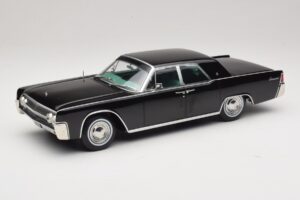
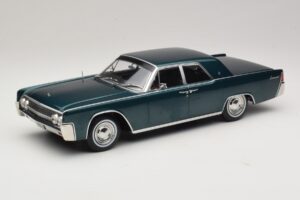
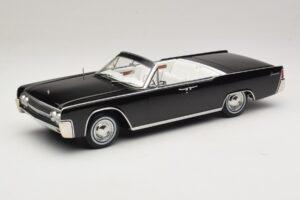
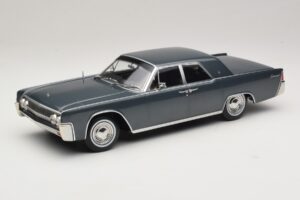
This turquoise convertible shares its tooling with KK-Scale's black Bad Boys version, and setting the two side by side shows how dramatically color alone changes the read of the same open-top body, bright and ceremonial against dark and purposeful. At 1:18, the convertible's long body runs close to 27 centimeters with the top folded, so it needs the same shelf allowance as the sedan version, plus a little extra visual breathing room since the open cabin invites closer inspection. It pairs naturally with the hardtop sedan from the same generation, or stands on its own as a study in how Lincoln's formal 1960s design worked with the roof removed. The fixed-body construction is the right call here, trading moving panels for geometry that holds its shape indefinitely.