New arrival
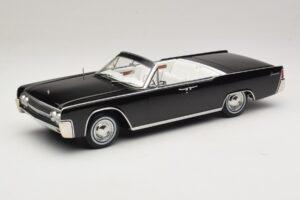
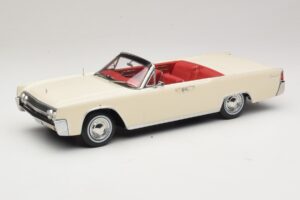
TL;DR: KK-Scale's 1:18 diecast Lincoln Continental Convertible reproduces the 1963 model in white, the same open-top body style the Kennedy administration used as its presidential state car. Diecast construction, sealed one-piece shell, cast-down convertible top, and suicide-door panel lines reproduced in zinc alloy for a mid-tier display piece.
White Continental convertibles rarely carried political weight after 1963, but this generation's body shares its silhouette with a car history remembers clearly. Lincoln's convertible Continental became the preferred choice for the era's state motorcades under several administrations, a connection that still colors how collectors read this cream-white civilian example today, long after the headlines moved on.
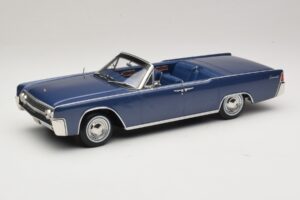
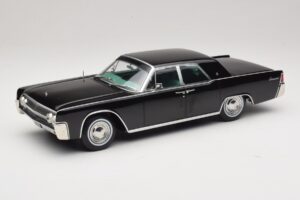
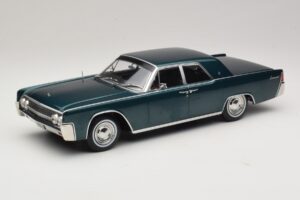
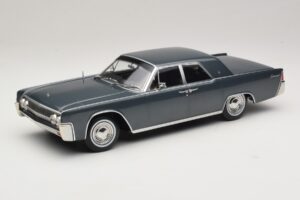
Lincoln's fourth-generation Continental convertible ran from 1961 through 1969, and for much of that span a car from this body style served as the White House's open state car, used by Kennedy and the presidents who followed him through public appearances and motorcades. That history is why the nameplate still carries presidential weight decades later, even on a civilian-spec example like this white 1963 model, built for a private buyer rather than government service. The connection is through body style and era rather than this specific unit: the actual Dallas car was a 1961 example finished in dark blue, a detail worth knowing before assuming provenance. What this model captures instead is the shared design language of that whole run, suicide doors, low beltline, chrome trim, bodywork a generation of Americans associates with the office itself.
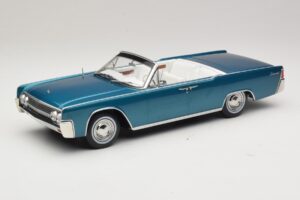
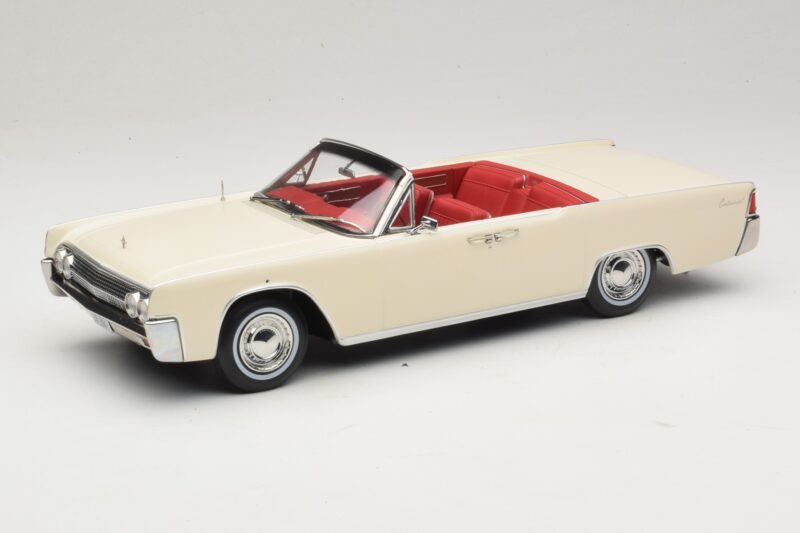
The fourth-generation Continental's rear-hinged back doors, popularly called suicide doors, gave the body a distinctive profile that no contemporary competitor shared, and KK-Scale reproduces that panel layout as a fixed, sealed shell rather than a set of hinges a buyer can work. Nothing on this model opens, and the convertible top is cast down rather than built as a separate folding assembly, so the whole silhouette reads as one continuous, open-air shape from windshield header to trunk lid. That choice suits the subject: a lowered top is the convertible's most photographed state, and a single casting holds the beltline crisp where a moving top would need clearance gaps along its stowage well.
Lifted from its box, the model carries the dense, settled weight that zinc alloy diecast always brings, a mass resin alternatives cannot match at this scale. That heft comes with a trade collectors should know going in: diecast tolerances run a touch wider than cast resin, so door and panel lines read slightly broader than a hand-finished resin piece would hold. KK-Scale works within that reality rather than fighting it, keeping the sealed body's shut lines consistent along the fender line and deck lid, and letting the metal's durability do the rest. A diecast shell like this one holds its shape for decades of handling between display moves, which a lighter material cannot always promise.
With nothing to open, the paint and trim do the talking. White sits clean against cream interior tones, chrome window surrounds and bumper trim are picked out in bright tampo rather than left to blend into the body color, and the convertible's open cabin shows off seat detail and dash texture that a closed-roof sedan would hide entirely. Under a display lamp the gloss holds even across the long hood and deck, the two longest unbroken panels on any Continental of this generation. That exposed cabin is the real payoff of an open-top casting: everything a closed car keeps hidden behind glass sits in full view here.
At 1:18 a full-size convertible like this one runs close to 27 centimeters nose to tail, enough presence to anchor a shelf of smaller postwar sedans without crowding a standard cabinet. It works best grouped with other early-1960s American iron rather than isolated as a solo centerpiece, since the suicide-door profile and acreage of chrome read most clearly against contemporaries of similar scale and era. Buyers chasing the actual Kennedy connection should look elsewhere for a dark blue 1961 example; this white 1963 model is better understood as the civilian side of that same design story, accessible where a presidential-provenance piece would not be. For a collector building a vintage American lineup on a mid-tier diecast budget, that honest distinction is exactly the point. Pair it with other KK-Scale 1960s releases to keep paint and casting quality consistent across the display, since mixing tiers often shows in side-by-side comparison.