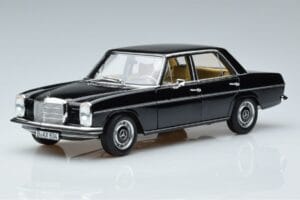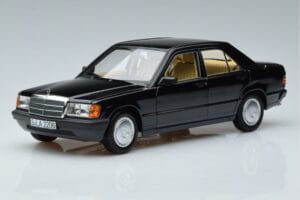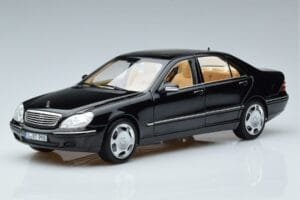
Mercedes S-Class W220 S600 Limited Edition Norev 1:18
Price:
91.00 €
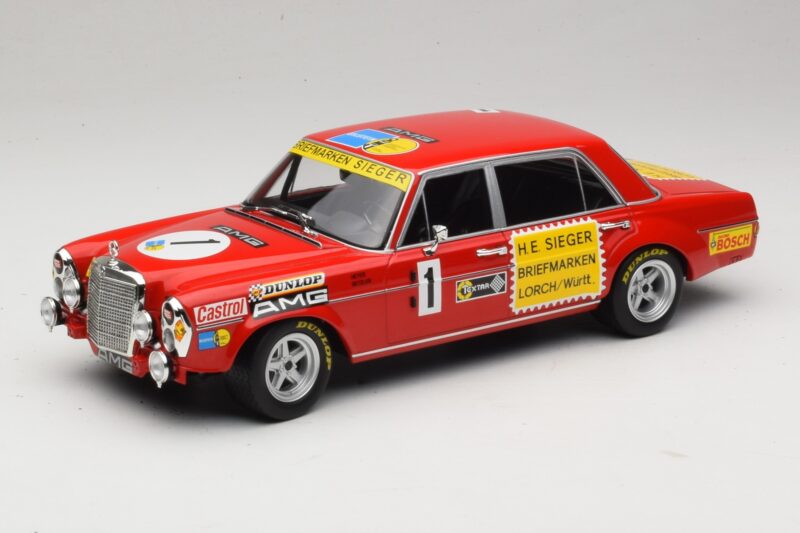
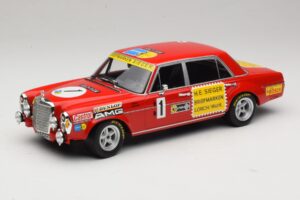
TL;DR: The Minichamps Mercedes 300 SEL 6.8 1:18 is a diecast replica of the #1 car driven by H. Heyer and Betzler at the 1972 24 Hours of Nurburgring. The body is a sealed one-piece casting, so the display value sits in the stance, shut lines and race graphics of this 1970s touring entry.
A big luxury saloon is an odd thing to send around the Nurburgring for 24 hours, and that mismatch is the charm of this model. The Minichamps Mercedes 300 SEL 6.8 1:18 turns a stately 1970s sedan into a numbered endurance entrant, carried in diecast with the weight that suits its size.
The body is a single sealed casting, so everything worth judging sits on the surface. Start with stance. A W109-based 300 SEL is a long, upright, formal shape, and turning it into a racer meant swapping showroom elegance for number roundels, race lettering and a purposeful look at the wheels. Run a fingernail along a door line and it tracks one clean groove, since no hinge tolerance has to be accommodated. Glazing should sit flush, chrome-effect trim should stay crisp against the paint, and the numbers should follow the door shape rather than drift across it. Those checks separate a careful casting from a rushed one.
Zinc alloy gives a car this large the mass it deserves. Lift it from its foam and the heft is the first thing you notice, which suits a subject whose real counterpart was a big, heavy sedan. Metal also holds its geometry across years on a shelf, and paint sits on a hard shell, so gloss reads even and deep under a display lamp. The trade-off is slightly broader casting tolerances than resin allows, which shows up as marginally wider panel gaps. At 1:18 the length runs well past 25 cm, so measure the shelf before planning a row of sedans.
The 300 SEL 6.8 started as Stuttgart's large luxury saloon, and the racing version leaned on an enlarged form of the 6.3-litre V8 used in the road car. The concept was blunt: let displacement overcome size and weight. The AMG-built 300 SEL 6.8 is best known from the 1971 Spa 24 Hours, where it finished second overall, and that run made the oversized-sedan formula famous. The 1972 Nurburgring entry on this model is a separate chapter of the same idea, carried by number 1 and the names H. Heyer and Betzler.
The Nurburgring's long lap and 24-hour format reward durable, powerful cars, which makes a big-engined sedan a reasonable fit. On a shelf, sedan-bodied racers share an upright silhouette, so models from the 1970s touring and endurance era line up convincingly. Collectors arranging by decade get a clear anchor here, while those who collect by marque gain a very different Mercedes from the usual road coupes and roadsters. The appeal is niche rather than universal, which is exactly why it stands out in a row of sports cars.
Minichamps casts this in diecast, so expect mid-tier finishing: clean printed graphics, glazing that fits tightly and the compromises of metal casting visible only at close range. Compare three things against period photos first: ride height, wheel offset and where the number roundels sit. Keep the model out of direct sun, which fades printed graphics over the years, and dust it with a soft brush rather than a cloth that can snag trim. At 1:18 it earns a cabinet shelf with breathing room around it. It is a conversation piece more than a crowd favorite. Buyers who want a heavyweight touring racer with an unusual backstory can order it as the anchor of a 1970s touring display.