Last one
Back in stock
This model is currently sold out. Enter your email and we'll let you know when it's back in stock.
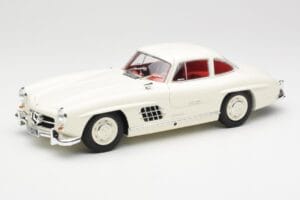
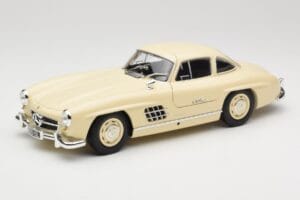
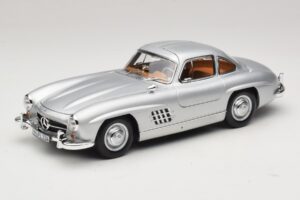
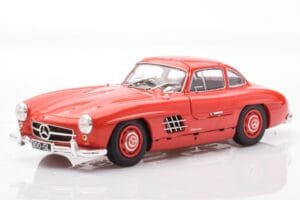
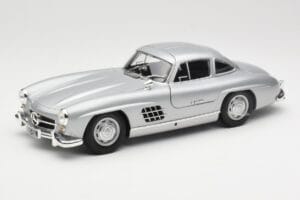
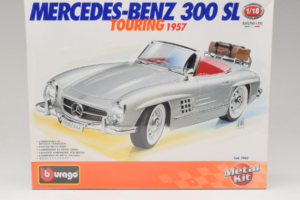
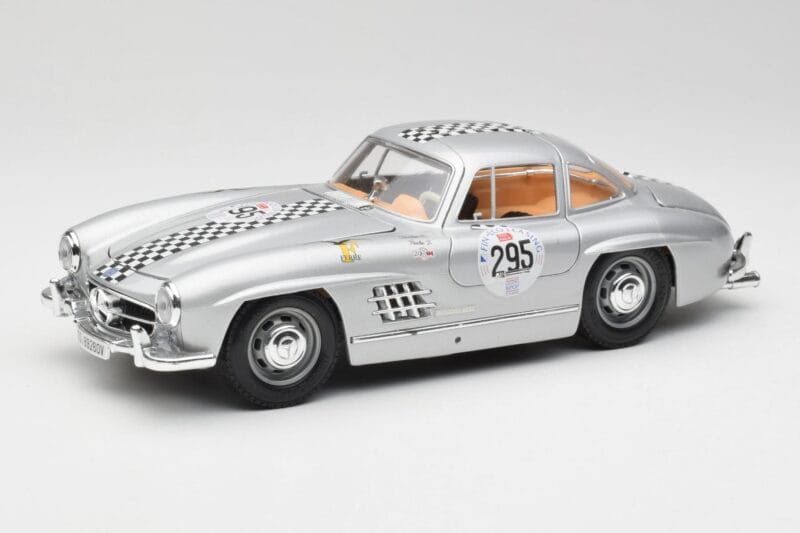
TL;DR: Bburago's 1:18 diecast Mercedes 300 SL W198 reproduces the #295 racing livery from 1954, with opening gullwing doors that give this shape its distinctive signature. This is a used model; the box shows traces of storage, the casting itself intact. A foundational vintage GT racer for a Mercedes competition shelf.
The 300 SL's upward-swinging doors weren't a styling flourish but a structural necessity, and Bburago's diecast keeps that mechanism functional on a genuine racing livery.
The body is zinc alloy, and the gullwing doors open upward on this casting, letting a collector recreate the car's most famous visual trait directly rather than settling for a static shape. Panel gaps around the hinge points run a touch wider than a hand-finished resin build, an ordinary trade for a mechanism that actually functions on a diecast model. The #295 racing livery's numbering and trim are reproduced with reasonable clarity for this price tier, though fine detail stops short of a specialist resin manufacturer's work. This example is used, and the box carries traces of storage while the model itself shows none of that wear.
The 300 SL's upward-opening doors were a direct consequence of its lightweight tubular space frame chassis, which ran high door sills that made conventional hinged doors impractical. Rather than compromise the chassis, Mercedes' engineers designed doors that opened upward instead, turning a structural constraint into the car's most recognizable feature. Raced with genuine success in the early 1950s, the 300 SL helped rebuild Mercedes' competition reputation after the war, making the #295 livery a piece of documented motorsport history rather than a generic period racer.
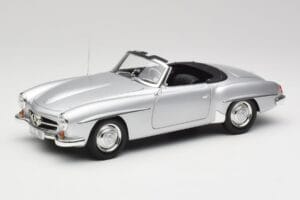
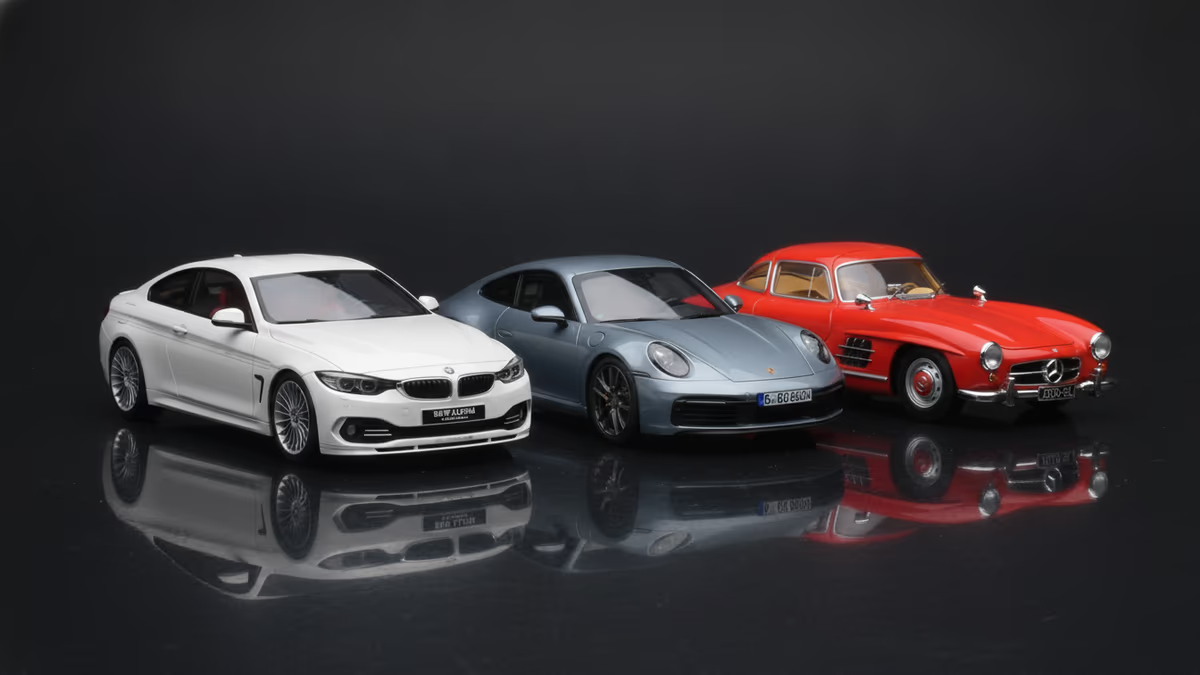
At 1:18, the 300 SL's low, curved coupe body and upward-swinging doors give it strong visual distinction against nearly any other car on a shelf, making it a natural centerpiece rather than a supporting piece. Displayed with doors raised, it draws attention immediately, and pairing it with the later 230 SL Pagoda shows Mercedes' sports-car lineage shifting from racing pedigree toward road-going elegance across the following decade.