Last one
Used
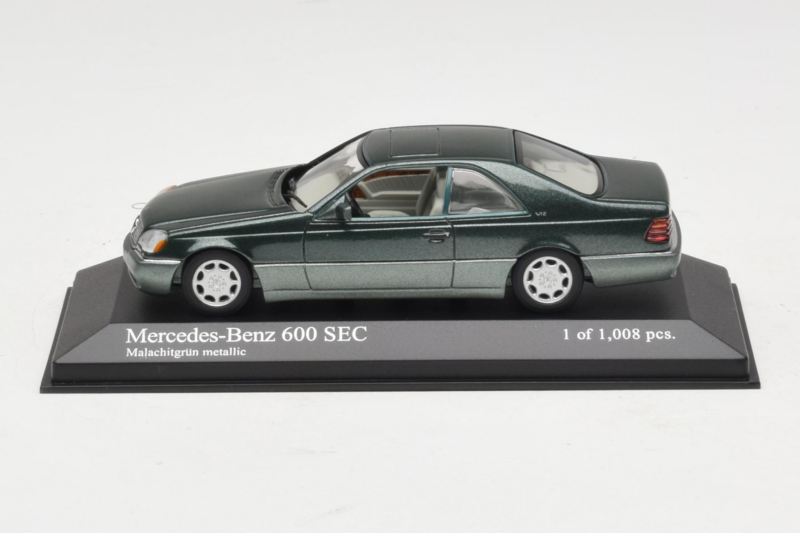
TL;DR: Minichamps' 1:43 diecast reproduces the Mercedes 600 SEC, the V12 coupe atop the W140 S-Class range, finished in green metallic. At roughly 10cm long, it delivers flagship-era Mercedes presence at a fraction of the shelf space a 1:18 coupe would need.
The W140 generation was Mercedes at its most uncompromising, and the 600 SEC sat at the top of that range as the V12 coupe variant.
At 1:43, this Minichamps piece is small enough to sit three or four deep on a single shelf row, which matters for anyone building a broader Mercedes lineup rather than dedicating an entire cabinet to one car. The green metallic finish is a period-correct choice, one of the quieter tones Mercedes offered against the more common black and silver seen on most 600 SEC survivors today. Minichamps built its reputation on precise, small-scale diecast, and a flagship coupe like this rewards that approach: the W140's slab-sided proportions and upright greenhouse translate cleanly even at reduced size, where a less careful tool would blur the coupe's heavy-shouldered stance into something generic. The trade-off of the scale is obvious and worth stating plainly: interior and engine detail stay simplified, and this is a car meant to be appreciated for silhouette and paint rather than opened up and inspected panel by panel.
The W140 launched in 1991 as Mercedes' most technically ambitious S-Class yet, and the 600 SEC used the range-topping V12 in a two-door body that later carried the coupe lineage forward as the brand reorganized its flagship nomenclature. It was never a volume seller, closer to a statement of engineering reach than a mainstream product, which is exactly why a 1:43 replica of it still has appeal: most collectors will never see one in person, let alone from behind the wheel. Displayed alongside other early-90s German flagships, it reads as the quiet, expensive alternative to more overt supercar coupes of the same period, and a diecast at this scale lets that comparison happen on one shelf instead of across a room.