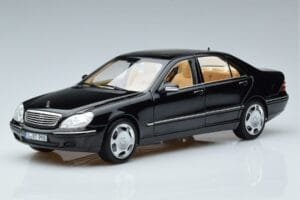
Mercedes S-Class W220 S600 Limited Edition Norev 1:18
Price:
91.00 €
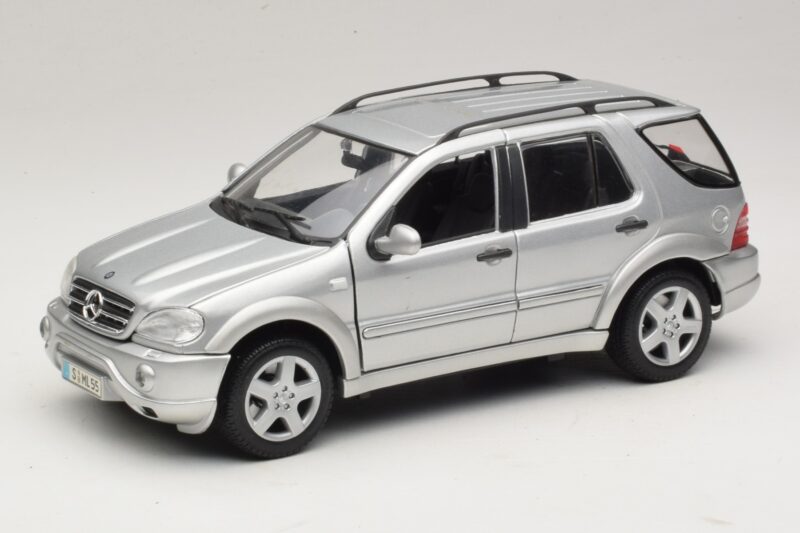
TL;DR: Maisto's 1:18 diecast Mercedes-Benz ML55 AMG W163 reproduces the 2001 V8 performance SUV in Silver, with opening doors and hood exposing the engine bay and cabin. Built as AMG's early entry into SUV tuning, this casting suits collectors assembling performance SUV or Mercedes-AMG lineups.
By the early 2000s, AMG had moved beyond sedans and coupes to apply its tuning formula to Mercedes' first SUV, dropping a 5.5-liter V8 under the ML's hood and creating one of the earliest examples of a genre that would later define an entire segment: the performance SUV.
This ML55 opens at the doors and hood, revealing a V8 engine bay laid out to suggest the larger displacement AMG fitted compared to the standard six-cylinder ML models, a detail that matters on a performance variant where the engine itself is part of the appeal. The cabin behind the opening doors carries AMG-specific touches molded into the dashboard and seating, distinguishing it from the standard ML320 Maisto also produced in this body style. Posing the hood open lets a collector display the one feature that actually separates this SUV from its more common siblings on the same platform. Maisto's decision to produce both the standard ML and this AMG version gives collectors a built-in before-and-after comparison on the same platform.
The zinc alloy body carries the same real heft any 1:18 diecast in this body style delivers, denser than the plastic SUV toys sold alongside it at mass retail. The Silver finish is a natural choice for an AMG performance model, a shade that reads as understated rather than flashy, consistent with how AMG positioned its early SUV work as serious engineering rather than show-car styling. Chrome trim around the grille and AMG-specific wheels are picked out cleanly, and the larger wheel-to-arch fit that distinguished the AMG version visually from standard MLs is represented correctly in the casting's proportions, a small but telling detail for anyone who knows to look for it.
AMG began as an independent tuning operation before becoming fully integrated into Mercedes-Benz, and by the time the ML55 arrived, the brand had built a reputation on reworking sedans and coupes with larger engines and sharpened chassis tuning, a reputation built largely on four-door sedans and two-door coupes, which made the SUV application feel like a genuine departure for the brand rather than an obvious next step. Applying that formula to an SUV was a natural but still notable extension, since performance SUVs were not yet the crowded category they would become in later decades. The ML55 represents AMG testing that formula on a body style its engineers had not previously touched.
Fitting a 5.5-liter V8 into the ML's engine bay gave the SUV meaningfully more power than the standard six-cylinder versions, while AMG's suspension and brake upgrades aimed to keep that power usable rather than just adding a bigger number to the spec sheet. The approach previewed a formula that would later become standard across the industry: take a mainstream SUV platform, add a performance engine and chassis package, and sell it at a premium to buyers who wanted both utility and genuine speed. For collectors tracking the SUV segment's performance evolution, the ML55 is a credible early chapter in that story.
At 1:18, the ML55 AMG's boxy proportions carry the same shelf presence as any W163-based casting, but its AMG badging and V8-correct detailing give it a different story to tell next to a standard ML on the same shelf. Opening doors and hood keep it interactive, letting a collector show off the engine bay that is this model's real point of distinction. Mass-market diecast pricing makes an AMG-badged SUV accessible in a way an AMG-licensed resin piece rarely would be, which suits a model whose appeal rests more on historical interest than on display drama. Paired with the standard ML320, this casting completes a small but genuine before-and-after story within Mercedes' early SUV lineup.