Last one
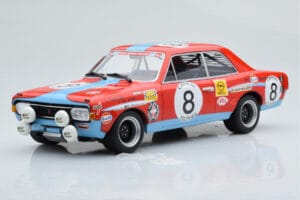
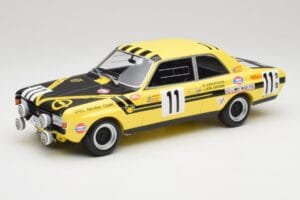
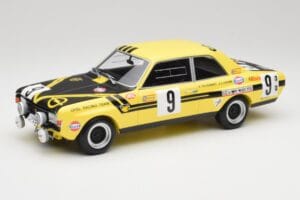
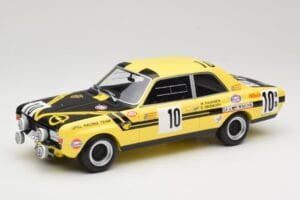
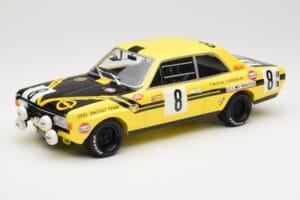
Opel Commodore A Steinmetz #8 Tuerlinx / T. Pilette 24 Hours of Spa 1972 Minichamps 1:18
Only 1 left
Price:
128.00 €
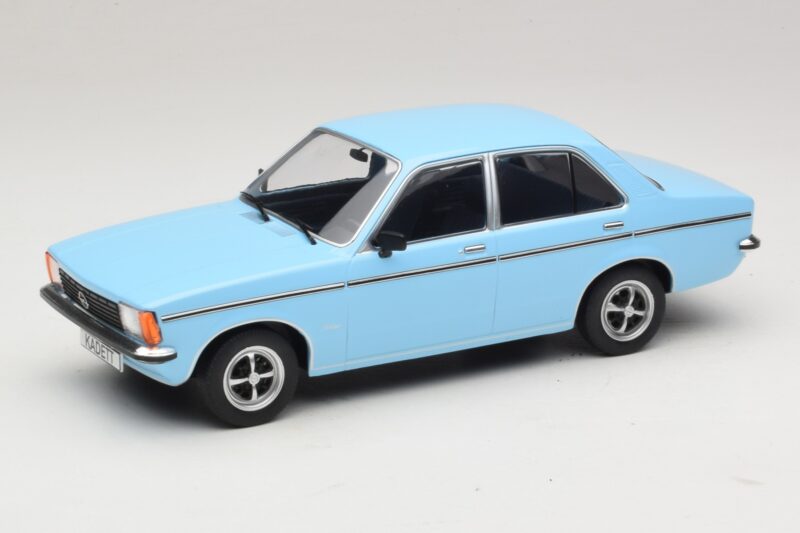
TL;DR: The MCG Opel Kadett C2 1:18 is a diecast model of the 1977 German compact sedan, finished in Light Blue on a one-piece body with fixed panels. Metal weight, straight-edged 1970s proportions, and clean exterior shut lines make it an accessible retro piece for collectors building a German everyday-car shelf.
Not every shelf needs a supercar. The Kadett C was Opel's rear-wheel-drive compact of the 1970s, a car that filled driveways and company car parks rather than poster walls, and that ordinariness is exactly what gives a well-cast 1:18 version its charm. This MCG Opel Kadett C2 in Light Blue treats it with respect.
Here the body is a single sealed shell, so everything worth judging sits on the surface. Run a fingernail along the door line and it follows one continuous groove, with no hinge gaps interrupting the profile. Because nothing has to swing open, the casting can hold its roofline, window pillars, and flat panel sides straight and unbroken, which matters on a car whose whole design language is tidy corners and plain surfaces. Zinc alloy adds the mass a collector registers first when lifting the model from its packaging, and it keeps that geometry stable on a shelf for years. The trade-off is plain: no interior access, all the effort on the outside.
Light Blue suits a 1970s subject, and on a hard metal shell a solid color reads even and deep rather than thin. When inspecting the model, check stance first: ride height, wheel position inside the arches, and tire proportions expose a generic casting faster than any badge. Then look at the nose and tail details against reference photos, since the C2 label marks the 1977 revision of the Kadett C generation. Clean glazing, crisp grille and lamp definition, and tidy printed trim separate a considered diecast from a toy-grade one. At 1:18 the car runs to roughly 23 cm, a modest footprint beside larger sports models.
The Kadett C arrived in 1973 as a rear-wheel-drive compact and stayed in production until 1979. It belonged to General Motors' small-car family, the same engineering lineage that gave American showrooms the Chevrolet Chevette, which offers US collectors an easy point of connection. Opel sold the C in several body styles, the sedan being the plainest and most common, and the 1977 update brought the revised styling this C2 model follows. Driving was honest rather than exciting, with a straightforward rigid rear axle and a range of modest engines. That honesty makes the Kadett a good counterweight to wilder machines on the same shelf.
Anyone tracking the decade's European daily drivers will find the Kadett a natural companion for other compact sedans of the era. Placed beside a larger executive saloon or a sports coupe, its small proportions tell the scale story at once: 1:18 turns even a humble compact into a substantial object. Diecast at this accessible tier rewards that approach, because the subject is a car most people actually knew, not an unattainable halo model. Expect the finishing to prioritize the visible surfaces, with simplification accepted where it will not be noticed from normal viewing distance. Group it by marque with other Opel pieces or by decade with neighbors from the 1970s, and the shelf reads as a coherent snapshot.
Place the Kadett under a side-angled light and the paint reveals its depth along the shoulder line. Keep it out of direct sun, because ultraviolet exposure fades paint and dries rubber over long periods, and clear dust with a soft brush rather than a cloth that can drag grit across the clear coat. With no opening panels, handling is simple: lift it by the chassis, not by the bumper edges or small trim. As an entry point the logic holds: an accessible MCG diecast is a straightforward way to explore 1970s retro city cars before committing to hand-built resin. For the shopper ready to order, the Light Blue example suits a cabinet with neutral backgrounds, where the paint stands out without competing with louder neighbors.