Last one
Used
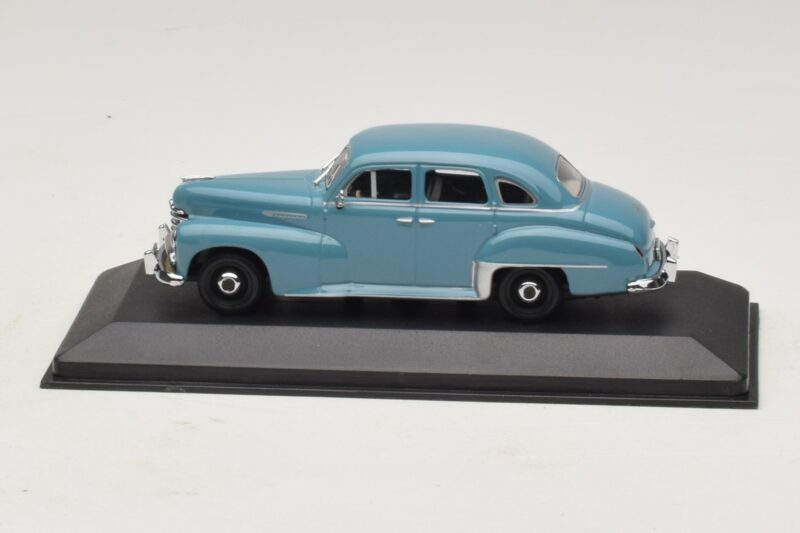
TL;DR: Minichamps' 1:43 diecast Opel Kapitän reproduces the 1951 flagship sedan in blue, a sealed one-piece body holding deep paint and crisp chrome trim across its long bonnet and formal roofline. A quiet entry point for collectors building a postwar German sedan lineage rather than chasing a headline marque.
Opel's Kapitän never chased attention the way a sports car does, and that restraint is exactly why Minichamps picked it. In the early 1950s it was the car a West German executive drove, not flashy but substantial, and the model treats that substance with the same seriousness the original earned on the road.
The body is a sealed, one-piece zinc alloy casting, so the Kapitän carries no moving doors, hood, or trunk, and every bit of the model's craft lives on the outside of the shell. The blue paint sits with real depth on the metal, holding an even gloss across the long bonnet and the formal, upright greenhouse that defined early postwar German sedans. Chrome trim along the beltline, around the headlight bezels, and across the grille is plated rather than painted, keeping the highlights sharp under a display lamp. Shut lines along the doors and trunk read as single, consistent grooves, a precision a sealed casting holds more easily than an articulated body ever could.
At 1:43 a full-size executive sedan like the Kapitän comes down to a shelf-friendly footprint, roughly the length of a hand, without losing the proportions that make it recognizable. That compactness is the whole appeal of this scale for European sedans: a collector can line up a dozen postwar models in the space a single 1:18 piece would need. The trade is detail resolution, since fine interior texture and engine-bay work are simplified at this size, but a car built for quiet competence rather than drama loses little in the translation.
Opel had built the Kapitän nameplate since the late 1930s, and when the line resumed after the war it carried real symbolic weight. It sat above Opel's smaller Olympia and Rekord models, the senior car in the range, aimed at business owners and officials rather than ordinary buyers. Putting a Kapitän back into volume production by the early 1950s was itself a statement about West Germany's industrial recovery, a country rebuilding its capacity to make something as complex as a full-size car again.
The Kapitän was never meant to impress with pace. Its six-cylinder engine and generous cabin were tuned for comfortable long-distance driving, the kind of car that signaled stability rather than ambition. That restraint is part of why the subject rewards a closer look in miniature: nothing about this car needs to shout, and Minichamps' quiet, correct execution matches the original's own temperament.
This Kapitän earns its place less as a centerpiece than as connective tissue, the sedan that makes a 1950s European lineup read as complete rather than selective. It sits comfortably alongside other postwar executive cars, filling in the business-sedan segment that sports cars and rally liveries tend to crowd out of a themed shelf. For a collector assembling a serious postwar German display, that honest, accessible presence matters more than headline appeal, and the sealed body's clean, correct exterior holds up to the close inspection a quiet subject like this one invites.