Last one
Used
This model is currently sold out. Enter your email and we'll let you know when it's back in stock.
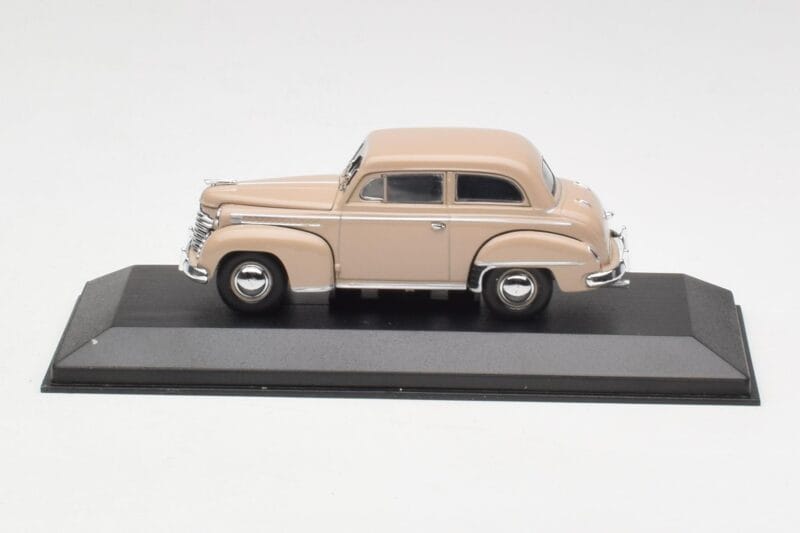
TL;DR: Minichamps' 1:43 diecast Opel Olympia A wears a beige finish over the early-1950s German sedan's rounded, understated postwar body. Compact zinc-alloy construction suits this modest but historically notable subject for a vintage German marque display.
The Olympia A arrived as West Germany's economy rebuilt, and its plain, practical shape says more about that era's priorities than any flashy trim ever could.
This Olympia A's rounded fenders and simple grille give Minichamps a straightforward shape to tool accurately at 1:43, without the complex chrome brightwork that more expensive contemporaries carried. The beige finish needs to sit flat and even rather than metallic, since this was an economy-oriented sedan whose original paint options leaned toward practical solid colors rather than showy flake finishes. Minor chrome trim around the grille and bumpers should read crisp against the beige body, providing just enough contrast to define the car's edges without overstating its modest original specification. Because the Olympia A carried few flourishes even when new, this model's success depends on getting the proportions and stance right rather than on elaborate surface detail, and Minichamps' small-scale sedans generally handle that discipline well.
The Olympia name traces back to Opel's prewar lineup, and its early-1950s revival became one of the cars that put ordinary German families back on the road during postwar recovery, a role quite different from the luxury or performance stories that dominate most collector shelves. At 1:43, its compact size lets it sit comfortably among other early-1950s European sedans, illustrating how modestly most manufacturers were building at the time compared to a decade later. Collectors interested in postwar German industrial history will find more meaning here than those chasing performance pedigree, and that honest positioning is the right way to approach this piece.