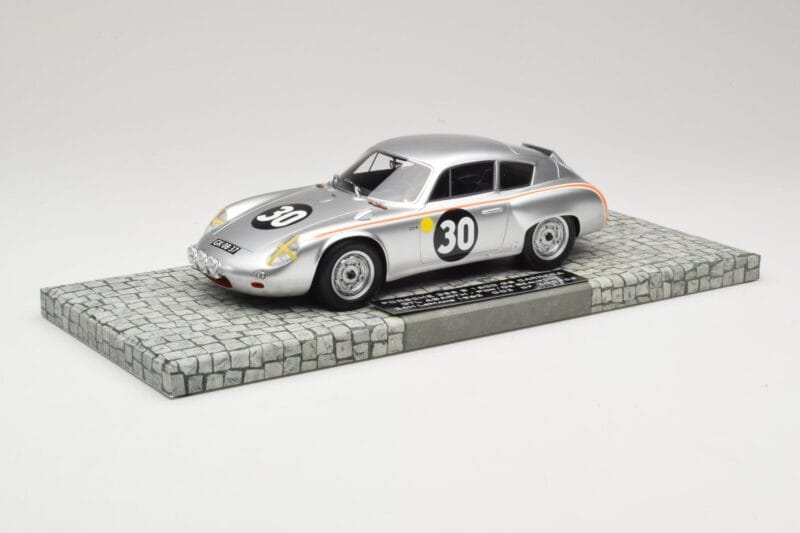
Porsche 356B 1600 GS Carrera GTL #30 B. Pon / C. Godin de Beaufort 24 Hours of Le Mans 1962 Minichamps 1:18
Sold out
1
/
6
Minichamps' 1:18 diecast Porsche 356B 1600 GS Carrera GTL Abarth #30 reproduces the aluminum-bodied Turin racer campaigned by Dutch privateers Ben Pon and Carel Godin de Beaufort at Le Mans in 1962. Zinc alloy construction and detailed livery graphics place this historic GT entry at mid-tier pricing for collectors building a vintage Porsche motorsport shelf.
1 / 6
[{"index":0,"id":"1037920","thumb":"https:\/\/models118.com\/wp-content\/uploads\/2026\/06\/porsche-356b-1600-gs-carrera-gtl-30-b-pon-c-godin-de-beaufort-24h-le-mans-1962-minichamps-1-18-300x200.jpg","medium":"https:\/\/models118.com\/wp-content\/uploads\/2026\/06\/porsche-356b-1600-gs-carrera-gtl-30-b-pon-c-godin-de-beaufort-24h-le-mans-1962-minichamps-1-18-800x533.jpg","full":"https:\/\/models118.com\/wp-content\/uploads\/2026\/06\/porsche-356b-1600-gs-carrera-gtl-30-b-pon-c-godin-de-beaufort-24h-le-mans-1962-minichamps-1-18.jpg","srcset":"https:\/\/models118.com\/wp-content\/uploads\/2026\/06\/porsche-356b-1600-gs-carrera-gtl-30-b-pon-c-godin-de-beaufort-24h-le-mans-1962-minichamps-1-18-800x533.jpg 800w, https:\/\/models118.com\/wp-content\/uploads\/2026\/06\/porsche-356b-1600-gs-carrera-gtl-30-b-pon-c-godin-de-beaufort-24h-le-mans-1962-minichamps-1-18-64x43.jpg 64w, https:\/\/models118.com\/wp-content\/uploads\/2026\/06\/porsche-356b-1600-gs-carrera-gtl-30-b-pon-c-godin-de-beaufort-24h-le-mans-1962-minichamps-1-18-300x200.jpg 300w, https:\/\/models118.com\/wp-content\/uploads\/2026\/06\/porsche-356b-1600-gs-carrera-gtl-30-b-pon-c-godin-de-beaufort-24h-le-mans-1962-minichamps-1-18-480x320.jpg 480w, https:\/\/models118.com\/wp-content\/uploads\/2026\/06\/porsche-356b-1600-gs-carrera-gtl-30-b-pon-c-godin-de-beaufort-24h-le-mans-1962-minichamps-1-18.jpg 1800w","sizes":"(max-width: 1023px) 400px, 640px","srcsetAvif":"https:\/\/models118.com\/wp-content\/uploads\/2026\/06\/porsche-356b-1600-gs-carrera-gtl-30-b-pon-c-godin-de-beaufort-24h-le-mans-1962-minichamps-1-18-800x533.jpg.avif 800w, https:\/\/models118.com\/wp-content\/uploads\/2026\/06\/porsche-356b-1600-gs-carrera-gtl-30-b-pon-c-godin-de-beaufort-24h-le-mans-1962-minichamps-1-18-64x43.jpg.avif 64w, https:\/\/models118.com\/wp-content\/uploads\/2026\/06\/porsche-356b-1600-gs-carrera-gtl-30-b-pon-c-godin-de-beaufort-24h-le-mans-1962-minichamps-1-18-300x200.jpg.avif 300w, https:\/\/models118.com\/wp-content\/uploads\/2026\/06\/porsche-356b-1600-gs-carrera-gtl-30-b-pon-c-godin-de-beaufort-24h-le-mans-1962-minichamps-1-18-480x320.jpg.avif 480w, https:\/\/models118.com\/wp-content\/uploads\/2026\/06\/porsche-356b-1600-gs-carrera-gtl-30-b-pon-c-godin-de-beaufort-24h-le-mans-1962-minichamps-1-18.jpg.avif 1800w","srcsetWebp":"https:\/\/models118.com\/wp-content\/uploads\/2026\/06\/porsche-356b-1600-gs-carrera-gtl-30-b-pon-c-godin-de-beaufort-24h-le-mans-1962-minichamps-1-18-800x533.jpg.webp 800w, https:\/\/models118.com\/wp-content\/uploads\/2026\/06\/porsche-356b-1600-gs-carrera-gtl-30-b-pon-c-godin-de-beaufort-24h-le-mans-1962-minichamps-1-18-64x43.jpg.webp 64w, https:\/\/models118.com\/wp-content\/uploads\/2026\/06\/porsche-356b-1600-gs-carrera-gtl-30-b-pon-c-godin-de-beaufort-24h-le-mans-1962-minichamps-1-18-300x200.jpg.webp 300w, https:\/\/models118.com\/wp-content\/uploads\/2026\/06\/porsche-356b-1600-gs-carrera-gtl-30-b-pon-c-godin-de-beaufort-24h-le-mans-1962-minichamps-1-18-480x320.jpg.webp 480w, https:\/\/models118.com\/wp-content\/uploads\/2026\/06\/porsche-356b-1600-gs-carrera-gtl-30-b-pon-c-godin-de-beaufort-24h-le-mans-1962-minichamps-1-18.jpg.webp 1800w","alt":"Porsche 356B 1600 GS Carrera GTL #30 B. Pon \/ C. Godin de Beaufort 24 Hours of Le Mans 1962 Minichamps 1:18 107626830 Diecast"},{"index":1,"id":1038032,"thumb":"https:\/\/models118.com\/wp-content\/uploads\/2026\/06\/porsche-356b-1600-gs-carrera-gtl-30-b-pon-c-godin-de-beaufort-24h-le-mans-1962-minichamps-1-18-1-300x200.jpg","medium":"https:\/\/models118.com\/wp-content\/uploads\/2026\/06\/porsche-356b-1600-gs-carrera-gtl-30-b-pon-c-godin-de-beaufort-24h-le-mans-1962-minichamps-1-18-1-800x533.jpg","full":"https:\/\/models118.com\/wp-content\/uploads\/2026\/06\/porsche-356b-1600-gs-carrera-gtl-30-b-pon-c-godin-de-beaufort-24h-le-mans-1962-minichamps-1-18-1.jpg","srcset":"https:\/\/models118.com\/wp-content\/uploads\/2026\/06\/porsche-356b-1600-gs-carrera-gtl-30-b-pon-c-godin-de-beaufort-24h-le-mans-1962-minichamps-1-18-1-800x533.jpg 800w, https:\/\/models118.com\/wp-content\/uploads\/2026\/06\/porsche-356b-1600-gs-carrera-gtl-30-b-pon-c-godin-de-beaufort-24h-le-mans-1962-minichamps-1-18-1-64x43.jpg 64w, https:\/\/models118.com\/wp-content\/uploads\/2026\/06\/porsche-356b-1600-gs-carrera-gtl-30-b-pon-c-godin-de-beaufort-24h-le-mans-1962-minichamps-1-18-1-300x200.jpg 300w, https:\/\/models118.com\/wp-content\/uploads\/2026\/06\/porsche-356b-1600-gs-carrera-gtl-30-b-pon-c-godin-de-beaufort-24h-le-mans-1962-minichamps-1-18-1.jpg 1800w","sizes":"(max-width: 1023px) 400px, 640px","srcsetAvif":"https:\/\/models118.com\/wp-content\/uploads\/2026\/06\/porsche-356b-1600-gs-carrera-gtl-30-b-pon-c-godin-de-beaufort-24h-le-mans-1962-minichamps-1-18-1-800x533.jpg.avif 800w, https:\/\/models118.com\/wp-content\/uploads\/2026\/06\/porsche-356b-1600-gs-carrera-gtl-30-b-pon-c-godin-de-beaufort-24h-le-mans-1962-minichamps-1-18-1-64x43.jpg.avif 64w, https:\/\/models118.com\/wp-content\/uploads\/2026\/06\/porsche-356b-1600-gs-carrera-gtl-30-b-pon-c-godin-de-beaufort-24h-le-mans-1962-minichamps-1-18-1-300x200.jpg.avif 300w, https:\/\/models118.com\/wp-content\/uploads\/2026\/06\/porsche-356b-1600-gs-carrera-gtl-30-b-pon-c-godin-de-beaufort-24h-le-mans-1962-minichamps-1-18-1.jpg.avif 1800w","srcsetWebp":"https:\/\/models118.com\/wp-content\/uploads\/2026\/06\/porsche-356b-1600-gs-carrera-gtl-30-b-pon-c-godin-de-beaufort-24h-le-mans-1962-minichamps-1-18-1-800x533.jpg.webp 800w, https:\/\/models118.com\/wp-content\/uploads\/2026\/06\/porsche-356b-1600-gs-carrera-gtl-30-b-pon-c-godin-de-beaufort-24h-le-mans-1962-minichamps-1-18-1-64x43.jpg.webp 64w, https:\/\/models118.com\/wp-content\/uploads\/2026\/06\/porsche-356b-1600-gs-carrera-gtl-30-b-pon-c-godin-de-beaufort-24h-le-mans-1962-minichamps-1-18-1-300x200.jpg.webp 300w, https:\/\/models118.com\/wp-content\/uploads\/2026\/06\/porsche-356b-1600-gs-carrera-gtl-30-b-pon-c-godin-de-beaufort-24h-le-mans-1962-minichamps-1-18-1.jpg.webp 1800w","alt":"Porsche 356B 1600 GS Carrera GTL #30 B. Pon \/ C. Godin de Beaufort 24 Hours of Le Mans 1962 Minichamps 1:18 107626830 Diecast - image 2 of 6"},{"index":2,"id":1038139,"thumb":"https:\/\/models118.com\/wp-content\/uploads\/2026\/06\/porsche-356b-1600-gs-carrera-gtl-30-b-pon-c-godin-de-beaufort-24h-le-mans-1962-minichamps-1-18-2-300x200.jpg","medium":"https:\/\/models118.com\/wp-content\/uploads\/2026\/06\/porsche-356b-1600-gs-carrera-gtl-30-b-pon-c-godin-de-beaufort-24h-le-mans-1962-minichamps-1-18-2-800x533.jpg","full":"https:\/\/models118.com\/wp-content\/uploads\/2026\/06\/porsche-356b-1600-gs-carrera-gtl-30-b-pon-c-godin-de-beaufort-24h-le-mans-1962-minichamps-1-18-2.jpg","srcset":"https:\/\/models118.com\/wp-content\/uploads\/2026\/06\/porsche-356b-1600-gs-carrera-gtl-30-b-pon-c-godin-de-beaufort-24h-le-mans-1962-minichamps-1-18-2-800x533.jpg 800w, https:\/\/models118.com\/wp-content\/uploads\/2026\/06\/porsche-356b-1600-gs-carrera-gtl-30-b-pon-c-godin-de-beaufort-24h-le-mans-1962-minichamps-1-18-2-64x43.jpg 64w, https:\/\/models118.com\/wp-content\/uploads\/2026\/06\/porsche-356b-1600-gs-carrera-gtl-30-b-pon-c-godin-de-beaufort-24h-le-mans-1962-minichamps-1-18-2-300x200.jpg 300w, https:\/\/models118.com\/wp-content\/uploads\/2026\/06\/porsche-356b-1600-gs-carrera-gtl-30-b-pon-c-godin-de-beaufort-24h-le-mans-1962-minichamps-1-18-2.jpg 1800w","sizes":"(max-width: 1023px) 400px, 640px","srcsetAvif":"https:\/\/models118.com\/wp-content\/uploads\/2026\/06\/porsche-356b-1600-gs-carrera-gtl-30-b-pon-c-godin-de-beaufort-24h-le-mans-1962-minichamps-1-18-2-800x533.jpg.avif 800w, https:\/\/models118.com\/wp-content\/uploads\/2026\/06\/porsche-356b-1600-gs-carrera-gtl-30-b-pon-c-godin-de-beaufort-24h-le-mans-1962-minichamps-1-18-2-64x43.jpg.avif 64w, https:\/\/models118.com\/wp-content\/uploads\/2026\/06\/porsche-356b-1600-gs-carrera-gtl-30-b-pon-c-godin-de-beaufort-24h-le-mans-1962-minichamps-1-18-2-300x200.jpg.avif 300w, https:\/\/models118.com\/wp-content\/uploads\/2026\/06\/porsche-356b-1600-gs-carrera-gtl-30-b-pon-c-godin-de-beaufort-24h-le-mans-1962-minichamps-1-18-2.jpg.avif 1800w","srcsetWebp":"https:\/\/models118.com\/wp-content\/uploads\/2026\/06\/porsche-356b-1600-gs-carrera-gtl-30-b-pon-c-godin-de-beaufort-24h-le-mans-1962-minichamps-1-18-2-800x533.jpg.webp 800w, https:\/\/models118.com\/wp-content\/uploads\/2026\/06\/porsche-356b-1600-gs-carrera-gtl-30-b-pon-c-godin-de-beaufort-24h-le-mans-1962-minichamps-1-18-2-64x43.jpg.webp 64w, https:\/\/models118.com\/wp-content\/uploads\/2026\/06\/porsche-356b-1600-gs-carrera-gtl-30-b-pon-c-godin-de-beaufort-24h-le-mans-1962-minichamps-1-18-2-300x200.jpg.webp 300w, https:\/\/models118.com\/wp-content\/uploads\/2026\/06\/porsche-356b-1600-gs-carrera-gtl-30-b-pon-c-godin-de-beaufort-24h-le-mans-1962-minichamps-1-18-2.jpg.webp 1800w","alt":"Porsche 356B 1600 GS Carrera GTL #30 B. Pon \/ C. Godin de Beaufort 24 Hours of Le Mans 1962 Minichamps 1:18 107626830 Diecast - image 3 of 6"},{"index":3,"id":1038246,"thumb":"https:\/\/models118.com\/wp-content\/uploads\/2026\/06\/porsche-356b-1600-gs-carrera-gtl-30-b-pon-c-godin-de-beaufort-24h-le-mans-1962-minichamps-1-18-3-300x200.jpg","medium":"https:\/\/models118.com\/wp-content\/uploads\/2026\/06\/porsche-356b-1600-gs-carrera-gtl-30-b-pon-c-godin-de-beaufort-24h-le-mans-1962-minichamps-1-18-3-800x533.jpg","full":"https:\/\/models118.com\/wp-content\/uploads\/2026\/06\/porsche-356b-1600-gs-carrera-gtl-30-b-pon-c-godin-de-beaufort-24h-le-mans-1962-minichamps-1-18-3.jpg","srcset":"https:\/\/models118.com\/wp-content\/uploads\/2026\/06\/porsche-356b-1600-gs-carrera-gtl-30-b-pon-c-godin-de-beaufort-24h-le-mans-1962-minichamps-1-18-3-800x533.jpg 800w, https:\/\/models118.com\/wp-content\/uploads\/2026\/06\/porsche-356b-1600-gs-carrera-gtl-30-b-pon-c-godin-de-beaufort-24h-le-mans-1962-minichamps-1-18-3-64x43.jpg 64w, https:\/\/models118.com\/wp-content\/uploads\/2026\/06\/porsche-356b-1600-gs-carrera-gtl-30-b-pon-c-godin-de-beaufort-24h-le-mans-1962-minichamps-1-18-3-300x200.jpg 300w, https:\/\/models118.com\/wp-content\/uploads\/2026\/06\/porsche-356b-1600-gs-carrera-gtl-30-b-pon-c-godin-de-beaufort-24h-le-mans-1962-minichamps-1-18-3.jpg 1800w","sizes":"(max-width: 1023px) 400px, 640px","srcsetAvif":"https:\/\/models118.com\/wp-content\/uploads\/2026\/06\/porsche-356b-1600-gs-carrera-gtl-30-b-pon-c-godin-de-beaufort-24h-le-mans-1962-minichamps-1-18-3-800x533.jpg.avif 800w, https:\/\/models118.com\/wp-content\/uploads\/2026\/06\/porsche-356b-1600-gs-carrera-gtl-30-b-pon-c-godin-de-beaufort-24h-le-mans-1962-minichamps-1-18-3-64x43.jpg.avif 64w, https:\/\/models118.com\/wp-content\/uploads\/2026\/06\/porsche-356b-1600-gs-carrera-gtl-30-b-pon-c-godin-de-beaufort-24h-le-mans-1962-minichamps-1-18-3-300x200.jpg.avif 300w, https:\/\/models118.com\/wp-content\/uploads\/2026\/06\/porsche-356b-1600-gs-carrera-gtl-30-b-pon-c-godin-de-beaufort-24h-le-mans-1962-minichamps-1-18-3.jpg.avif 1800w","srcsetWebp":"https:\/\/models118.com\/wp-content\/uploads\/2026\/06\/porsche-356b-1600-gs-carrera-gtl-30-b-pon-c-godin-de-beaufort-24h-le-mans-1962-minichamps-1-18-3-800x533.jpg.webp 800w, https:\/\/models118.com\/wp-content\/uploads\/2026\/06\/porsche-356b-1600-gs-carrera-gtl-30-b-pon-c-godin-de-beaufort-24h-le-mans-1962-minichamps-1-18-3-64x43.jpg.webp 64w, https:\/\/models118.com\/wp-content\/uploads\/2026\/06\/porsche-356b-1600-gs-carrera-gtl-30-b-pon-c-godin-de-beaufort-24h-le-mans-1962-minichamps-1-18-3-300x200.jpg.webp 300w, https:\/\/models118.com\/wp-content\/uploads\/2026\/06\/porsche-356b-1600-gs-carrera-gtl-30-b-pon-c-godin-de-beaufort-24h-le-mans-1962-minichamps-1-18-3.jpg.webp 1800w","alt":"Porsche 356B 1600 GS Carrera GTL #30 B. Pon \/ C. Godin de Beaufort 24 Hours of Le Mans 1962 Minichamps 1:18 107626830 Diecast - image 4 of 6"},{"index":4,"id":1038343,"thumb":"https:\/\/models118.com\/wp-content\/uploads\/2026\/06\/porsche-356b-1600-gs-carrera-gtl-30-b-pon-c-godin-de-beaufort-24h-le-mans-1962-minichamps-1-18-4-300x200.jpg","medium":"https:\/\/models118.com\/wp-content\/uploads\/2026\/06\/porsche-356b-1600-gs-carrera-gtl-30-b-pon-c-godin-de-beaufort-24h-le-mans-1962-minichamps-1-18-4-800x533.jpg","full":"https:\/\/models118.com\/wp-content\/uploads\/2026\/06\/porsche-356b-1600-gs-carrera-gtl-30-b-pon-c-godin-de-beaufort-24h-le-mans-1962-minichamps-1-18-4.jpg","srcset":"https:\/\/models118.com\/wp-content\/uploads\/2026\/06\/porsche-356b-1600-gs-carrera-gtl-30-b-pon-c-godin-de-beaufort-24h-le-mans-1962-minichamps-1-18-4-800x533.jpg 800w, https:\/\/models118.com\/wp-content\/uploads\/2026\/06\/porsche-356b-1600-gs-carrera-gtl-30-b-pon-c-godin-de-beaufort-24h-le-mans-1962-minichamps-1-18-4-64x43.jpg 64w, https:\/\/models118.com\/wp-content\/uploads\/2026\/06\/porsche-356b-1600-gs-carrera-gtl-30-b-pon-c-godin-de-beaufort-24h-le-mans-1962-minichamps-1-18-4-300x200.jpg 300w, https:\/\/models118.com\/wp-content\/uploads\/2026\/06\/porsche-356b-1600-gs-carrera-gtl-30-b-pon-c-godin-de-beaufort-24h-le-mans-1962-minichamps-1-18-4.jpg 1800w","sizes":"(max-width: 1023px) 400px, 640px","srcsetAvif":"https:\/\/models118.com\/wp-content\/uploads\/2026\/06\/porsche-356b-1600-gs-carrera-gtl-30-b-pon-c-godin-de-beaufort-24h-le-mans-1962-minichamps-1-18-4-800x533.jpg.avif 800w, https:\/\/models118.com\/wp-content\/uploads\/2026\/06\/porsche-356b-1600-gs-carrera-gtl-30-b-pon-c-godin-de-beaufort-24h-le-mans-1962-minichamps-1-18-4-64x43.jpg.avif 64w, https:\/\/models118.com\/wp-content\/uploads\/2026\/06\/porsche-356b-1600-gs-carrera-gtl-30-b-pon-c-godin-de-beaufort-24h-le-mans-1962-minichamps-1-18-4-300x200.jpg.avif 300w, https:\/\/models118.com\/wp-content\/uploads\/2026\/06\/porsche-356b-1600-gs-carrera-gtl-30-b-pon-c-godin-de-beaufort-24h-le-mans-1962-minichamps-1-18-4.jpg.avif 1800w","srcsetWebp":"https:\/\/models118.com\/wp-content\/uploads\/2026\/06\/porsche-356b-1600-gs-carrera-gtl-30-b-pon-c-godin-de-beaufort-24h-le-mans-1962-minichamps-1-18-4-800x533.jpg.webp 800w, https:\/\/models118.com\/wp-content\/uploads\/2026\/06\/porsche-356b-1600-gs-carrera-gtl-30-b-pon-c-godin-de-beaufort-24h-le-mans-1962-minichamps-1-18-4-64x43.jpg.webp 64w, https:\/\/models118.com\/wp-content\/uploads\/2026\/06\/porsche-356b-1600-gs-carrera-gtl-30-b-pon-c-godin-de-beaufort-24h-le-mans-1962-minichamps-1-18-4-300x200.jpg.webp 300w, https:\/\/models118.com\/wp-content\/uploads\/2026\/06\/porsche-356b-1600-gs-carrera-gtl-30-b-pon-c-godin-de-beaufort-24h-le-mans-1962-minichamps-1-18-4.jpg.webp 1800w","alt":"Porsche 356B 1600 GS Carrera GTL #30 B. Pon \/ C. Godin de Beaufort 24 Hours of Le Mans 1962 Minichamps 1:18 107626830 Diecast - image 5 of 6"},{"index":5,"id":1038410,"thumb":"https:\/\/models118.com\/wp-content\/uploads\/2026\/06\/porsche-356b-1600-gs-carrera-gtl-30-b-pon-c-godin-de-beaufort-24h-le-mans-1962-minichamps-1-18-5-300x200.jpg","medium":"https:\/\/models118.com\/wp-content\/uploads\/2026\/06\/porsche-356b-1600-gs-carrera-gtl-30-b-pon-c-godin-de-beaufort-24h-le-mans-1962-minichamps-1-18-5-800x533.jpg","full":"https:\/\/models118.com\/wp-content\/uploads\/2026\/06\/porsche-356b-1600-gs-carrera-gtl-30-b-pon-c-godin-de-beaufort-24h-le-mans-1962-minichamps-1-18-5.jpg","srcset":"https:\/\/models118.com\/wp-content\/uploads\/2026\/06\/porsche-356b-1600-gs-carrera-gtl-30-b-pon-c-godin-de-beaufort-24h-le-mans-1962-minichamps-1-18-5-800x533.jpg 800w, https:\/\/models118.com\/wp-content\/uploads\/2026\/06\/porsche-356b-1600-gs-carrera-gtl-30-b-pon-c-godin-de-beaufort-24h-le-mans-1962-minichamps-1-18-5-64x43.jpg 64w, https:\/\/models118.com\/wp-content\/uploads\/2026\/06\/porsche-356b-1600-gs-carrera-gtl-30-b-pon-c-godin-de-beaufort-24h-le-mans-1962-minichamps-1-18-5-300x200.jpg 300w, https:\/\/models118.com\/wp-content\/uploads\/2026\/06\/porsche-356b-1600-gs-carrera-gtl-30-b-pon-c-godin-de-beaufort-24h-le-mans-1962-minichamps-1-18-5.jpg 1800w","sizes":"(max-width: 1023px) 400px, 640px","srcsetAvif":"https:\/\/models118.com\/wp-content\/uploads\/2026\/06\/porsche-356b-1600-gs-carrera-gtl-30-b-pon-c-godin-de-beaufort-24h-le-mans-1962-minichamps-1-18-5-800x533.jpg.avif 800w, https:\/\/models118.com\/wp-content\/uploads\/2026\/06\/porsche-356b-1600-gs-carrera-gtl-30-b-pon-c-godin-de-beaufort-24h-le-mans-1962-minichamps-1-18-5-64x43.jpg.avif 64w, https:\/\/models118.com\/wp-content\/uploads\/2026\/06\/porsche-356b-1600-gs-carrera-gtl-30-b-pon-c-godin-de-beaufort-24h-le-mans-1962-minichamps-1-18-5-300x200.jpg.avif 300w, https:\/\/models118.com\/wp-content\/uploads\/2026\/06\/porsche-356b-1600-gs-carrera-gtl-30-b-pon-c-godin-de-beaufort-24h-le-mans-1962-minichamps-1-18-5.jpg.avif 1800w","srcsetWebp":"https:\/\/models118.com\/wp-content\/uploads\/2026\/06\/porsche-356b-1600-gs-carrera-gtl-30-b-pon-c-godin-de-beaufort-24h-le-mans-1962-minichamps-1-18-5-800x533.jpg.webp 800w, https:\/\/models118.com\/wp-content\/uploads\/2026\/06\/porsche-356b-1600-gs-carrera-gtl-30-b-pon-c-godin-de-beaufort-24h-le-mans-1962-minichamps-1-18-5-64x43.jpg.webp 64w, https:\/\/models118.com\/wp-content\/uploads\/2026\/06\/porsche-356b-1600-gs-carrera-gtl-30-b-pon-c-godin-de-beaufort-24h-le-mans-1962-minichamps-1-18-5-300x200.jpg.webp 300w, https:\/\/models118.com\/wp-content\/uploads\/2026\/06\/porsche-356b-1600-gs-carrera-gtl-30-b-pon-c-godin-de-beaufort-24h-le-mans-1962-minichamps-1-18-5.jpg.webp 1800w","alt":"Porsche 356B 1600 GS Carrera GTL #30 B. Pon \/ C. Godin de Beaufort 24 Hours of Le Mans 1962 Minichamps 1:18 107626830 Diecast - image 6 of 6"}]
Porsche 356B 1600 GS Carrera GTL #30 B. Pon / C. Godin de Beaufort 24 Hours of Le Mans 1962 Minichamps 1:18
Current price:
161.00 €
Sold out
This model is currently sold out. Enter your email and we'll let you know when it's back in stock.
Shipping to 79 countries
Worldwide delivery
Prices incl. 23% VAT
No hidden costs
Shipping rates by country
Tracked & insured
Pay in EUR €
Local currency
Specifications
- Brand
- Porsche
- Manufacturer
- Minichamps
- Scale
- 1:18
- Material
- Diecast
- Model Condition
- Used Model
- SKU
- 107626830
- Year
- 1962
- Era
- 1960s
- Body Type
- GT Models
- Vehicle Class
- Historic GT & GTE
- Openable Parts
- No
- Packaging Condition
- Traces of Storage
- Model Type
- Race Models
- EAN / GTIN
- 4012138136540
100% authentic
5-layer carton
Foam-filled interior
Easy returns
14 days, no questions asked
Secure payment
256-bit SSL encryption
About the Porsche 356B 1600 GS Carrera GTL #30 B. Pon / C. Godin de Beaufort 24 Hours of Le Mans 1962 Minichamps 1:18
TL;DR: Minichamps' 1:18 diecast Porsche 356B 1600 GS Carrera GTL Abarth #30 reproduces the Turin-built lightweight racer campaigned by Dutch privateers Ben Pon and Carel Godin de Beaufort at Le Mans in 1962. Zinc alloy construction and mapped livery detail bring this historic GT entry to mid-tier diecast for motorsport collectors.
Car number 30 never became a household name the way Le Mans winners do, but that's exactly the appeal for collectors who value the privateer GT class over the factory headliners, the drivers who raced for the love of it rather than a factory contract.
Minichamps' Diecast Take on the 356B GTL Abarth
Livery Registration on Car Number 30
The number 30 roundel and period sponsor markings sit in sharp registration against the body color, printed flat rather than raised so the graphics read correctly under close inspection rather than catching light unevenly the way lower-tier decals sometimes do. Getting a racing livery this legible at 1:18 matters more than it might on a road car model, since the number and class markings are the whole point of the subject, the detail a collector checks first against period photographs of the actual Le Mans entry.
Aluminum-Bodied Proportions in Diecast Scale
Abarth built the GTL's body in aluminum to save weight over the standard steel 356 shell, giving the real car a slightly different panel tension and a more pronounced curve over the rear haunches, proportions Minichamps carries through into the zinc alloy casting with a body that reads noticeably lower and more purposeful than a standard road-going 356. The bumperless nose and the small aero details specific to the racing bodywork are picked out cleanly rather than smoothed over, the kind of accuracy that separates a real motorsport reproduction from a road car wearing a race livery. Zinc alloy's weight also means this model sits solidly on a shelf without the tipping risk lighter resin racing models sometimes carry on an angled display stand.
Abarth's Lightweight Answer to the 356 Carrera
The GTL Abarth existed for one reason: to make an already quick car faster.
The Four-Cam Engine Behind the GTL's Speed
Beneath that aluminum skin ran Porsche's four-cam Carrera engine, the complex, high-revving flat-four the factory had developed specifically for competition and offered in the road-going Carrera GT as a homologation base. Abarth's involvement was purely about the body: shedding weight from the steel 356 shell without touching the engine that already gave the car its edge, a division of labor between Stuttgart's engineering and Turin's coachbuilding that produced one of the most focused GT racers of the early 1960s. That combination is what makes the GTL Abarth a genuinely different subject from a standard 356, not just a livery variant.
Ben Pon and Carel Godin de Beaufort at Le Mans
Ben Pon, tied to the Dutch Porsche import business, and Carel Godin de Beaufort, a gentleman racer who later competed in Formula 1 before his death at the Nürburgring, campaigned this GTL Abarth in the GT class at the 1962 running of Le Mans. Neither driver needed racing as a livelihood, and that privateer spirit is part of what gives GT-class entries like this one their lasting appeal among collectors who prefer the story of the drivers to the outcome of the race. The GT class at Le Mans in that era was densely contested, and simply reaching the finish counted as a real result.
A Grid Car for a Historic GT Display
This GTL Abarth works best inside a display built specifically around historic GT and endurance racing rather than a general Porsche road-car lineup. At roughly 20 centimeters, the compact 356 body fits easily alongside larger Le Mans subjects from later decades, and the printed livery graphics should be kept out of direct sunlight, since UV exposure fades tampo-printed racing numbers faster than solid body paint. Handle the roundel decals gently when repositioning the model, since printed graphics are more vulnerable to fingerprint oils than painted body panels. Collectors chasing a full early-1960s Le Mans GT class field will find this Porsche pairs naturally with contemporary Ferrari and Jaguar GT entries from the same grid era.
From the same collection
Last one
Used
Last one
Back in stock
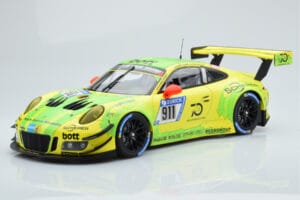
Porsche 911 GT3 R Manthey Racing #911 F. Scherer / K. Estre / R. Dumas / L. Vanthoor / E. Bamber 24 Hours of Nurburgring 2018 Minichamps 1:18
Only 1 left
Price:
137.00 €
Last one
Back in stock
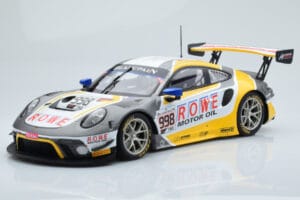
Porsche 911 GT3 R Rowe Racing #998 F. Makowiecki / A. Pilet / N. Tandy 2nd Place 24 Hours of Spa-Francorchamps 2019 Minichamps 1:18
Only 1 left
Price:
108.00 €
Last one
Used
Back in stock
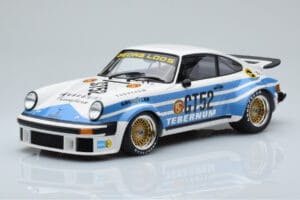
Porsche 911 934 Tebernum Racing Team #52 T. Schenken Nurburgring 300km 1976 Minichamps 1:18
Only 1 left
Price:
147.00 €
Last one
Used
Porsche 956L Spirit of America #8 G. Follmer / J. Morton / K. Miller 24 Hours of Le Mans 1986 Minichamps 1:18
Only 1 left
Price:
119.00 €
Collectors also bought
Browse all 1:18
Used

Used

Last one
Used
Back in stock
Used

Ford Fiesta RS WRC Ford Abu Dhabi #3 M. Hirvonen / J. Lehtinen Winner Rally Australia 2011 Minichamps 1:18
Only 2 left
Price:
123.00 €
Last one
Used
Mercedes SLS AMG GT3 HTP Motorsport Persson #84 B. Schneider / M. Buhk / M. Gotz Winners 24 Hours of Spa-Francorchamps 2013 Minichamps 1:18
Only 1 left
Price:
110.00 €
Last one
Back in stock

BMW M6 GT3 Rowe Racing #98 A. Graf / R. Westbrook / N. Catsburg / N. Paltalla 24 Hours of Nurburgring 2016 Minichamps 1:18
Only 1 left
Price:
169.00 €
Last one
Back in stock
Opel Commodore A Steinmetz #8 Tuerlinx / T. Pilette 24 Hours of Spa 1972 Minichamps 1:18
Only 1 left
Price:
128.00 €
Used
Back in stock
Recently viewed
{"id":1038479,"name":"Porsche 356B 1600 GS Carrera GTL #30 B. Pon \/ C. Godin de Beaufort 24 Hours of Le Mans 1962 Minichamps 1:18","price":"161.00 €<\/span><\/bdi><\/span>","image":"https:\/\/models118.com\/wp-content\/uploads\/2026\/06\/porsche-356b-1600-gs-carrera-gtl-30-b-pon-c-godin-de-beaufort-24h-le-mans-1962-minichamps-1-18-400x400.jpg","permalink":"https:\/\/models118.com\/porsche-356b-1600-gs-carrera-gtl-30-b-pon-c-godin-de-beaufort-24-hours-of-le-mans-1962-minichamps-1-18-107626830\/","brand":"Porsche"}