Last one
Used
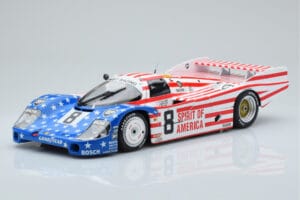
Porsche 956L Spirit of America #8 G. Follmer / J. Morton / K. Miller 24 Hours of Le Mans 1986 Minichamps 1:18
Only 1 left
Price:
119.00 €
This model is currently sold out. Enter your email and we'll let you know when it's back in stock.
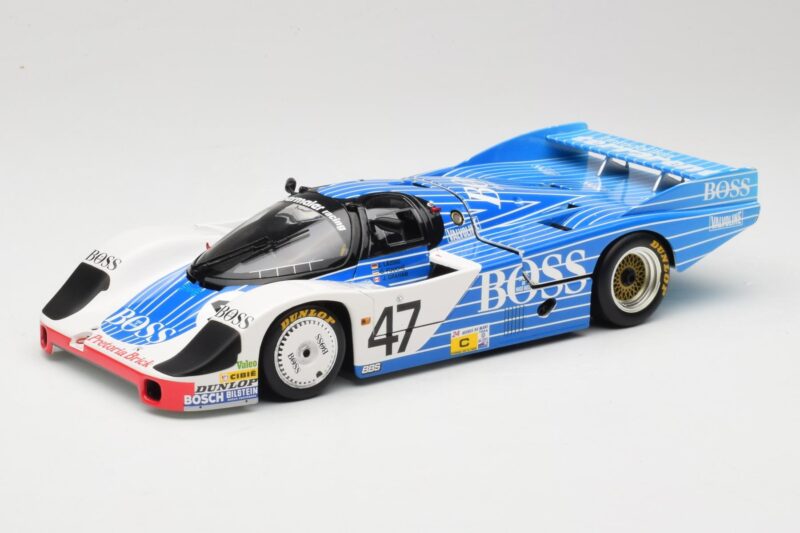
TL;DR: Minichamps' 1:18 diecast reproduces the #47 Hugo Boss Porsche 956L driven by Volkert Merl, Harald Grohs, and Alois Plankenhorn at the 1984 24 Hours of Le Mans. A German fashion house's sponsorship on a Group C prototype makes this one of the era's more unusual privateer liveries.
A fashion brand's name on a Group C prototype still looks unusual decades later, and that contrast is exactly what makes this 956 worth a closer look.
Hugo Boss backing a Le Mans prototype seems like an odd pairing next to the tobacco and oil-industry sponsors that dominated Group C liveries, but German fashion and lifestyle brands did occasionally fund endurance racing programs during the 1980s, and this #47 car carried that branding through the 1984 race with Volkert Merl, Harald Grohs, and Alois Plankenhorn sharing the cockpit. All three drivers had substantial German touring and sports car racing experience, a typical profile for a well-funded privateer 956 entry rather than a factory-backed effort. The result is a livery that reads more like a product launch than a racing scheme, precisely why it stands out on a shelf full of more conventional Group C paint jobs.
Minichamps applies the same build standard to this Hugo Boss car as to its other 956 liveries: tight, even panel gaps along the long tail and rear wing assembly, tampo-printed graphics that hold clean edges on brand lettering, and a zinc alloy body that gives the model real weight against the lighter feel of resin alternatives. Doors open in keeping with the maker's standard motorsport specification, and the cabin is finished for competition rather than dressed up with unnecessary detail. For a Group C collection built around livery variety rather than results, this car earns its place simply by looking like nothing else on the shelf, a reminder that 1980s endurance racing sponsorship went well beyond the usual tobacco and oil brands.