Back in stock

Premium sedan scale models bring together the four-door flagships that define executive luxury, from Mercedes S-Class and BMW 7 Series to Audi A8 and Volkswagen Phaeton. Minichamps, Norev, AUTOart, UT Models, and FAW cover the segment across 1:18 and 1:43, in both diecast and resin, spanning three decades of sedan design.




















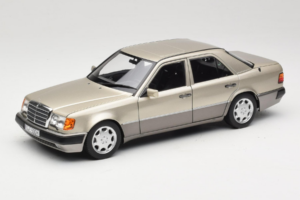
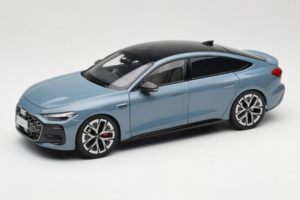


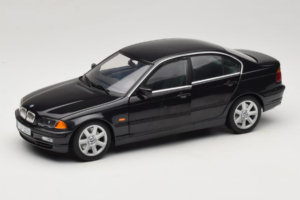
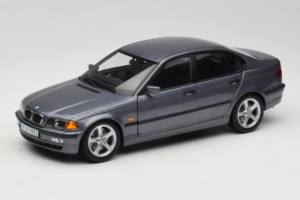
































TL;DR: Premium sedan scale models span Mercedes, BMW, Audi, Volkswagen, Porsche, Skoda, Toyota, and Ford, produced by Minichamps, Norev, AUTOart, and other manufacturers in 1:18 and 1:43 diecast and resin. Coverage runs from 1990s executive flagships through current-generation sedans, giving collectors a wide cross-brand comparison base.
Premium sedan scale models occupy the practical, everyday-flagship end of the collecting spectrum, sedans built to move executives and families rather than post lap times. That doesn't make them less interesting to collect. Mercedes, BMW, Audi, and Volkswagen anchor the segment, joined by Porsche's four-door models, Skoda's underrated Superb, and mainstream entries from Toyota and Ford that show how far the sedan format stretches. The manufacturer landscape covering these subjects runs from established European specialists to newer producers, giving collectors real choice in how deeply they document any single model generation.
Minichamps holds the deepest catalog for this segment, covering Mercedes, BMW, and Audi sedans in both 1:43 for generational tracking and 1:18 for flagship pieces, with construction that favors accurate proportions over opening-feature novelty. Norev brings diecast coverage skewed toward Volkswagen and other European volume brands, priced for collectors building breadth rather than chasing a single hero model.
AUTOart occupies the upper-mid tier, known for tighter panel tolerances and opening features executed with real mechanical precision, making it the choice when a specific sedan generation deserves closer inspection. UT Models represents older production, useful for 1990s and early 2000s subjects that newer manufacturers have moved away from. The broader catalog includes additional manufacturers working at accessible price points, which matters for a segment defined as much by everyday ownership as by prestige.
The marques covered in this segment span a wider price and prestige range than the "premium" label might suggest. Mercedes and BMW anchor the top, their S-Class and 7 Series generations representing the flagship end of executive design, while Audi's A6 and A8 lines split the difference between sport and luxury. Volkswagen's Phaeton, a genuine engineering outlier built to compete with cars costing far more, gives the segment one of its more interesting footnotes. Porsche's four-door models bring a sporting edge that sets them apart from the rest of the segment. Skoda's Superb, often overlooked by collectors chasing bigger badges, shares platform engineering with several of its Volkswagen Group siblings, making it a smart addition for anyone building a comparison shelf. Toyota and Ford round things out, showing that the executive-sedan format extends well beyond the usual European names.
Executive sedans change more between generations than most collectors expect, since each redesign typically brings a genuine shift in proportions, lighting design, and interior architecture rather than a cosmetic refresh. That makes the segment well suited to a generational collecting approach: lining up successive S-Class or 7 Series releases in 1:43 turns a shelf into a visual record of how luxury design language actually evolved across two or three decades. Cross-brand comparison works just as well, since placing a Mercedes S-Class beside an Audi A8 and a BMW 7 Series from the same model year shows how differently three manufacturers solved the same brief. This kind of comparison collecting is where the premium sedan segment earns its keep, offering more analytical interest than its understated exteriors might suggest at first glance.
1:43 remains the practical default for this segment, since a comprehensive run of any single model's generations fits a normal shelf without demanding a dedicated cabinet. 1:18 becomes worthwhile for a specific flagship, typically an S-Class, 7 Series, or A8, where the added size lets interior detail and proportions read properly from across a room. Given how many marques and generations this segment covers, most collectors settle on 1:43 as the backbone of a sedan collection and reserve 1:18 for the two or three models that matter most personally, whether that's a childhood family car or a genuinely significant design generation.
Minichamps has the deepest coverage across Mercedes, BMW, and Audi sedan generations in 1:43, making it the natural starting point for collectors tracking a single model's design evolution across two or three decades of redesigns.
Yes. The Phaeton was a genuine engineering outlier, a Volkswagen built to compete with far pricier luxury sedans, and that unusual positioning makes it a distinctive addition to a premium sedan shelf rather than just another badge in the lineup.
AUTOart typically works at a slightly higher tier, with tighter panel tolerances and functional opening features executed with more mechanical precision. Minichamps prioritizes breadth and accurate proportions across a wider range of models rather than chasing that extra mechanical detail.
1:43 works best for cross-brand comparison, since it lets a collector line up a Mercedes S-Class, Audi A8, and BMW 7 Series from the same era on one shelf without the space demands of 1:18.