Used

This model is currently sold out. Enter your email and we'll let you know when it's back in stock.
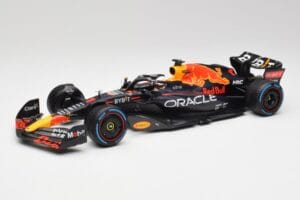
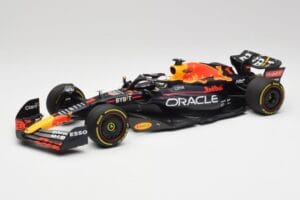
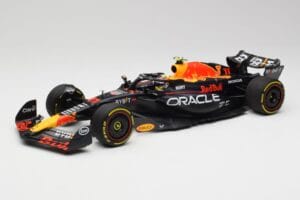
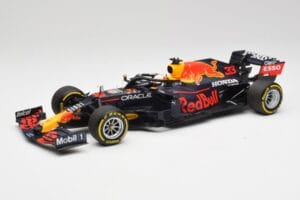
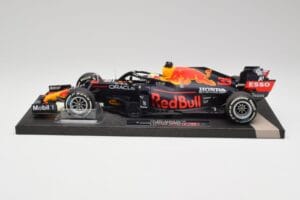
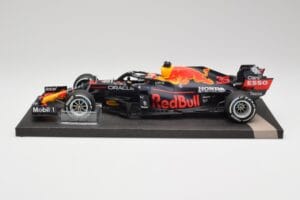
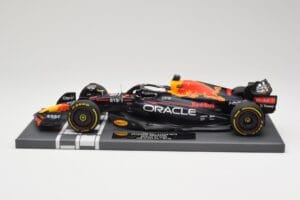
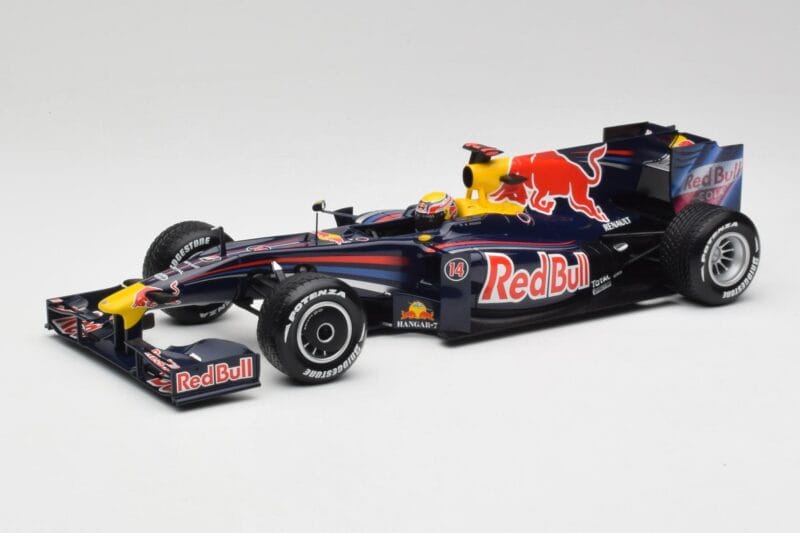
TL;DR: Minichamps' 1:18 diecast Red Bull RB3 reproduces Mark Webber's #2 car from the 2007 Formula 1 season, years before the team's championship run began. Built with a diecast chassis, molded aero parts, and period-correct livery, it's a piece that captures Red Bull Racing in its early, developing years rather than its dominant later era.
Red Bull's championship years get most of the attention, but the team spent its early seasons simply trying to be competitive. This RB3 belongs to that earlier chapter, a car built by a squad still finding its footing.
The body and chassis are cast in diecast metal, giving the model real heft through the cockpit and sidepod area, while the wings and smaller aero pieces are separately molded to keep their thin profiles accurate. The livery reproduces Red Bull's 2007 sponsor arrangement and color scheme, a notably different visual identity from the team's later years, with period-correct branding placed where it actually sat on the real car rather than updated to a more recent design.
Webber's No. 2 sits correctly sized at the nose and airbox, matching the era's simpler aero philosophy before the elaborate bargeboards and winglets of later regulation cycles arrived. This was a comparatively clean-bodied car by modern F1 standards, and the model reflects that simplicity rather than the visual complexity collectors associate with more recent liveries. Getting an older car's proportions right, rather than just its colors, is what separates a considered reissue from a generic period diecast.
Adrian Newey joined Red Bull Racing in late 2005, and the RB3 is widely regarded as his first Red Bull chassis designed without the constraints of an existing program already underway. It arrived at a team still working out its identity after taking over the former Jaguar operation, years before the resources and experience needed for a title challenge had come together. Handling this model means handling a piece of that transition, a car built by a designer who would later define an era, but not yet with the tools to do so.
Webber partnered David Coulthard at Red Bull in 2007, a season complicated by reliability issues that cost the team points it might otherwise have scored. It wasn't a year defined by front-row starts or podium fights, and being honest about that context matters more than pretending every Red Bull release represents a triumph. The RB3 tells a rebuilding story, and there's genuine value in owning that chapter alongside the championship cars that followed.
At roughly 30 centimeters long, this RB3 shares the compact, low footprint typical of mid-2000s F1 cars, slightly different in proportion from the wider, more aggressive current-generation chassis. That compact scale also makes it an easy fit even in cabinets built around later, larger cars, since older F1 chassis generally ran narrower and shorter than the regulations Red Bull's championship-era cars followed.
Placed beside a title-winning RB16B or RB19, this RB3 does something a lone championship car can't: it shows the distance a team traveled to get there. Collectors building a full Red Bull timeline, rather than just its highlight reel, will find this piece essential precisely because it isn't a winner. It's the kind of piece that rewards patience and context over instant gratification, and it deepens the value of every championship car that shares its shelf.