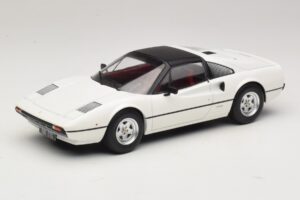
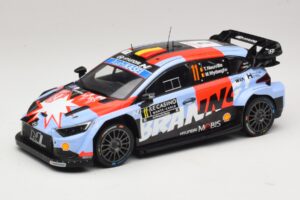
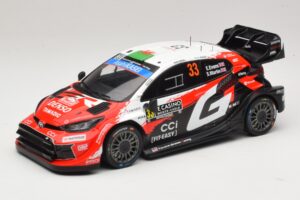
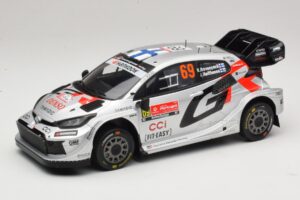
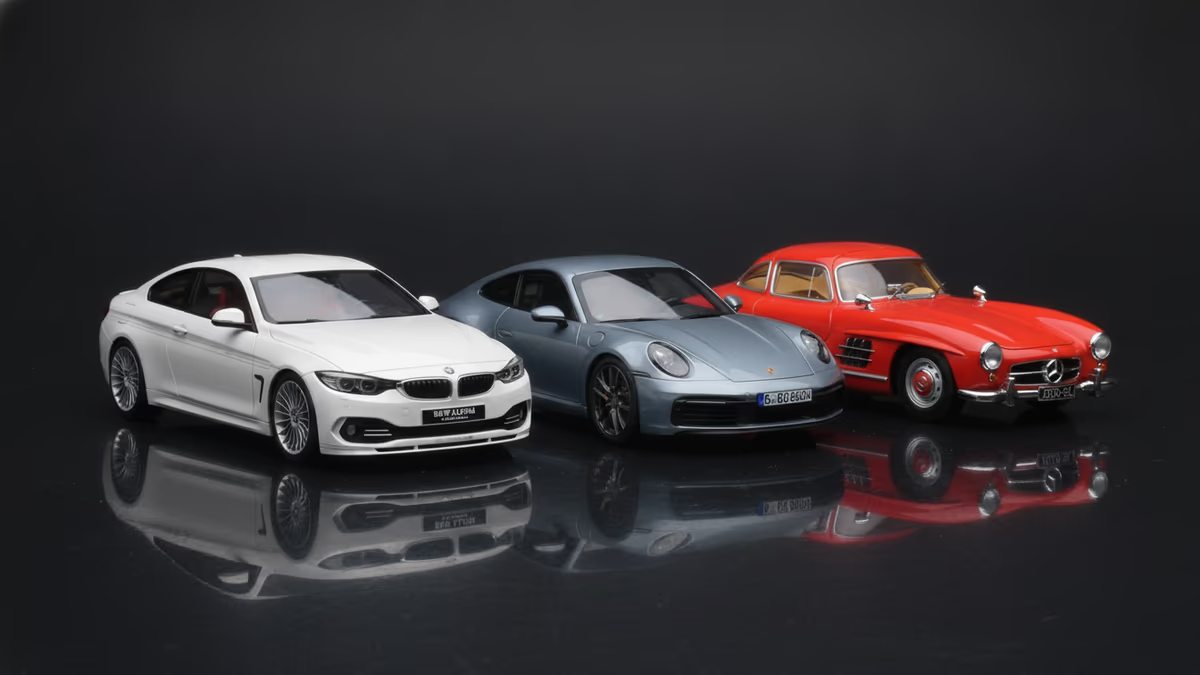
TL;DR: Scale model ratios range from large-format 1:12 and 1:8 hero pieces through the 1:18 collector standard to compact 1:43 and 1:64 formats built for breadth. Each ratio trades detail visibility against display footprint, and most collections use more than one scale.
A scale ratio determines how much of the original car survives in miniature: how legible the panel gaps stay, how many interior details resolve, and how much shelf space each piece demands. Choosing a scale is choosing a collecting strategy, not just a size preference.
Scale Model Ratios Across the Collecting Landscape
1:18 sits at the center of the hobby, large enough for opening features and interior detail to matter while still allowing several models per shelf. 1:43 compresses a car to a matchbox footprint, trading individual detail for the ability to document a full model lineage or racing season in one display. 1:24 splits the difference, common in budget and mid-tier diecast where a larger, more affordable alternative to 1:18 is wanted. 1:12 and 1:8 exist for statement pieces, rewarding close inspection at the cost of significant shelf space. 1:64 serves volume collecting, where breadth and affordability outweigh individual detail entirely.
- 1:8 and 1:12: hero-piece scales with museum-level detail and a large footprint.
- 1:18: the collector standard, balancing detail against practical display space.
- 1:24: a compact alternative offering size closer to 1:18 at a lower typical price.
- 1:43: comprehensive coverage on a fraction of the shelf space.
- 1:64: volume collecting, dozens of models in the space one 1:18 car occupies.
Reading Quality Within Any Scale
Scale and quality tier are independent decisions. Every ratio spans entry-level mass production through hand-finished investment pieces, so the ratio alone never tells a collector how well a specific model was built. Panel-gap precision, interior detail, and paint finish separate tiers within a scale far more than the scale itself does. A well-executed 1:43 racing car can hold more collector interest than a poorly finished 1:18 road car of the same subject.
Choosing a Scale Strategy
Most experienced collectors settle into a dual-scale approach rather than committing to one ratio exclusively: 1:43 for comprehensive documentation of a brand's model lineage or a full racing season, and 1:18 reserved for a smaller number of personally significant hero pieces. This lets a collection grow in breadth without demanding the shelf space a scale like 1:12 requires for the same number of subjects, while still leaving room for standout pieces at a larger, more detailed scale.
Frequently Asked Questions
Which scale is best for a first collection?
1:18 is the usual starting point, since it offers the widest manufacturer selection and enough detail to reward close inspection while remaining practical to display in reasonable numbers on standard shelving.
Does a larger scale always mean better quality?
No. Every scale spans entry-level to investment-grade construction. A larger scale allows for more physical detail, but the actual execution, panel gaps, paint, and interior work, determines quality within that ratio.
Can different scales be displayed together?
Yes, though most collectors group by scale on separate shelves so proportions stay visually consistent. Mixing scales within a single row can make correctly-sized models look mismatched next to each other.
Why do some manufacturers only work in certain scales?
Tooling and production methods differ by scale, and a manufacturer's construction approach, whether hand-built resin or high-volume diecast, tends to suit certain ratios better than others, which naturally concentrates producers around specific scales.