Used
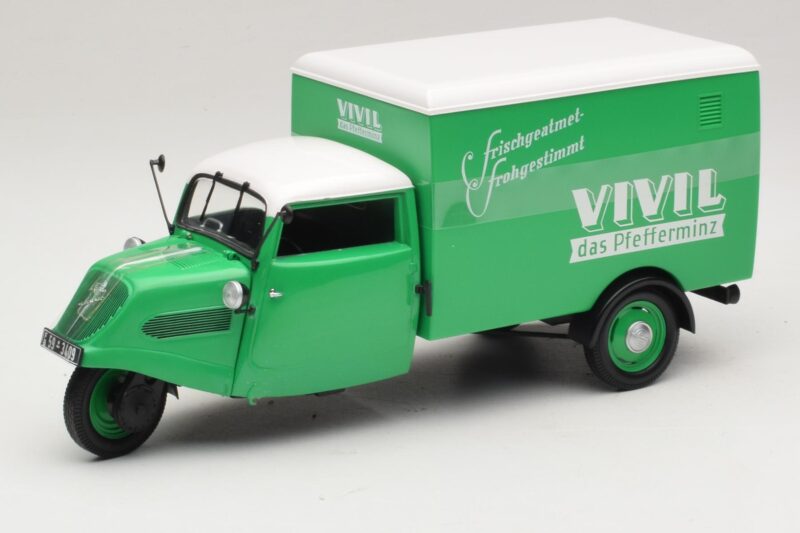
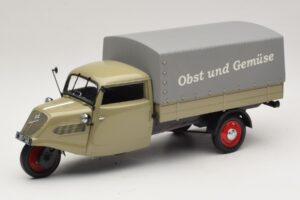
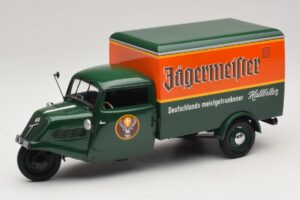
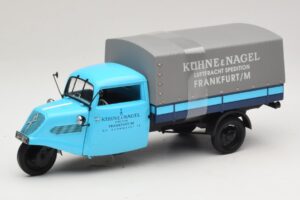
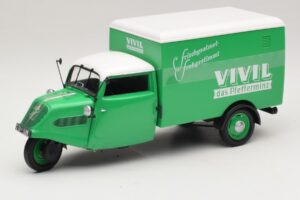
TL;DR: Minichamps' 1:18 diecast Tempo Hanseat van wears green Vivil confectionery livery on the enclosed three-wheeled delivery vehicle common on 1950s German streets. The rear cargo door opens on this zinc alloy build, and the boxy proportions capture a genuine slice of small-business delivery history rarely reproduced at this scale.
Enclosed cargo space mattered more than speed for a small confectionery maker moving stock between shops, and the Tempo Hanseat's box van body answered that need directly. Minichamps renders this Vivil-liveried example at 1:18 with an opening rear door, putting a genuine piece of 1950s German delivery culture within easy reach of any collection.
Vidal & Sohn's Tempo-Werke designed the Hanseat around a single steered front wheel rather than a conventional four-wheel layout, trading highway stability for a turning circle small enough to navigate the narrow streets and tight loading areas common in German towns rebuilding after the war. A modest two-stroke engine supplied enough power for local delivery runs without the cost or complexity of a full-size truck engine, keeping the Hanseat within financial reach of small manufacturers and shopkeepers rather than only large fleets. The Hanseat name itself references Hamburg's Hanseatic trading heritage, a nod to the commercial tradition the vehicle was built to serve.
A boxed van body suited a confectionery maker better than an open pickup bed, keeping mints and pastilles dry and free of road dust on the way to local grocers and tobacco shops. Vivil built its reputation as a long-established German maker of mints and throat pastilles, and a liveried delivery vehicle like this one would have carried that brand identity through town well before television advertising existed. The green color scheme reproduced here follows Vivil's period packaging closely enough that longtime collectors of German confectionery advertising will recognize the shade at a glance.
This van's zinc alloy body carries real heft for its size, the kind of density that keeps a small commercial vehicle model from feeling like an afterthought beside larger road cars on the same shelf. The rear cargo door opens to show the enclosed load space that defined this body style, scaled correctly to the narrow proportions of the real Hanseat rather than stretched wider for visual effect. Diecast construction handles this kind of boxy commercial shape well, since the flat panels and simple curves show off paint depth and livery crispness more readily than a car's compound curves would.
Reproducing a confectionery brand's green accurately matters more than it might seem, since a shade even slightly too blue or too yellow immediately reads as wrong to anyone who remembers the original packaging. Minichamps applies the Vivil livery using the same tampo printing process used across its automotive range, keeping the lettering edges sharp rather than blurred, and the color consistent across every panel of the box body. That precision is what separates a considered commercial-vehicle livery from a generic green van with a sticker applied as an afterthought.
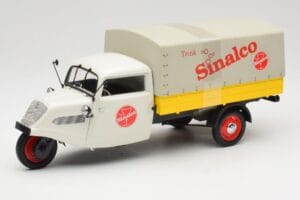
At 1:18, the Hanseat's boxy proportions occupy a small footprint on a shelf, well under the length of any contemporary sedan, which makes it easy to slot several liveried variants together without crowding a display case built primarily for cars. That compactness is part of its charm: parked beside a full-size 1950s saloon, the Hanseat reads exactly as modest as it did on a real street corner, a small workhorse rather than a hero piece. Collectors assembling a themed display around German post-war commerce often collect several liveried Hanseats side by side, using each company's colors to build a miniature townscape of period shops and delivery routes rather than a single manufacturer's story. The Vivil green in particular stands out well against more muted liveries, giving a themed shelf a genuine splash of period brand color rather than uniform utilitarian grey. Direct light across the flat box panels shows off the tampo printing's edge quality clearly, since there are no compound curves here to distract the eye.
This van will never be the centerpiece of a display the way a flagship sports car is, and that is precisely its value. It fills the role of context, a small, honestly built piece of the everyday commercial world that surrounded the cars collectors usually chase. Priced within familiar mid-tier diecast territory, it rewards buyers building a period townscape or a commercial-vehicle theme more than those chasing rarity for its own sake. Paired with other Tempo Hanseat liveries from the same range, it becomes part of a small fleet that tells a fuller story about 1950s German street life than any single road car could. For a collection with room for the ordinary alongside the extraordinary, this Vivil-liveried van earns its spot on the shelf.