Used

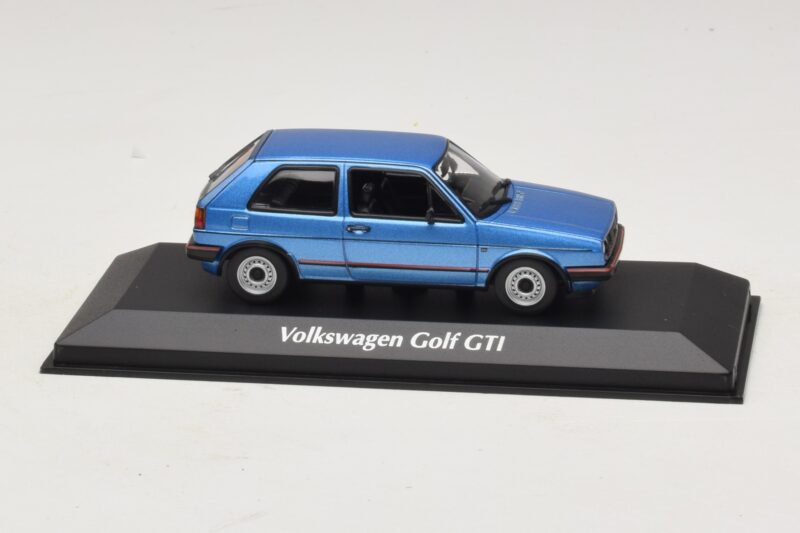
TL;DR: The Maxichamps Volkswagen Golf GTI Mk2 is a 1:43 diecast hot hatch in blue metallic, representing the 1985 second-generation GTI. A sealed one-piece casting, it relies on stance, paint, and glazing to carry the display. A compact piece for collectors tracing the hot hatch idea from the 1970s onward.
The hot hatch was never meant to be exotic; it took an ordinary hatchback and gave it an enthusiast's edge. The original GTI in 1976 defined the idea, and the Mk2 grew larger and more refined while keeping the shape. In 1:43 blue metallic, the boxy, upright profile reads instantly.
The first Golf GTI created a segment; the Mk2 gave it a broader audience. The second-generation car is bigger than the first, with a roomier cabin and a more substantial look, yet it keeps the crisp, rectangular character that defined the Golf. For a collector, the difference is visible in the shoulders and the rear pillar, which are thicker and more solid than on the earlier car. When comparing a model to period photographs, check the roofline and the way the rear window meets the tailgate. These areas tell you quickly whether the proportions are right.
Metallic blue suits a hot hatch, giving the flat panels a lively surface under display light. A zinc alloy shell provides a hard base, so paint tends to lie smooth and keep its gloss, and the model feels dense and solid for a car just under ten centimeters long. Flake size matters at 1:43: too coarse and the finish looks sparkly, too fine and it looks flat. Diecast tolerances are slightly wider than small-batch resin, so panel lines may be a touch more visible, a reasonable price for toughness.
This model has a sealed body, so nothing opens and everything rests on the exterior. The GTI is distinguished from lesser Golfs by cues collectors check first: a slightly lowered ride height, a sporty wheel design, and the red accent associated with GTI trim around the grille. Glazing should sit flush and the C-pillar should look solid rather than thin. A one-piece casting keeps lines tidy and consistent, which suits a car whose appeal was clean, honest design.
At this tier the model is a sturdy mid-tier diecast, not a hand-built resin showpiece. Expect confident proportions and good paint, with printed rather than separately applied small details. That fits a car that made performance accessible: the model philosophy matches the car philosophy.
The GTI makes an ideal anchor for a hot hatch theme. Set it beside other small, quick hatchbacks from the 1970s through the 1990s and the lineage becomes clear: the same recipe of light weight, practical body, and sporty trim, interpreted by different brands. At 1:43, a whole decade of hot hatches fits in one cabinet, which is much harder to achieve in larger scales. For American collectors, the GTI also carries a familiar name and a story of affordable fun that resonates. Keep it in a closed cabinet, out of direct sun, and it will hold its finish for years. Shop it for a shelf that celebrates ordinary cars made special.