Last one
Used
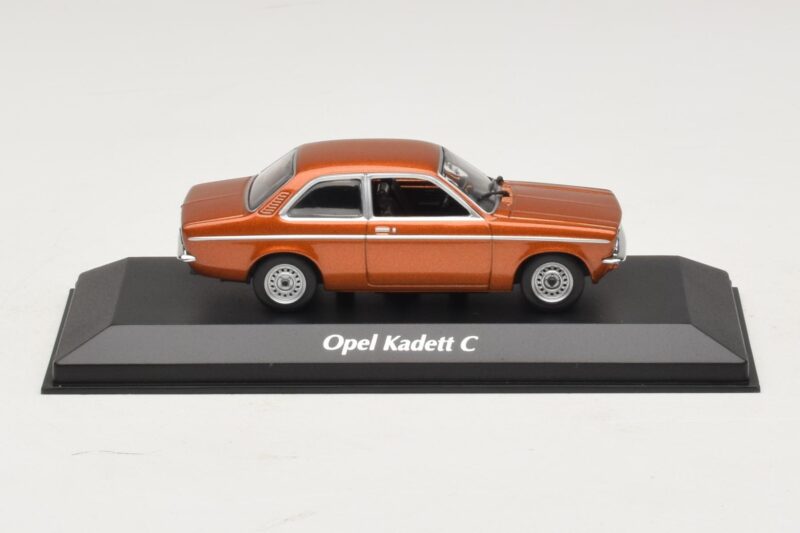
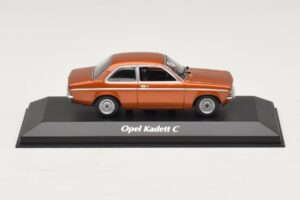
TL;DR: Maxichamps' 1:43 Opel Kadett C in bronze metallic reproduces the compact 1970s family sedan that sold across Europe in huge numbers. Built as a sealed one-piece diecast casting rather than an opening-panel model, it sits at Maxichamps' accessible price tier below full-detail Minichamps releases of the same era.
Not every collectible needs to chase rarity. The Kadett C was one of the most ordinary cars on European roads through the mid-1970s, and that ordinariness is exactly what a themed 1970s shelf needs alongside the era's rarer machinery. Maxichamps treats the subject honestly, at a price that matches its everyday status rather than inflating it.
Maxichamps operates as Minichamps' value-focused line, built around older tooling and simplified finishing to reach a lower price point than the parent brand's full-detail releases. That trade-off shows in fewer separately painted trim pieces and a sealed body rather than opening doors, but it also means the Kadett C, a car that never commanded premium collector attention new or used, arrives at a price that matches its original market position. The bronze metallic paint covers the shell evenly, without the layered clearcoat depth a hand-finished piece would carry, an honest reflection of the tier rather than a shortcoming to apologize for.
With no opening doors or hood, the Kadett C's shut lines are cast directly into the body, holding a consistent width around the whole car rather than varying at a hinge point. That single-shell approach keeps the proportions true to the compact three-box sedan shape Opel built through the mid-1970s, and at 1:43 it sits comfortably alongside other small-scale European classics without demanding its own display case. The wheels and glazing carry the detail a buyer notices first from arm's length, while finer trim work is simplified in ways that suit the price rather than distract from it.
Opel built the Kadett C from 1973 through the end of the decade, and it sold in genuinely large numbers across West Germany and export markets as a straightforward, affordable family car. It shared its basic platform thinking with GM's other European small-car efforts of the period, part of a broader continental small-car strategy rather than a standalone design exercise. The bronze metallic finish this casting wears was a common period color choice, the kind of unremarkable but honest paint option that dominated actual Kadett C sales far more than any striking limited-run scheme ever did.
A 1970s German sedan lineup built entirely from rare specials tells an incomplete story. The Kadett C's real contribution to Opel's history was volume, not spectacle, and a themed shelf gains credibility by including the car that most West German households could actually afford alongside the era's halo models. Displaying it next to a contemporary Commodore or Rekord shows the spread of Opel's range at the time, from mainstream family transport to more upscale sedans, in a way a single hero piece cannot communicate on its own.
This Kadett C works best as connective tissue in a broader collection rather than a standalone centerpiece. Pair it with other Maxichamps or Minichamps European sedans from the same decade to show how ordinary transport and premium models coexisted on the same roads. At 1:43, a run of a dozen sedans still fits a single Vitrine shelf, which makes the scale practical for anyone building genuine depth rather than a handful of showpieces. Buyers weighing this against a full-detail Minichamps release of a similar car should expect fewer separately finished parts and a simpler paint process here, a fair trade given the accessible price and the car's own unpretentious history.