Back in stock

Williams FW11 Honda #5 N. Mansell F1 1986 MCG 1:18
Price:
55.00 €
This model is currently sold out. Enter your email and we'll let you know when it's back in stock.
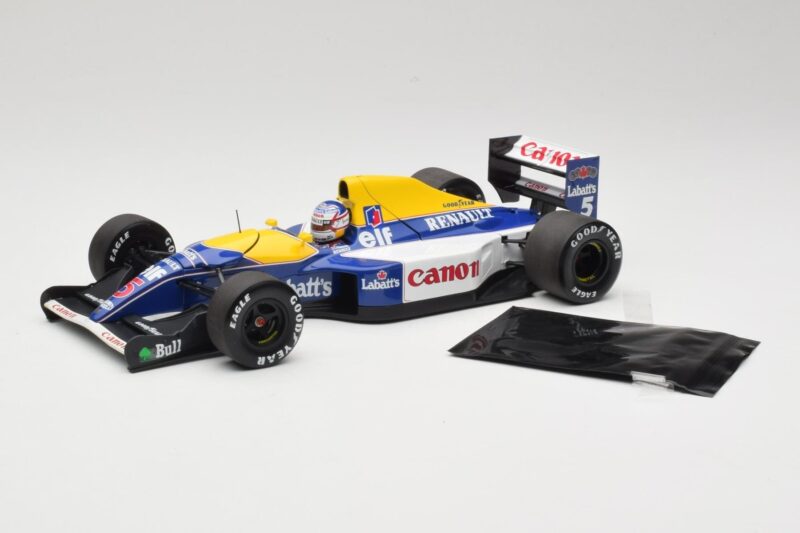
TL;DR: Minichamps' 1:18 diecast Williams FW14B reproduces Nigel Mansell's No. 5 car from the 1992 Formula 1 season, in which he clinched the World Championship with a record-setting number of wins. Built around active suspension technology, the FW14B remains one of the sport's most technically advanced early-1990s cars.
Some race cars win championships through sheer horsepower. This one won through technology so far ahead of the field that rivals spent years trying to catch up, and Mansell simply drove it to a title almost nobody could contest.
Williams built the FW14B around a hydraulically controlled active suspension system, a technology that let the car maintain a nearly constant ride height and aerodynamic platform regardless of track surface or fuel load, at a time when most rivals still relied on passive setups. Combined with a semi-automatic gearbox and early traction control, the car represented one of the biggest single-season technical leaps the sport had seen, developed under the technical leadership of Patrick Head and Adrian Newey. That technical dominance also drew scrutiny from the sport's governing body, which moved to ban several of these driver-aid systems for the following seasons, making the FW14B something of a high-water mark for a regulatory era that would soon close.
Nigel Mansell won nine races during the 1992 season, a tally that set a new record for wins in a single Formula 1 campaign at the time, and he clinched the World Championship with several rounds still remaining on the calendar. It was the title Mansell had chased for years, arriving in a season where the FW14B's technical advantage made him the clear favorite from the opening race. Mansell left Williams for American open-wheel racing the following year, adding a sense of finality to this particular championship season within his broader career.
Minichamps casts the FW14B in diecast, and the model's low, narrow nose and distinctive periscope-style exhaust exit, both hallmarks of early-1990s Williams design, are rendered with sharp definition. The distinctive high-mounted rear wing endplates, a visual signature of the era, are molded with enough separation to catch light cleanly from the side. The cockpit surround and roll hoop detailing hold their shape cleanly, and the diecast weight gives the model a solid, substantial feel in the hand.
The blue-and-white Williams Renault livery is applied with tight registration around the sponsor branding, and Mansell's No. 5 sits crisply on the nose and engine cover. Panel gaps along the sidepods and floor stay consistent, and the front and rear wings hold their period-correct profiles without the softening some lower-tier castings apply to older aerodynamic shapes.
A car this significant to Formula 1's technical history earns a place at the center of any early-1990s collection rather than at its edges. The FW14B represents a genuine turning point in how teams approached car design, and Mansell's title run gives that engineering story a human face and a clear result to attach to it. It also serves as a useful comparison point against later, more heavily regulated Formula 1 eras, showing just how much technical freedom teams once had before rule changes reshaped what a championship-winning car could include. Paired with later Williams liveries from the mid-1990s Rothmans era or earlier Canon-sponsored cars from the same design lineage, this FW14B helps a shelf trace how quickly the sport's technical arms race accelerated once a team proved what was possible.