


Rolls-Royce Silver Wraith Empress by Hooper Brown & Gold MCG 1:18
New arrival
1
/
6
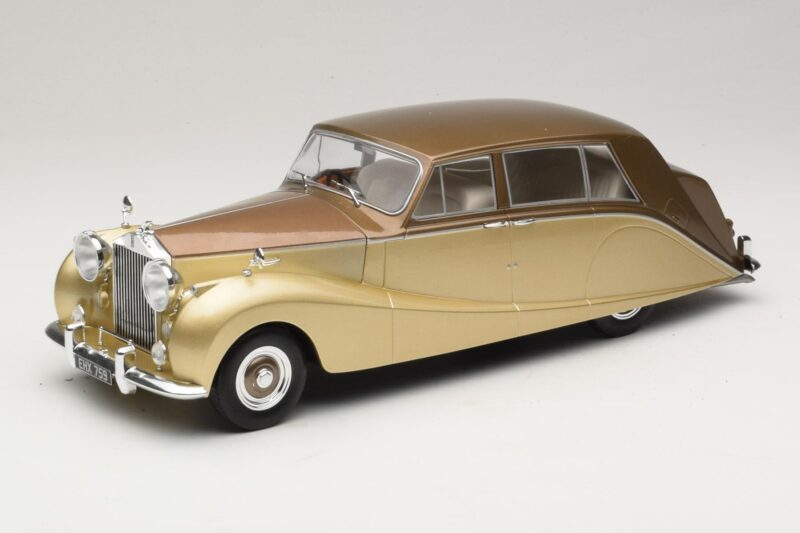
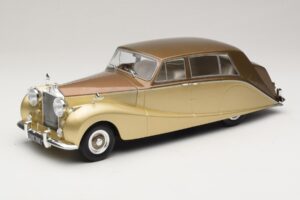
MCG's 1:18 diecast Rolls-Royce Silver Wraith reproduces the Hooper-bodied Empress line saloon from 1956 in a brown and gold formal livery. Cast as a sealed one-piece shell with no opening panels, the model captures Hooper's signature lower roofline and coachbuilt proportions with crisp, consistent shut lines and deep diecast gloss.
1 / 6
[{"index":0,"id":"1659201","thumb":"https:\/\/models118.com\/wp-content\/uploads\/2026\/08\/rolls-royce-silver-wraith-empress-by-hooper-brown-gold-mcg-1-18-mcg18000-1-1-300x200.jpg","medium":"https:\/\/models118.com\/wp-content\/uploads\/2026\/08\/rolls-royce-silver-wraith-empress-by-hooper-brown-gold-mcg-1-18-mcg18000-1-1-800x533.jpg","full":"https:\/\/models118.com\/wp-content\/uploads\/2026\/08\/rolls-royce-silver-wraith-empress-by-hooper-brown-gold-mcg-1-18-mcg18000-1-1.jpg","srcset":"https:\/\/models118.com\/wp-content\/uploads\/2026\/08\/rolls-royce-silver-wraith-empress-by-hooper-brown-gold-mcg-1-18-mcg18000-1-1-800x533.jpg 800w, https:\/\/models118.com\/wp-content\/uploads\/2026\/08\/rolls-royce-silver-wraith-empress-by-hooper-brown-gold-mcg-1-18-mcg18000-1-1-300x200.jpg 300w, https:\/\/models118.com\/wp-content\/uploads\/2026\/08\/rolls-royce-silver-wraith-empress-by-hooper-brown-gold-mcg-1-18-mcg18000-1-1-64x43.jpg 64w, https:\/\/models118.com\/wp-content\/uploads\/2026\/08\/rolls-royce-silver-wraith-empress-by-hooper-brown-gold-mcg-1-18-mcg18000-1-1.jpg 1800w","sizes":"(max-width: 1023px) 400px, 640px","srcsetAvif":"https:\/\/models118.com\/wp-content\/uploads\/2026\/08\/rolls-royce-silver-wraith-empress-by-hooper-brown-gold-mcg-1-18-mcg18000-1-1-800x533.jpg.avif 800w, https:\/\/models118.com\/wp-content\/uploads\/2026\/08\/rolls-royce-silver-wraith-empress-by-hooper-brown-gold-mcg-1-18-mcg18000-1-1-300x200.jpg.avif 300w, https:\/\/models118.com\/wp-content\/uploads\/2026\/08\/rolls-royce-silver-wraith-empress-by-hooper-brown-gold-mcg-1-18-mcg18000-1-1-64x43.jpg.avif 64w, https:\/\/models118.com\/wp-content\/uploads\/2026\/08\/rolls-royce-silver-wraith-empress-by-hooper-brown-gold-mcg-1-18-mcg18000-1-1.jpg.avif 1800w","srcsetWebp":"https:\/\/models118.com\/wp-content\/uploads\/2026\/08\/rolls-royce-silver-wraith-empress-by-hooper-brown-gold-mcg-1-18-mcg18000-1-1-800x533.jpg.webp 800w, https:\/\/models118.com\/wp-content\/uploads\/2026\/08\/rolls-royce-silver-wraith-empress-by-hooper-brown-gold-mcg-1-18-mcg18000-1-1-300x200.jpg.webp 300w, https:\/\/models118.com\/wp-content\/uploads\/2026\/08\/rolls-royce-silver-wraith-empress-by-hooper-brown-gold-mcg-1-18-mcg18000-1-1-64x43.jpg.webp 64w, https:\/\/models118.com\/wp-content\/uploads\/2026\/08\/rolls-royce-silver-wraith-empress-by-hooper-brown-gold-mcg-1-18-mcg18000-1-1.jpg.webp 1800w","alt":"Rolls-Royce Silver Wraith Empress by Hooper Brown & Gold MCG 1:18 MCG18000 Diecast"},{"index":1,"id":1659202,"thumb":"https:\/\/models118.com\/wp-content\/uploads\/2026\/08\/rolls-royce-silver-wraith-empress-by-hooper-brown-gold-mcg-1-18-mcg18000-1-300x200.jpg","medium":"https:\/\/models118.com\/wp-content\/uploads\/2026\/08\/rolls-royce-silver-wraith-empress-by-hooper-brown-gold-mcg-1-18-mcg18000-1-800x533.jpg","full":"https:\/\/models118.com\/wp-content\/uploads\/2026\/08\/rolls-royce-silver-wraith-empress-by-hooper-brown-gold-mcg-1-18-mcg18000-1.jpg","srcset":"https:\/\/models118.com\/wp-content\/uploads\/2026\/08\/rolls-royce-silver-wraith-empress-by-hooper-brown-gold-mcg-1-18-mcg18000-1-800x533.jpg 800w, https:\/\/models118.com\/wp-content\/uploads\/2026\/08\/rolls-royce-silver-wraith-empress-by-hooper-brown-gold-mcg-1-18-mcg18000-1-300x200.jpg 300w, https:\/\/models118.com\/wp-content\/uploads\/2026\/08\/rolls-royce-silver-wraith-empress-by-hooper-brown-gold-mcg-1-18-mcg18000-1-64x43.jpg 64w, https:\/\/models118.com\/wp-content\/uploads\/2026\/08\/rolls-royce-silver-wraith-empress-by-hooper-brown-gold-mcg-1-18-mcg18000-1.jpg 1800w","sizes":"(max-width: 1023px) 400px, 640px","srcsetAvif":"https:\/\/models118.com\/wp-content\/uploads\/2026\/08\/rolls-royce-silver-wraith-empress-by-hooper-brown-gold-mcg-1-18-mcg18000-1-800x533.jpg.avif 800w, https:\/\/models118.com\/wp-content\/uploads\/2026\/08\/rolls-royce-silver-wraith-empress-by-hooper-brown-gold-mcg-1-18-mcg18000-1-300x200.jpg.avif 300w, https:\/\/models118.com\/wp-content\/uploads\/2026\/08\/rolls-royce-silver-wraith-empress-by-hooper-brown-gold-mcg-1-18-mcg18000-1-64x43.jpg.avif 64w, https:\/\/models118.com\/wp-content\/uploads\/2026\/08\/rolls-royce-silver-wraith-empress-by-hooper-brown-gold-mcg-1-18-mcg18000-1.jpg.avif 1800w","srcsetWebp":"https:\/\/models118.com\/wp-content\/uploads\/2026\/08\/rolls-royce-silver-wraith-empress-by-hooper-brown-gold-mcg-1-18-mcg18000-1-800x533.jpg.webp 800w, https:\/\/models118.com\/wp-content\/uploads\/2026\/08\/rolls-royce-silver-wraith-empress-by-hooper-brown-gold-mcg-1-18-mcg18000-1-300x200.jpg.webp 300w, https:\/\/models118.com\/wp-content\/uploads\/2026\/08\/rolls-royce-silver-wraith-empress-by-hooper-brown-gold-mcg-1-18-mcg18000-1-64x43.jpg.webp 64w, https:\/\/models118.com\/wp-content\/uploads\/2026\/08\/rolls-royce-silver-wraith-empress-by-hooper-brown-gold-mcg-1-18-mcg18000-1.jpg.webp 1800w","alt":"Rolls-Royce Silver Wraith Empress by Hooper Brown & Gold MCG 1:18 MCG18000 Diecast - image 2 of 6"},{"index":2,"id":1659203,"thumb":"https:\/\/models118.com\/wp-content\/uploads\/2026\/08\/rolls-royce-silver-wraith-empress-by-hooper-brown-gold-mcg-1-18-mcg18000-2-300x200.jpg","medium":"https:\/\/models118.com\/wp-content\/uploads\/2026\/08\/rolls-royce-silver-wraith-empress-by-hooper-brown-gold-mcg-1-18-mcg18000-2-800x533.jpg","full":"https:\/\/models118.com\/wp-content\/uploads\/2026\/08\/rolls-royce-silver-wraith-empress-by-hooper-brown-gold-mcg-1-18-mcg18000-2.jpg","srcset":"https:\/\/models118.com\/wp-content\/uploads\/2026\/08\/rolls-royce-silver-wraith-empress-by-hooper-brown-gold-mcg-1-18-mcg18000-2-800x533.jpg 800w, https:\/\/models118.com\/wp-content\/uploads\/2026\/08\/rolls-royce-silver-wraith-empress-by-hooper-brown-gold-mcg-1-18-mcg18000-2-300x200.jpg 300w, https:\/\/models118.com\/wp-content\/uploads\/2026\/08\/rolls-royce-silver-wraith-empress-by-hooper-brown-gold-mcg-1-18-mcg18000-2-64x43.jpg 64w, https:\/\/models118.com\/wp-content\/uploads\/2026\/08\/rolls-royce-silver-wraith-empress-by-hooper-brown-gold-mcg-1-18-mcg18000-2.jpg 1800w","sizes":"(max-width: 1023px) 400px, 640px","srcsetAvif":"https:\/\/models118.com\/wp-content\/uploads\/2026\/08\/rolls-royce-silver-wraith-empress-by-hooper-brown-gold-mcg-1-18-mcg18000-2-800x533.jpg.avif 800w, https:\/\/models118.com\/wp-content\/uploads\/2026\/08\/rolls-royce-silver-wraith-empress-by-hooper-brown-gold-mcg-1-18-mcg18000-2-300x200.jpg.avif 300w, https:\/\/models118.com\/wp-content\/uploads\/2026\/08\/rolls-royce-silver-wraith-empress-by-hooper-brown-gold-mcg-1-18-mcg18000-2-64x43.jpg.avif 64w, https:\/\/models118.com\/wp-content\/uploads\/2026\/08\/rolls-royce-silver-wraith-empress-by-hooper-brown-gold-mcg-1-18-mcg18000-2.jpg.avif 1800w","srcsetWebp":"https:\/\/models118.com\/wp-content\/uploads\/2026\/08\/rolls-royce-silver-wraith-empress-by-hooper-brown-gold-mcg-1-18-mcg18000-2-800x533.jpg.webp 800w, https:\/\/models118.com\/wp-content\/uploads\/2026\/08\/rolls-royce-silver-wraith-empress-by-hooper-brown-gold-mcg-1-18-mcg18000-2-300x200.jpg.webp 300w, https:\/\/models118.com\/wp-content\/uploads\/2026\/08\/rolls-royce-silver-wraith-empress-by-hooper-brown-gold-mcg-1-18-mcg18000-2-64x43.jpg.webp 64w, https:\/\/models118.com\/wp-content\/uploads\/2026\/08\/rolls-royce-silver-wraith-empress-by-hooper-brown-gold-mcg-1-18-mcg18000-2.jpg.webp 1800w","alt":"Rolls-Royce Silver Wraith Empress by Hooper Brown & Gold MCG 1:18 MCG18000 Diecast - image 3 of 6"},{"index":3,"id":1659204,"thumb":"https:\/\/models118.com\/wp-content\/uploads\/2026\/08\/rolls-royce-silver-wraith-empress-by-hooper-brown-gold-mcg-1-18-mcg18000-3-300x200.jpg","medium":"https:\/\/models118.com\/wp-content\/uploads\/2026\/08\/rolls-royce-silver-wraith-empress-by-hooper-brown-gold-mcg-1-18-mcg18000-3-800x533.jpg","full":"https:\/\/models118.com\/wp-content\/uploads\/2026\/08\/rolls-royce-silver-wraith-empress-by-hooper-brown-gold-mcg-1-18-mcg18000-3.jpg","srcset":"https:\/\/models118.com\/wp-content\/uploads\/2026\/08\/rolls-royce-silver-wraith-empress-by-hooper-brown-gold-mcg-1-18-mcg18000-3-800x533.jpg 800w, https:\/\/models118.com\/wp-content\/uploads\/2026\/08\/rolls-royce-silver-wraith-empress-by-hooper-brown-gold-mcg-1-18-mcg18000-3-300x200.jpg 300w, https:\/\/models118.com\/wp-content\/uploads\/2026\/08\/rolls-royce-silver-wraith-empress-by-hooper-brown-gold-mcg-1-18-mcg18000-3-64x43.jpg 64w, https:\/\/models118.com\/wp-content\/uploads\/2026\/08\/rolls-royce-silver-wraith-empress-by-hooper-brown-gold-mcg-1-18-mcg18000-3.jpg 1800w","sizes":"(max-width: 1023px) 400px, 640px","srcsetAvif":"https:\/\/models118.com\/wp-content\/uploads\/2026\/08\/rolls-royce-silver-wraith-empress-by-hooper-brown-gold-mcg-1-18-mcg18000-3-800x533.jpg.avif 800w, https:\/\/models118.com\/wp-content\/uploads\/2026\/08\/rolls-royce-silver-wraith-empress-by-hooper-brown-gold-mcg-1-18-mcg18000-3-300x200.jpg.avif 300w, https:\/\/models118.com\/wp-content\/uploads\/2026\/08\/rolls-royce-silver-wraith-empress-by-hooper-brown-gold-mcg-1-18-mcg18000-3-64x43.jpg.avif 64w, https:\/\/models118.com\/wp-content\/uploads\/2026\/08\/rolls-royce-silver-wraith-empress-by-hooper-brown-gold-mcg-1-18-mcg18000-3.jpg.avif 1800w","srcsetWebp":"https:\/\/models118.com\/wp-content\/uploads\/2026\/08\/rolls-royce-silver-wraith-empress-by-hooper-brown-gold-mcg-1-18-mcg18000-3-800x533.jpg.webp 800w, https:\/\/models118.com\/wp-content\/uploads\/2026\/08\/rolls-royce-silver-wraith-empress-by-hooper-brown-gold-mcg-1-18-mcg18000-3-300x200.jpg.webp 300w, https:\/\/models118.com\/wp-content\/uploads\/2026\/08\/rolls-royce-silver-wraith-empress-by-hooper-brown-gold-mcg-1-18-mcg18000-3-64x43.jpg.webp 64w, https:\/\/models118.com\/wp-content\/uploads\/2026\/08\/rolls-royce-silver-wraith-empress-by-hooper-brown-gold-mcg-1-18-mcg18000-3.jpg.webp 1800w","alt":"Rolls-Royce Silver Wraith Empress by Hooper Brown & Gold MCG 1:18 MCG18000 Diecast - image 4 of 6"},{"index":4,"id":1659205,"thumb":"https:\/\/models118.com\/wp-content\/uploads\/2026\/08\/rolls-royce-silver-wraith-empress-by-hooper-brown-gold-mcg-1-18-mcg18000-4-300x200.jpg","medium":"https:\/\/models118.com\/wp-content\/uploads\/2026\/08\/rolls-royce-silver-wraith-empress-by-hooper-brown-gold-mcg-1-18-mcg18000-4-800x533.jpg","full":"https:\/\/models118.com\/wp-content\/uploads\/2026\/08\/rolls-royce-silver-wraith-empress-by-hooper-brown-gold-mcg-1-18-mcg18000-4.jpg","srcset":"https:\/\/models118.com\/wp-content\/uploads\/2026\/08\/rolls-royce-silver-wraith-empress-by-hooper-brown-gold-mcg-1-18-mcg18000-4-800x533.jpg 800w, https:\/\/models118.com\/wp-content\/uploads\/2026\/08\/rolls-royce-silver-wraith-empress-by-hooper-brown-gold-mcg-1-18-mcg18000-4-300x200.jpg 300w, https:\/\/models118.com\/wp-content\/uploads\/2026\/08\/rolls-royce-silver-wraith-empress-by-hooper-brown-gold-mcg-1-18-mcg18000-4-64x43.jpg 64w, https:\/\/models118.com\/wp-content\/uploads\/2026\/08\/rolls-royce-silver-wraith-empress-by-hooper-brown-gold-mcg-1-18-mcg18000-4.jpg 1800w","sizes":"(max-width: 1023px) 400px, 640px","srcsetAvif":"https:\/\/models118.com\/wp-content\/uploads\/2026\/08\/rolls-royce-silver-wraith-empress-by-hooper-brown-gold-mcg-1-18-mcg18000-4-800x533.jpg.avif 800w, https:\/\/models118.com\/wp-content\/uploads\/2026\/08\/rolls-royce-silver-wraith-empress-by-hooper-brown-gold-mcg-1-18-mcg18000-4-300x200.jpg.avif 300w, https:\/\/models118.com\/wp-content\/uploads\/2026\/08\/rolls-royce-silver-wraith-empress-by-hooper-brown-gold-mcg-1-18-mcg18000-4-64x43.jpg.avif 64w, https:\/\/models118.com\/wp-content\/uploads\/2026\/08\/rolls-royce-silver-wraith-empress-by-hooper-brown-gold-mcg-1-18-mcg18000-4.jpg.avif 1800w","srcsetWebp":"https:\/\/models118.com\/wp-content\/uploads\/2026\/08\/rolls-royce-silver-wraith-empress-by-hooper-brown-gold-mcg-1-18-mcg18000-4-800x533.jpg.webp 800w, https:\/\/models118.com\/wp-content\/uploads\/2026\/08\/rolls-royce-silver-wraith-empress-by-hooper-brown-gold-mcg-1-18-mcg18000-4-300x200.jpg.webp 300w, https:\/\/models118.com\/wp-content\/uploads\/2026\/08\/rolls-royce-silver-wraith-empress-by-hooper-brown-gold-mcg-1-18-mcg18000-4-64x43.jpg.webp 64w, https:\/\/models118.com\/wp-content\/uploads\/2026\/08\/rolls-royce-silver-wraith-empress-by-hooper-brown-gold-mcg-1-18-mcg18000-4.jpg.webp 1800w","alt":"Rolls-Royce Silver Wraith Empress by Hooper Brown & Gold MCG 1:18 MCG18000 Diecast - image 5 of 6"},{"index":5,"id":1659206,"thumb":"https:\/\/models118.com\/wp-content\/uploads\/2026\/08\/rolls-royce-silver-wraith-empress-by-hooper-brown-gold-mcg-1-18-mcg18000-5-300x200.jpg","medium":"https:\/\/models118.com\/wp-content\/uploads\/2026\/08\/rolls-royce-silver-wraith-empress-by-hooper-brown-gold-mcg-1-18-mcg18000-5-800x533.jpg","full":"https:\/\/models118.com\/wp-content\/uploads\/2026\/08\/rolls-royce-silver-wraith-empress-by-hooper-brown-gold-mcg-1-18-mcg18000-5.jpg","srcset":"https:\/\/models118.com\/wp-content\/uploads\/2026\/08\/rolls-royce-silver-wraith-empress-by-hooper-brown-gold-mcg-1-18-mcg18000-5-800x533.jpg 800w, https:\/\/models118.com\/wp-content\/uploads\/2026\/08\/rolls-royce-silver-wraith-empress-by-hooper-brown-gold-mcg-1-18-mcg18000-5-300x200.jpg 300w, https:\/\/models118.com\/wp-content\/uploads\/2026\/08\/rolls-royce-silver-wraith-empress-by-hooper-brown-gold-mcg-1-18-mcg18000-5-64x43.jpg 64w, https:\/\/models118.com\/wp-content\/uploads\/2026\/08\/rolls-royce-silver-wraith-empress-by-hooper-brown-gold-mcg-1-18-mcg18000-5.jpg 1800w","sizes":"(max-width: 1023px) 400px, 640px","srcsetAvif":"https:\/\/models118.com\/wp-content\/uploads\/2026\/08\/rolls-royce-silver-wraith-empress-by-hooper-brown-gold-mcg-1-18-mcg18000-5-800x533.jpg.avif 800w, https:\/\/models118.com\/wp-content\/uploads\/2026\/08\/rolls-royce-silver-wraith-empress-by-hooper-brown-gold-mcg-1-18-mcg18000-5-300x200.jpg.avif 300w, https:\/\/models118.com\/wp-content\/uploads\/2026\/08\/rolls-royce-silver-wraith-empress-by-hooper-brown-gold-mcg-1-18-mcg18000-5-64x43.jpg.avif 64w, https:\/\/models118.com\/wp-content\/uploads\/2026\/08\/rolls-royce-silver-wraith-empress-by-hooper-brown-gold-mcg-1-18-mcg18000-5.jpg.avif 1800w","srcsetWebp":"https:\/\/models118.com\/wp-content\/uploads\/2026\/08\/rolls-royce-silver-wraith-empress-by-hooper-brown-gold-mcg-1-18-mcg18000-5-800x533.jpg.webp 800w, https:\/\/models118.com\/wp-content\/uploads\/2026\/08\/rolls-royce-silver-wraith-empress-by-hooper-brown-gold-mcg-1-18-mcg18000-5-300x200.jpg.webp 300w, https:\/\/models118.com\/wp-content\/uploads\/2026\/08\/rolls-royce-silver-wraith-empress-by-hooper-brown-gold-mcg-1-18-mcg18000-5-64x43.jpg.webp 64w, https:\/\/models118.com\/wp-content\/uploads\/2026\/08\/rolls-royce-silver-wraith-empress-by-hooper-brown-gold-mcg-1-18-mcg18000-5.jpg.webp 1800w","alt":"Rolls-Royce Silver Wraith Empress by Hooper Brown & Gold MCG 1:18 MCG18000 Diecast - image 6 of 6"}]
Rolls-Royce Silver Wraith Empress by Hooper Brown & Gold MCG 1:18
Current price:
61.00 €
In stock
Estimated delivery: 27.08-01.09.2026
Shipping from 21.50 €
10% discount on your first order — create a free account
Shipping to United States (US)
Worldwide delivery
Prices exclude VAT
No hidden costs
Shipping from 18.00 €
Tracked & insured
Pay in EUR €
Local currency
Specifications
- Brand
- Rolls-Royce
- Manufacturer
- MCG
- Scale
- 1:18
- Material
- Diecast
- Model Condition
- New Model
- SKU
- MCG18000
- Year
- 1956
- Era
- 1950s
- Body Type
- Sedan
- Vehicle Class
- Vintage Classics
- Openable Parts
- No
- Packaging Condition
- New
- Model Type
- Street Models
- EAN / GTIN
- 4052176862490
100% authentic
Direct from manufacturers
5-layer carton
Foam-filled interior
Easy returns
14 days, no questions asked
Secure payment
256-bit SSL encryption
About the Rolls-Royce Silver Wraith Empress by Hooper Brown & Gold MCG 1:18
TL;DR: MCG's 1:18 diecast Rolls-Royce Silver Wraith reproduces the Empress line body by coachbuilder Hooper, finished in brown and gold. The 1956 chassis carries a sealed one-piece body with no opening panels, its formal proportions built for a shelf display rather than interior access, at a mid-tier diecast price point.
Rolls-Royce never built a complete Silver Wraith. The factory supplied a rolling chassis and left the bodywork to independent coachbuilders, a business model that turned each finished car into a bespoke commission. MCG's 1:18 diecast reproduces one such result: a Hooper-bodied Empress line saloon in brown and gold, cast as a sealed formal shape true to its 1956 origins.
Coachbuilt Tradition Behind the Silver Wraith Chassis
Rolls-Royce's Chassis-Only Business Model
Through the Silver Wraith's production run, Rolls-Royce sold customers a chassis, engine, and running gear, then left the choice of body entirely to the buyer's chosen coachbuilder. That arrangement, common across the British luxury trade of the era, meant no two Silver Wraiths needed to look alike, and a wealthy client could commission a shape as formal or as sporting as taste and budget allowed. It also meant a coachbuilder's reputation mattered as much as the chassis underneath, since the finished car's identity came almost entirely from the body.
Hooper's Standing Among London's Coachbuilders
Hooper and Co. ranked among the most established names in that trade, a firm whose royal warrant and decades of formal-carriage heritage carried directly into its motorcar work. Commissioning a Hooper body signaled a particular kind of taste, one favoring restrained, formal elegance over flamboyance, and the firm's design department became known for lines that balanced traditional saloon proportions with a lower, more modern roof profile than many contemporaries offered.
The Empress Line's Design Signature
A Lower, Sweeping Roof Profile
Hooper's Empress line took its name from a roofline that sat noticeably lower than the upright, boxy saloon shapes common on other coachbuilt Rolls-Royce chassis of the period. That lower roof gave the car a longer, more graceful silhouette without sacrificing the formal upright grille and generous rear cabin a chauffeur-driven commission demanded, a balance that made the Empress line one of Hooper's most recognized designs on the Silver Wraith chassis.
MCG's Diecast Rendering of Coachbuilt Curves
Reproducing that roofline in 1:18 diecast means getting the exact rake of the rear window and the depth of the greenhouse right, since a Hooper Empress reads as a generic postwar saloon the moment those proportions drift. MCG's casting holds the roofline's characteristic sweep and pairs it with crisp, consistent shut lines across a sealed one-piece body, a construction choice that lets the paintwork and chrome trim carry the design without a hinge line interrupting the flow of the bodywork.
Brown and Gold: A Formal Two-Tone Livery
The brown and gold combination sits within a period-correct palette for a formal, chauffeur-oriented commission, warmer and less severe than the black liveries more commonly associated with Rolls-Royce town cars of the era. Diecast paint on a metal body holds gloss and depth well, and the two-tone split, likely running along the waistline in the manner Hooper favored, gives the casting a visual anchor point that a single-color body would lack. Chrome detailing along the grille, headlamp surrounds, and window trim reads crisply against the darker brown, a contrast that rewards a directed shelf light rather than flat overhead illumination. Because the body is sealed, with no door or hood built to open, the paint and chrome carry the entire impression on their own, and MCG's execution has to hold up to close inspection precisely because there is no interior to distract from a flaw in the exterior finish. On a model built around formal elegance rather than mechanical spectacle, that exterior focus is exactly where the craftsmanship needs to show.
A Prewar-Era Anchor for a Formal Sedan Display
At 1:18, a Silver Wraith's generous proportions translate to a model in the neighborhood of 28 to 30 centimeters long, sizable enough to command real shelf presence next to smaller postwar saloons. Its formal, coachbuilt design pairs naturally with other British luxury marques of the 1950s, and a Hooper-bodied Rolls-Royce makes a fitting anchor piece for a collection organized around prewar-to-postwar formal motoring rather than sports or racing subjects. The sealed body needs no special handling beyond what any diecast requires, and its weight sits solidly on a shelf without the tipping risk a lighter resin piece might carry. For a collector drawn to coachbuilding history as much as to any single marque, this is a straightforward model to shop for as a centerpiece rather than a supporting piece.
From the same collection

Last one
Used

New arrival
Collectors also bought
Browse all 1:18
Last one


Last one

Recently viewed
{"id":1656579,"name":"Rolls-Royce Silver Wraith Empress by Hooper Brown & Gold MCG 1:18","price":"61.00 €<\/span><\/bdi><\/span>","image":"https:\/\/models118.com\/wp-content\/uploads\/2026\/08\/rolls-royce-silver-wraith-empress-by-hooper-brown-gold-mcg-1-18-mcg18000-1-1-400x400.jpg","permalink":"https:\/\/models118.com\/rolls-royce-silver-wraith-empress-by-hooper-brown-gold-mcg-1-18-mcg18000\/","brand":"Rolls-Royce"}