Back in stock
This model is currently sold out. Enter your email and we'll let you know when it's back in stock.
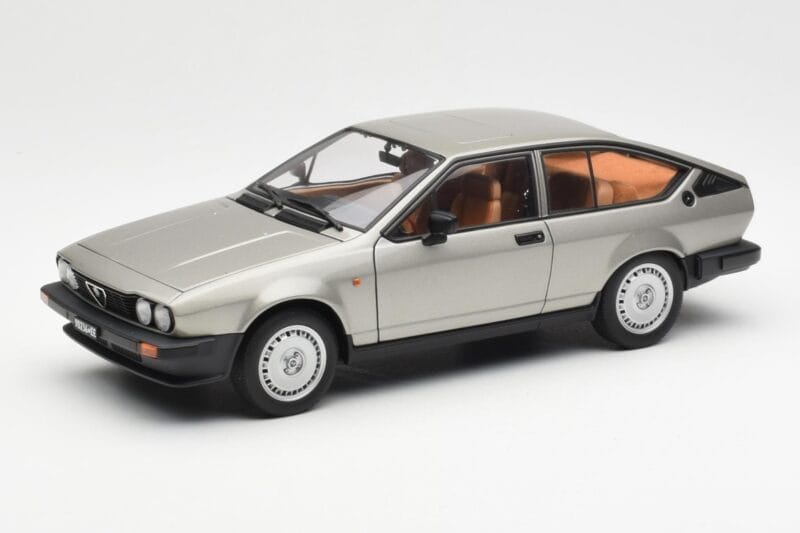
TL;DR: AUTOart's 1:18 diecast Alfa Romeo Alfetta GTV 2.0 in Grey Metallic, based on the 1980 original, includes opening doors and hood over a zinc alloy body. The model is used, its box showing storage wear. Clean, angular panel lines suit the GTV's wedge-shaped 1970s-80s design language.
The Alfetta GTV carried Alfa Romeo's rear-mounted transaxle layout into a genuinely striking wedge-shaped coupe body, a design approach that set it apart from more conventional front-engine rivals of its era.
The GTV's flat hood and sharply creased fenders suit diecast tooling well, since angular, planar surfaces hold crisp lines more easily than a heavily curved body would. AUTOart's casting keeps those creases sharp along the shoulder line, and opening the hood reveals a simplified engine bay appropriate to the scale, while the doors swing through a wide arc with the moderate resistance typical of period diecast hinges. Grey Metallic suits the design's angular character, the paint carrying visible metallic flake under direct light that reads differently across the flat hood versus the more curved rear haunches. As a used piece, the model has some handling history behind it, and the box shows storage wear, while the paint and functioning panels on the casting remain intact.
Alfa Romeo placed the GTV's gearbox at the rear axle rather than behind the engine, a layout choice aimed at improving weight distribution, and that engineering decision distinguished the Alfetta family from most of its contemporaries. The GTV's design also reflects the wedge-profile trend that swept European coupes through the late 1970s and into the 1980s, giving this diecast a clear era marker beyond the Alfa badge alone.
Grouped with other transaxle-era Alfa Romeo models, this GTV highlights an engineering approach the brand pursued distinctly from its rivals, adding technical depth to a classic Italian coupe display.