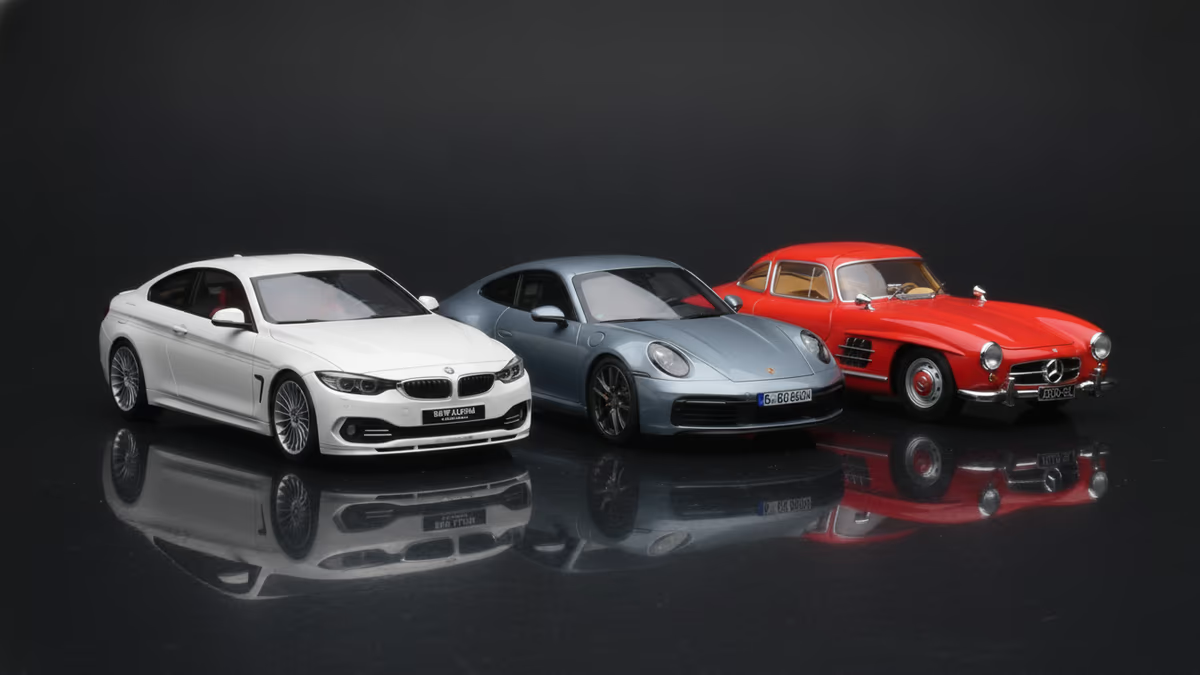
Last one
Used
This model is currently sold out. Enter your email and we'll let you know when it's back in stock.
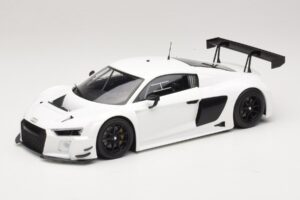
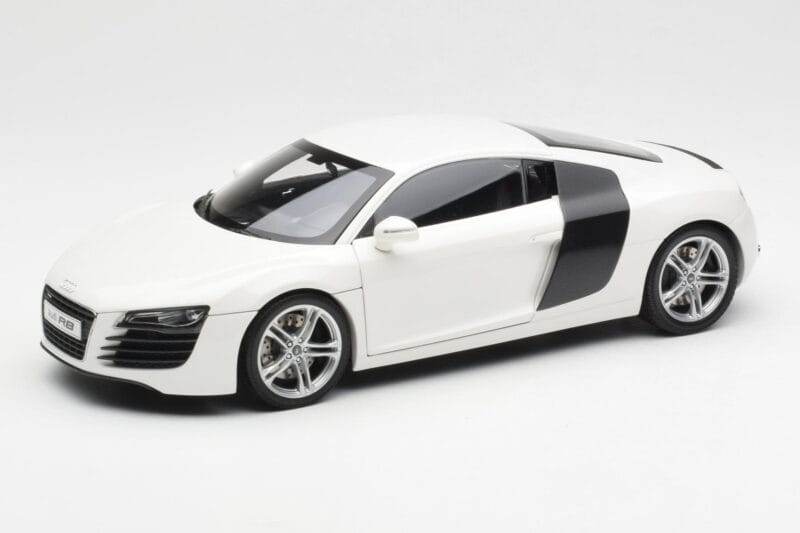
TL;DR: Kyosho's 1:18 diecast Audi R8 Type 42 reproduces the mid-engine coupe built on Audi's aluminum Space Frame, finished in white rather than a more common silver or red. Opening doors and a lift-up rear deck reveal the engine bay, giving a tactile look at the layout that helped make the R8 a more attainable modern supercar.
Audi built the R8 to prove a mid-engine supercar could also be driven daily, sharing its aluminum Space Frame architecture with the Lamborghini Gallardo while wrapping it in a shape distinctly Audi's own. Kyosho's diecast take on the Type 42 gives that engineering story a physical shelf presence in clean white.
The first-generation R8, internally the Type 42, ran from 2006 into the mid-2010s and used the same aluminum Space Frame chassis architecture Audi developed alongside Lamborghini for the Gallardo, though the two cars diverged sharply in character and styling. Where the Gallardo leaned into drama, the R8 offered a mid-engine layout with quattro all-wheel drive and everyday usability, a combination that widened who could realistically live with a supercar. Kyosho's casting keeps the R8's blade-like side intakes and low nose distinct from its Italian cousin, proof that shared underpinnings don't mean a shared silhouette.
Getting a mid-engine car's stance right in diecast means nailing the short front overhang and the wide rear haunches that house the engine bay, and Kyosho's model sits low and planted rather than looking stretched. The doors open on a firm hinge, and the rear deck lifts to expose a simplified engine bay behind the glass, the layout that defines this whole class of car. At 1:18 the model runs close to 22 centimeters, compact enough for a standard shelf slot but wide enough to need breathing room on either side.
Audi offered the R8 in a range of colors that leaned toward clean, technical shades rather than the loud reds and yellows Italian supercars favored, and white was always one of the more popular factory choices precisely because it let the car's creases and intakes do the talking instead of the paint. Kyosho's white holds an even, bright finish across the hood and doors, with the side blade panels picked out in a contrasting dark trim that breaks up what could otherwise be a flat expanse of color. Lifted from the box, the body carries the weight of zinc alloy construction, denser in the hand than resin alternatives of this subject. Panel gaps along the doors and rear deck stay tight and consistent, a sign the opening features were tooled with real attention rather than treated as an afterthought bolted onto a static casting.
Part of the R8's cultural footprint came from film appearances that put it in front of audiences who had never considered a supercar reachable, and that visibility helped the car become one of the more common modern supercars a newer collector actually recognizes on sight. That recognizability matters for a display aimed at a broad audience rather than only deep specialists, since a subject people already know is easier to build a themed shelf around.
This R8 pairs naturally with other 2000s and 2010s German performance diecast, standing in for the era when Audi, Porsche, and Mercedes each fielded a genuine supercar answer rather than leaving the category to Italy alone. Set beside a Gallardo of the same period, the shared Space Frame story becomes visible on the shelf itself, two very different cars built from a common engineering idea, a more interesting pairing than two examples of the same car in different colors.